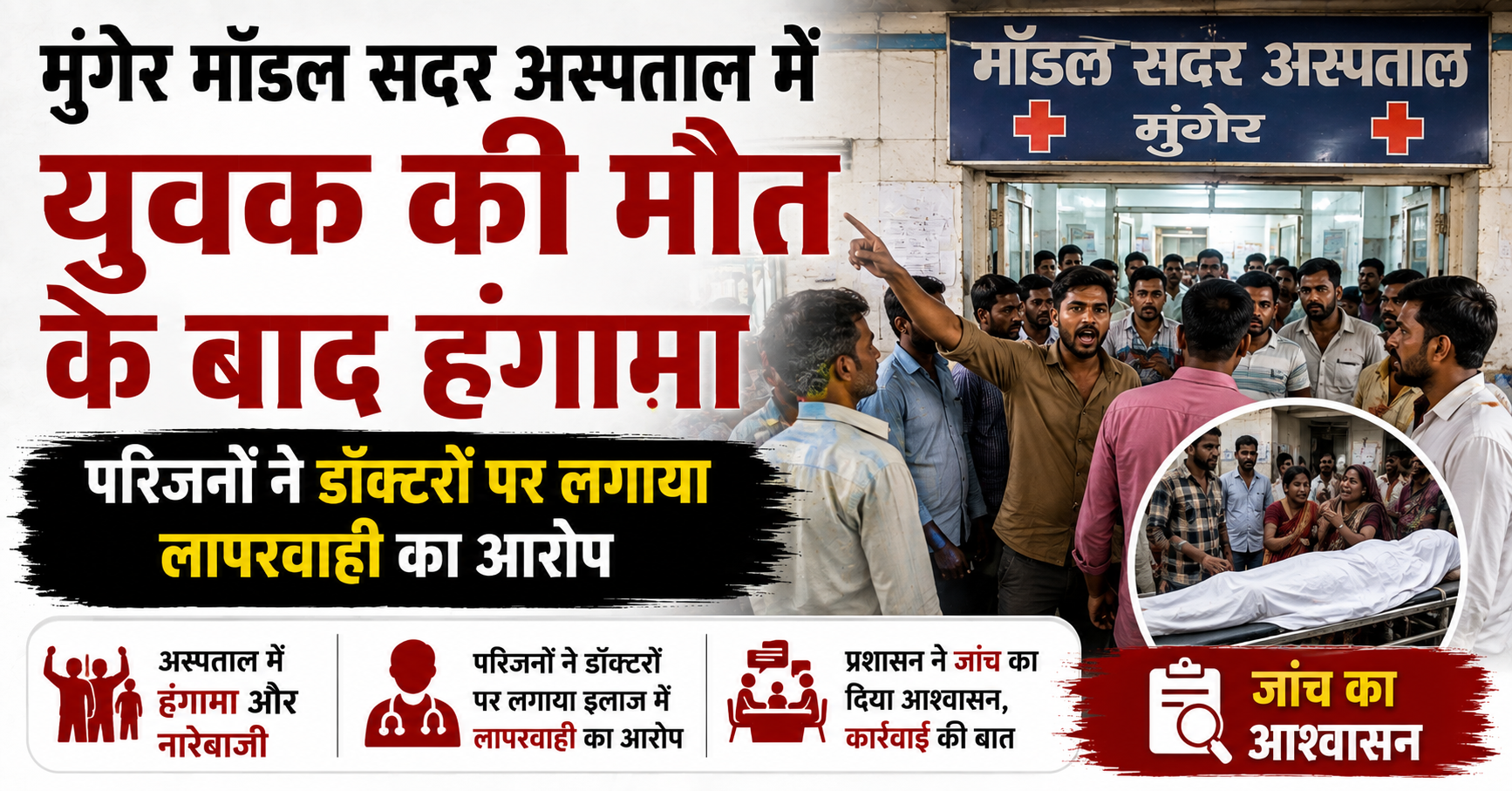
Family Alleges Medical Negligence After Young Man’s Death at Model Sadar Hospital; Emergency Services Affected for 12 Hours
Munger: A protest erupted at Munger’s Model Sadar Hospital following the death of a young man during treatment. The deceased was identified as Neeraj Kumar. His family members accused doctors and healthcare staff of serious negligence and alleged that the patient was given the wrong platelets during treatment, after which his condition deteriorated and he died.
Following the death, family members and others staged a protest at the hospital. The situation became serious enough to reportedly affect the hospital’s emergency services for around 12 hours. Other patients and their attendants also faced difficulties during this period.
After being informed about the incident, administrative officials intervened to control the situation. The administration assured the family that the matter would be investigated and appropriate action would be taken if negligence is established.
At present, the exact cause of Neeraj Kumar’s death and whether any medical error occurred during the platelet transfusion can only be established after a detailed investigation.
Patient’s Condition Deteriorated During Treatment
Neeraj Kumar had been brought to Model Sadar Hospital for medical treatment. Doctors reportedly began treatment after assessing his condition.
According to his family, Neeraj was given platelets during treatment. They alleged that his condition began deteriorating after the transfusion and suspected that the wrong platelets had been administered.
However, these allegations have not been independently established. A formal medical investigation will be necessary to determine whether the platelet transfusion was carried out according to the prescribed medical protocol.
Investigators are expected to examine which blood component was administered, what checks were conducted and whether the required procedures were followed.
Family Protests After Death
The death of Neeraj Kumar angered his family members, who protested at the hospital and questioned the treatment provided to him.
The family demanded accountability if any negligence was found to have contributed to his death.
According to the relatives, they wanted to know why Neeraj’s condition deteriorated and whether there was any error in the treatment or platelet transfusion.
The protest created tension on the hospital premises for several hours.
Emergency Services Affected for 12 Hours
The dispute also affected the hospital’s emergency services, which were reportedly disrupted for approximately 12 hours.
Emergency departments are among the most important services in any hospital because patients with serious injuries, sudden illnesses and critical conditions require immediate medical attention.
Any prolonged disruption can create difficulties for other patients who require urgent treatment.
Hospital authorities and officials therefore attempted to bring the situation under control and restore normal medical services.
Administration Assures Investigation
Given the seriousness of the allegations, the administration assured the family that the matter would be investigated.
The investigation may examine the circumstances in which Neeraj Kumar was admitted, the treatment he received and the procedures followed before and during the platelet transfusion.
His medical records, laboratory reports, doctors’ prescriptions and blood-bank records could be important evidence.
If the investigation establishes negligence or violation of medical procedures, action may be taken against those found responsible under applicable rules.
Allegation of Wrong Platelet Transfusion
The family’s allegation that the wrong platelets were administered is one of the most serious aspects of the case.
Blood and blood-component transfusions require careful verification procedures. Medical teams generally need to confirm the patient’s requirements, blood-group information and details of the component before transfusion.
Therefore, investigators will need to examine the complete transfusion records to determine whether the correct procedure was followed in Neeraj Kumar’s case.
A final conclusion should not be drawn solely from allegations before the investigation is completed.
Hospital Administration Faces Questions
Model Sadar Hospital is an important government healthcare facility in Munger and caters to a large number of patients.
The allegation of medical negligence following a patient’s death is therefore a serious matter for hospital authorities.
The administration needs to ensure that patients receive timely treatment and that all necessary safety procedures are followed during critical medical interventions.
Transparent investigation and communication with the family can also help prevent confusion and further escalation.
Medical Records Could Provide Key Evidence
Neeraj Kumar’s medical records are likely to play an important role in determining what happened.
Investigators may examine his condition at the time of admission, diagnostic reports, treatment notes, medicines administered and the sequence of events leading up to his death.
Details concerning the platelet unit, blood-bank documentation and transfusion records may also be reviewed.
If the platelets were obtained from a blood bank or another authorised source, records from that facility may also be examined.
Family Demands Action
Neeraj Kumar’s family has demanded a fair investigation into the circumstances surrounding his death.
They want to know whether the treatment was appropriate and whether any medical error occurred during the platelet transfusion.
The family has also sought action against those responsible if negligence is established.
For the relatives, determining the actual cause of death is now a major concern.
Other Patients Also Affected
The protest and disruption reportedly affected other patients visiting the hospital.
Patients arriving at an emergency department often require immediate medical attention. Therefore, any prolonged disruption can create additional risks and inconvenience.
The incident highlights the need for hospitals to maintain alternative arrangements so that essential emergency services continue even when a dispute or protest takes place.
Need for Effective Complaint Mechanism
Hospitals need effective systems through which patients and their families can raise treatment-related concerns.
If complaints are addressed promptly at the appropriate level, many disputes can potentially be resolved without affecting essential hospital services.
Patient-help desks and grievance-redressal mechanisms can play an important role in addressing concerns and communicating with families during difficult situations.
Care Required During Blood and Platelet Transfusions
Blood and platelet transfusions require strict attention to safety procedures.
Healthcare workers need to ensure that the appropriate blood component is provided to the correct patient and that the required verification steps are completed.
Any suspected mismatch or adverse reaction requires immediate medical assessment and appropriate action.
This makes the investigation of the platelet-related allegations particularly important in the present case.
Expert Investigation Needed
An independent and expert medical assessment will be important to establish the facts.
Specialists may need to review the patient’s medical records, diagnosis, treatment plan and transfusion details to determine whether the treatment was consistent with accepted medical procedures.
The investigation should also establish whether the deterioration in Neeraj Kumar’s condition was related to the transfusion or resulted from his underlying medical condition.
A proper investigation can provide clarity both to the family and to the hospital administration.
Time-Bound Investigation Important
The administration has assured the family of an investigation. The next important step will be to ensure that the inquiry is completed fairly and within a reasonable timeframe.
A prolonged investigation can increase frustration among family members and create further uncertainty.
If negligence is established, those responsible should face appropriate action. If the allegations are not substantiated, the findings should explain the circumstances surrounding the death and identify the medical cause as far as possible.
Need to Improve Hospital Systems
The incident also highlights the importance of strengthening not only medical services but also communication and grievance-handling systems in government hospitals.
Hospitals should ensure that patients receive timely treatment and that safety protocols are strictly followed during critical procedures.
Accurate documentation and monitoring are particularly important when handling blood and platelet components.
The death of Neeraj Kumar at Munger Model Sadar Hospital and the subsequent allegations of medical negligence have raised serious questions about the hospital’s treatment procedures.
His family alleges that he was given the wrong platelets during treatment, following which his condition deteriorated and he died. The allegations have not yet been conclusively established and require a detailed investigation.
The subsequent protest reportedly affected the hospital’s emergency services for around 12 hours, causing difficulties for other patients as well.
The administration has assured the family that the matter will be investigated. Medical records, laboratory reports, treatment documents and platelet-transfusion records will be important in determining what actually happened.
If negligence is established, appropriate action should follow according to the applicable rules. If the allegations are not substantiated, the investigation should clearly explain the medical circumstances surrounding Neeraj Kumar’s death.
The case underlines the importance of safe blood-component management, proper medical documentation, transparent grievance mechanisms and effective communication between hospitals and patients’ families.