From a Few Houses and Empty Plots to One of the City’s Most Prominent Neighborhoods
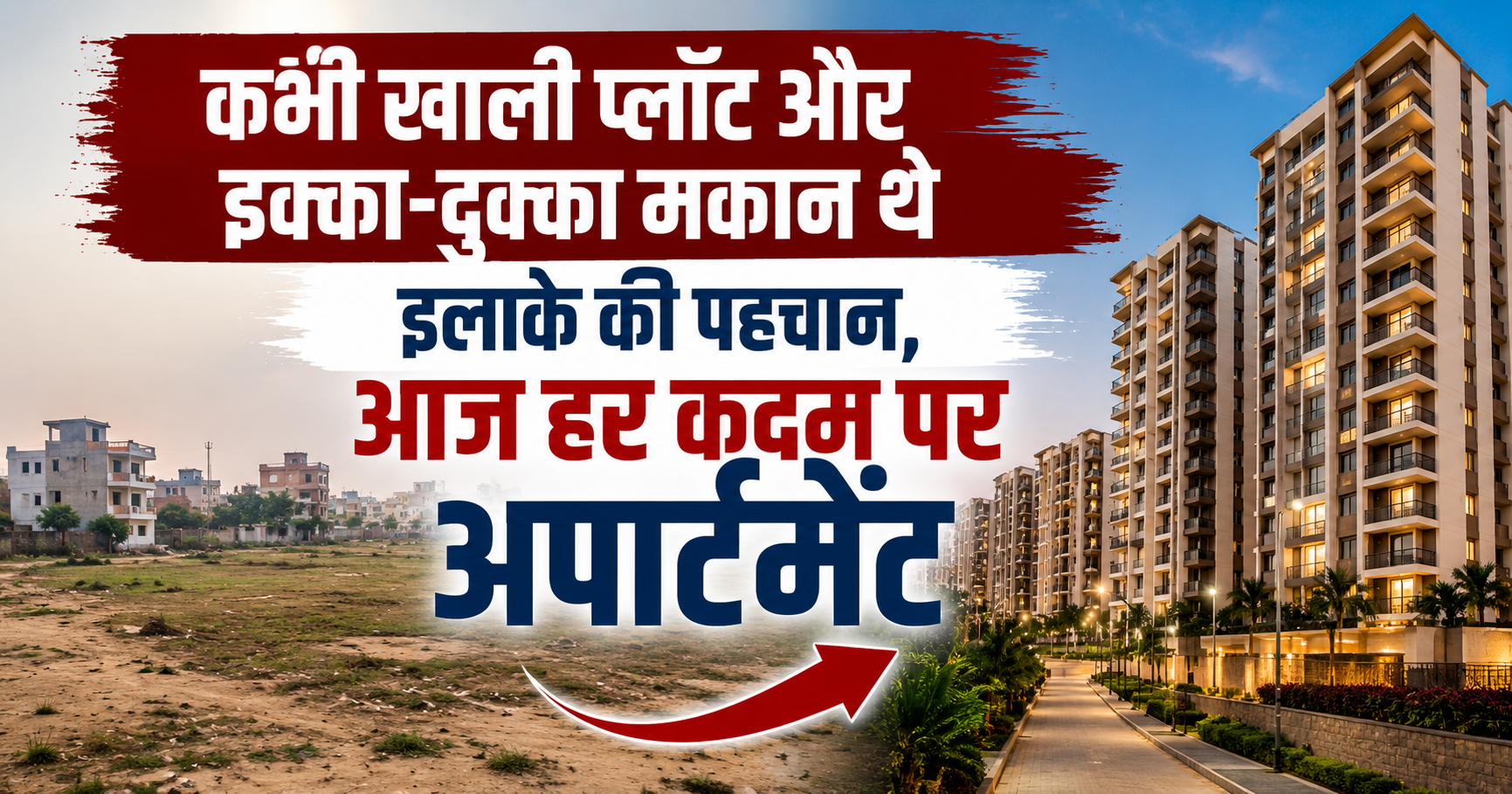
Patna: Boring Road is today regarded as one of the most prominent and upscale areas of the Bihar capital. The area is now filled with wide roads, commercial establishments, multi-storey buildings, apartments and dense residential neighborhoods, reflecting the modern face of Patna. However, a few decades ago, the area looked completely different. Neighborhoods such as Anandpuri, Gandhi Nagar and Shrikrishnapuri around Boring Road had only a handful of houses. Large vacant plots were common, and the population density was very low. Over time, rapid urbanization transformed these areas, and today it is difficult to find vacant land there.
According to accounts from longtime residents, houses began appearing on a limited scale on the northern side of Bailey Road, now known as Nehru Path, around 1960. At that time, Boring Road was considered relatively underdeveloped compared with some of the city's established areas. Many parts of the neighborhood were sparsely populated, and darkness would descend soon after evening.
Today, large houses and apartment buildings can be seen every 20 to 50 meters in many parts of the area.
Himalaya, Nilgiri and Jamuna Apartment Were Once Major Landmarks
For longtime residents, certain buildings and locations once served as important landmarks in and around Boring Road. These included Himalaya, Nilgiri, Dr. Gopal Prasad’s clinic and Jamuna Apartment.
People often used these landmarks to explain directions because there were relatively few buildings in the area. A single prominent building could serve as a reference point for an entire neighborhood.
As the city expanded and land prices increased, vacant plots gradually began to disappear. Residential construction increased, and single-family homes were eventually joined by multi-storey apartment buildings.
The old landmarks remain part of the memories of longtime residents, but the physical appearance of the neighborhood has changed dramatically.
Only a Few Houses Existed Around 1965
According to local accounts, around 1965, only a small number of houses had been constructed in Gandhi Colony, named after Mahatma Gandhi, behind Jamuna Apartment. Similarly, Shrikrishnapuri, located opposite AN College, and Anandpuri, west of Boring Canal Road, had only a few houses.
At that time, large stretches of land remained undeveloped and population density was low. The environment was considerably quieter than it is today.
Older residents recall that few people could have imagined that these neighborhoods would eventually become some of the most expensive and sought-after parts of Patna.
Government Employees Helped Establish the Neighborhoods
According to 92-year-old Akhilesh Srivastava, during 1955-60, a large number of flats were constructed for employees working at the High Court and Secretariat. However, not every employee could obtain government accommodation.
As a result, many employees began purchasing land around Boring Road and constructing their own homes. This gradually contributed to the expansion of residential settlements in the area.
The arrival of government employees and their families also encouraged the development of supporting facilities. As more people moved into the neighborhood, shops, schools, healthcare facilities and other services began emerging.
Boring Road Had a Single-Lane Road Until Around 1970
The Boring Road that is now busy with traffic was very different around 1970. According to local residents, Boring Road and Boring Canal Road were then essentially single-lane roads.
At that time, Boring Road was considered relatively backward compared with major routes such as Ashok Rajpath and Bailey Road. Although it was connected to other parts of the city, it did not have the modern infrastructure and facilities that are visible today.
Since there were relatively few houses, traffic was also much lighter. People could travel through the area relatively easily. As the number of houses and residents increased, however, pressure on roads and transportation infrastructure also grew.
Darkness Would Descend After Evening
Another distinctive feature of old Boring Road was the lack of adequate lighting after sunset. Local residents recall that many parts of the area became extremely dark in the evenings because street lighting was limited.
Today, Boring Road and its surrounding neighborhoods remain illuminated and active well into the night. Several decades ago, however, people often avoided unnecessary movement after dark because of the low population, vacant plots and limited street lighting.
Residents with memories of that period recall that people often had to travel toward the main roads for essential activities after evening.
From Vacant Land to Apartment Buildings
The transformation of Boring Road is closely connected with changes in land use. Plots that were once vacant gradually began to be developed. Initially, one- or two-storey houses were constructed, followed later by the rapid growth of apartment buildings.
As Patna's population expanded, demand for residential space increased. Multi-storey buildings offered a way to accommodate more families on limited land. As a result, older houses in several parts of Boring Road have gradually been replaced by larger residential and commercial structures.
The result is a dramatic change in the physical landscape. Areas that once contained large open spaces are now densely built up.
Boring Road Became a Major Commercial Hub
Over the years, Boring Road evolved from primarily a residential area into a major commercial center. Numerous shops, offices, coaching institutes, restaurants, clinics and other businesses developed along and around the road.
People from different parts of the city began visiting Boring Road for shopping and other activities. Economic activity increased, and property values rose significantly.
However, commercial growth also brought heavier traffic. Roads that once carried relatively few vehicles now experience substantial daily traffic. Parking and congestion have become major challenges in the modern Boring Road area.
Memories of Old Landmarks Remain
Although the physical landscape has changed, names such as Himalaya, Nilgiri, Dr. Gopal Prasad’s clinic and Jamuna Apartment continue to hold a special place in the memories of longtime residents.
In the past, people often used these landmarks to guide visitors. Since there were not enough buildings to distinguish individual streets and neighborhoods, prominent structures served as important reference points.
Today, digital maps, smartphones and a more developed road network have made navigation much easier. Nevertheless, for older residents, these landmarks remain reminders of Patna's urban history.
A Picture of a Changing City
The development of Boring Road and its surrounding neighborhoods is an important example of Patna's urban expansion. The transformation reflects the city's growing population, increasing economic activity and rising demand for housing.
Residential development that began gradually during the 1950s and 1960s accelerated over subsequent decades. The area eventually developed into a major residential and commercial destination.
Today, available land is extremely limited. Older houses are increasingly being replaced by new buildings and apartment complexes. The area's identity is no longer associated with vacant plots and isolated houses but with dense development and multi-storey structures.
Development Has Also Created New Challenges
Urban development has brought many conveniences to residents of Boring Road and surrounding neighborhoods, but it has also created new challenges. Rising population density has increased traffic pressure, while parking, drainage, waste management and congestion have become important concerns.
Roads that once served a small population and limited traffic now have to accommodate a large number of private vehicles. Therefore, upgrading infrastructure according to modern urban requirements has become increasingly important.
A Blend of History and Modernity
The story of Boring Road, Anandpuri, Gandhi Nagar and Shrikrishnapuri is not merely the story of a few neighborhoods. It is also a reflection of the changing urban life of Patna.
Several decades ago, darkness and silence would settle over the area after evening. Today, the same neighborhoods are among the busiest and most prominent parts of the capital.
The neighborhoods around Boring Road have witnessed remarkable transformation over the past six to seven decades. From government housing initiatives and the construction of private homes during the 1950s and 1960s to today's large apartment complexes and commercial centers, the area's journey reflects the broader urban development of Patna. Landmarks such as Himalaya, Nilgiri and Jamuna Apartment once defined the neighborhood, whereas today new buildings appear almost everywhere. The transformation shows how Patna's population, infrastructure, housing needs and urban lifestyle have continuously evolved over time.