
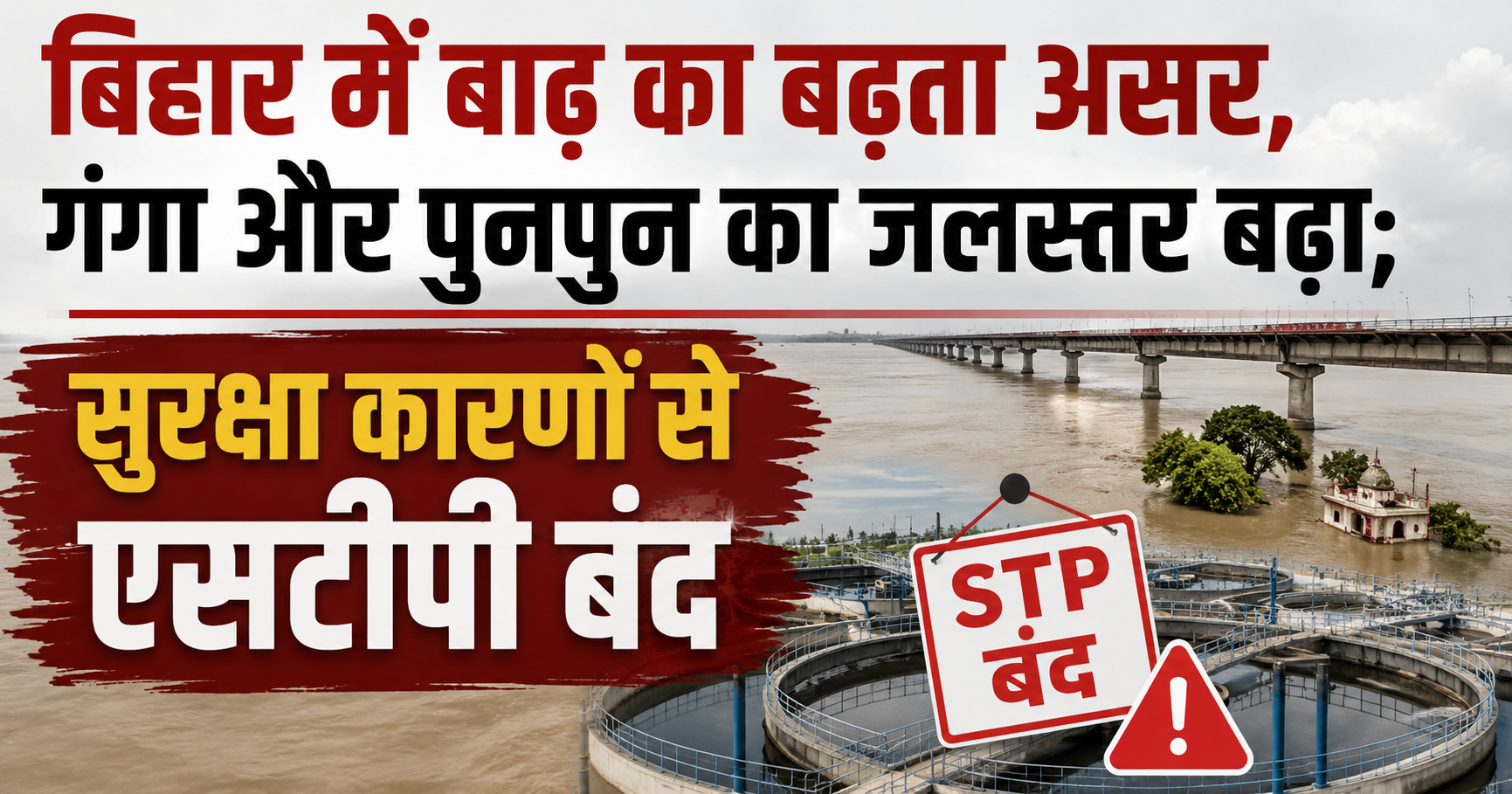
Ganga and Punpun Water Levels Rise, STP Shut Down for Safety
Patna: Flood conditions are beginning to affect several parts of Bihar as water levels in major rivers continue to rise. In and around Patna, the water level of the Ganga and Punpun rivers has increased, raising concerns in low-lying areas. Due to the high water level and safety concerns, the Sewage Treatment Plant (STP) has been shut down temporarily. As a result, sewage treatment operations in the city have been disrupted.
The state government and district administration are closely monitoring the situation. The Chief Minister conducted an aerial survey of flood-affected areas to assess the ground situation. During the survey, the condition of areas located along the rivers, waterlogged regions and places where people may be affected was reviewed. Officials have been instructed to maintain continuous surveillance and intensify relief and rescue operations whenever necessary.
Rising Water Levels of Ganga and Punpun Raise Concern
The rising water levels of the Ganga and Punpun rivers are a major concern for Patna and surrounding areas. Whenever the water level of these rivers increases, the risk of flooding in low-lying areas along their banks also rises.
The increase in the Ganga's water level has started affecting areas located near the river. At the same time, rising water in the Punpun has increased alertness in surrounding regions. Fluctuations in river levels are continuing due to rainfall and the flow of water from different catchment areas.
Authorities are keeping a close watch on vulnerable locations. People have been advised to avoid going near rivers and to follow instructions issued by the administration, particularly as the water level continues to rise.
Children and elderly people are being advised to stay away from rivers and waterlogged areas to prevent accidents.
STP Shut Down Due to Safety Concerns
The rising water level has also affected Patna's sewage management system. The Sewage Treatment Plant has been temporarily shut down as a safety precaution.
When water levels rise significantly, operating an STP can pose risks to machinery, electrical equipment and other technical infrastructure. Therefore, suspending operations is considered necessary to prevent damage and avoid any major technical or safety-related incident.
The shutdown has temporarily disrupted sewage treatment operations. If flood conditions continue for an extended period, maintaining an effective sewage and drainage system could become another challenge for the administration.
Officials are monitoring the situation closely. Once the water level falls and conditions become safe, the plant will be inspected before operations are resumed. The priority at present is to protect people and maintain essential civic services.
Chief Minister Conducts Aerial Survey
The Chief Minister conducted an aerial survey of flood-affected and vulnerable areas to assess the situation. The survey provided an overview of areas near rivers and locations where waterlogging may be increasing.
An aerial assessment can help authorities identify areas where water levels are rising rapidly and where people may require immediate assistance.
Following the survey, the flood situation and preparedness for relief and rescue operations were reviewed with officials. Authorities have been directed to remain alert in vulnerable areas and ensure that there is no negligence in dealing with the situation.
The administration is also monitoring the availability of relief camps, boats, food, drinking water and medical facilities so that assistance can be provided promptly if required.
Special Focus on Low-Lying Areas
As river levels rise, residents of low-lying areas are becoming increasingly concerned. Waterlogging conditions can change rapidly in such locations. Authorities have therefore increased monitoring and asked local officials and disaster-management personnel to remain prepared.
Floods can create serious challenges for transportation, drinking water, electricity, healthcare and sewage services. Rising water can disrupt road connectivity and obstruct drainage systems in several areas.
Experts emphasize that continuous local monitoring is essential during periods of rising river levels. It is not enough to monitor the rivers alone; embankments, drainage channels and low-lying residential areas must also be closely observed.
People Advised to Remain Cautious
Authorities have appealed to residents to remain cautious amid the flood threat. People have been advised not to believe rumors and to contact the local administration in case of an emergency.
Residents have also been urged not to enter rivers or areas with strong water currents. Those living in areas where water has already accumulated have been advised to take extra precautions.
Parents have been asked to prevent children from playing near waterlogged areas and rivers. Livestock owners have also been advised to move their animals to safer locations if water levels rise further.
Restoring Sewage Services Will Be Another Challenge
The temporary closure of the STP has created an additional challenge for the administration. Any prolonged disruption in sewage treatment could affect sanitation and public health in the city.
Once the water level decreases, authorities will need to inspect the plant's machinery, electrical systems and other technical equipment before restarting operations. A thorough safety inspection will be important to prevent technical failures or damage.
The administration will have to balance flood-management efforts with the need to keep essential urban services functioning.
Administration Closely Monitoring the Situation
The Bihar administration is continuously monitoring the flood situation. Officials are keeping track of changes in the water levels of the Ganga and Punpun rivers and are assessing the situation based on weather conditions and further changes in river levels.
Patna requires particular attention because several parts of the city are connected to river systems and drainage networks. If water levels rise further, low-lying areas could face more serious waterlogging.
The government and administration are currently facing a dual challenge: ensuring the safety of people living in flood-prone and affected areas while maintaining essential civic services. The temporary closure of the STP is one example of the difficulties created by the rising water level.
Overall, the rising water levels of the Ganga and Punpun rivers have increased concerns over the possibility of worsening floods in Bihar. Following the Chief Minister's aerial survey, preparations for relief and rescue operations have been intensified.
The situation in the coming days will depend largely on river levels, rainfall and weather conditions. For now, the administration's main priorities are protecting residents in vulnerable areas, monitoring essential services and remaining prepared to respond quickly to any emergency.