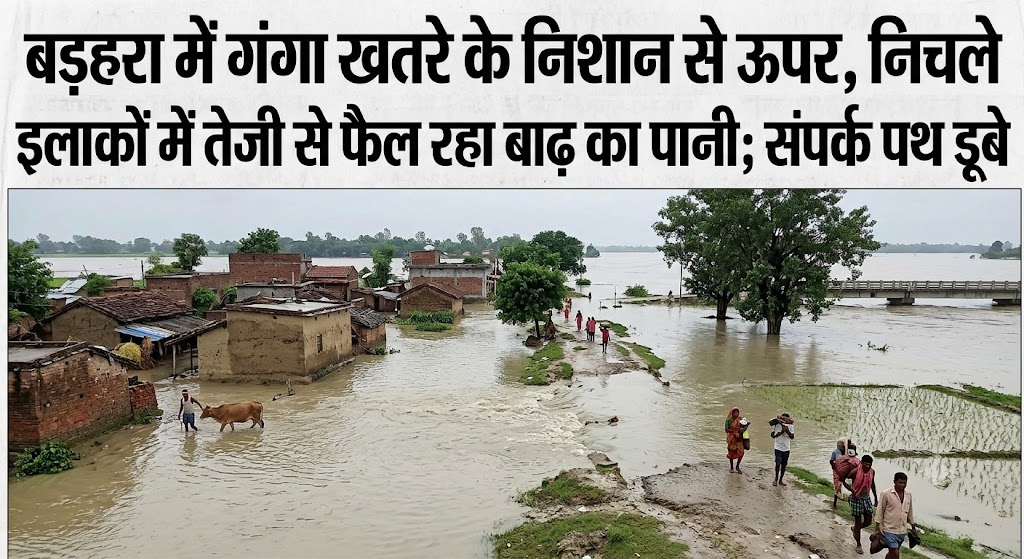
Ganga Rises Above Danger Mark in Barhara, Floodwaters Spread Rapidly; Several Roads Submerged
Barhara/Bhojpur: The flood situation in Bihar’s Bhojpur district has become a matter of concern following a continuous rise in the water level of the Ganga River. At 6 am on Friday, the water level of the Ganga in Barhara block crossed the danger mark of 55.08 metres.
As the river continued to rise, floodwater began spreading rapidly across low-lying and plain areas of the block. Several local roads have also been affected, raising concerns about transportation for residents.
Floodwater has reached the Neknam Tola connecting road, the connecting road to Sirsiya village and the Bakhorapur-Farna road. If the water level continues to rise, movement along these routes could become increasingly difficult.
Ganga Crosses Danger Mark
The Ganga water level in the Barhara area crossed the 55.08-metre danger mark at around 6 am on Friday.
The rise has particularly affected low-lying areas located close to the river. Residents living in vulnerable areas are keeping a close watch on the situation as the river continues to rise.
Local residents fear that if the increase continues, the flood situation could become more serious in the coming days.
Connecting Roads Affected
Floodwater has already entered several important rural connecting roads.
The Neknam Tola connecting road, the Sirsiya village connecting road and the Bakhorapur-Farna road have been affected by rising water levels.
These roads are important for residents travelling to nearby markets, schools, hospitals, administrative offices and other essential locations.
If the water level rises further, pedestrians and smaller vehicles may face significant difficulties.
Impact on Rural Transportation
The rising floodwater is expected to affect daily movement in the affected areas.
Residents of rural areas often depend on local connecting roads for their daily needs. If these routes become unusable, people may have to take longer alternative routes.
The situation could be particularly difficult for elderly people, children and patients who need to travel for medical treatment.
Authorities may therefore need to monitor the affected roads continuously and take appropriate safety measures if water levels increase further.
Farmers Increasingly Worried
The rising Ganga has also increased concerns among farmers.
Several low-lying agricultural fields in the area have crops such as maize, vegetables and other seasonal produce. The spread of floodwater into these fields could result in crop damage.
If water remains in the fields for an extended period, crops may suffer significant damage. This could create additional financial pressure for farming families.
Farmers are therefore closely monitoring the river level and the movement of floodwater.
Threat to Maize and Vegetable Crops
Maize and vegetable crops in low-lying fields are particularly vulnerable to flooding.
Prolonged waterlogging can damage crop roots and reduce agricultural production. If the water does not recede quickly, farmers may face substantial losses.
Farmers may seek an assessment of crop damage if the situation worsens and may expect assistance under applicable government relief provisions.
Anxiety Among Villagers
The continuous rise in the Ganga water level has created concern among residents living in low-lying areas.
Villagers are monitoring the river and floodwater closely. Many fear that additional areas could be affected if the water level continues to rise.
Local resident Nanhak Rai expressed concern that the situation could become more serious in the coming days if the rise in the river continues.
Residents are therefore keeping themselves alert and watching developments closely.
Low-Lying Areas Face Greater Risk
Low-lying settlements are generally among the first areas to be affected when river levels rise.
Even a relatively small increase in the water level can result in floodwater entering agricultural fields and residential areas located close to the river.
People living in vulnerable locations may therefore need to remain prepared for changing conditions and be aware of nearby safer locations if evacuation becomes necessary.
Need for Administrative Monitoring
With the Ganga crossing the danger mark, continued monitoring by the district administration has become important.
Authorities may need to regularly assess water levels, monitor affected roads and identify areas where residents could be affected if the situation deteriorates.
If required, disaster-response and rescue teams may also need to remain prepared.
Residents should be informed promptly about changes in water levels and advised to avoid dangerous areas.
Health Challenges Could Increase
Flooding can create health-related challenges in addition to affecting roads and crops.
Standing water can increase mosquito breeding and may contribute to the spread of water-related illnesses. Drinking-water sources can also be affected when floodwater enters residential areas.
Ensuring access to safe drinking water, medicines and basic healthcare services will therefore be important if the flood situation expands.
Problems for Livestock Owners
People who keep cattle and other livestock could also face difficulties as floodwater spreads.
Flooding can reduce access to animal feed and safe shelter. Livestock owners may need to move their animals to higher and safer locations.
If the situation worsens, authorities may also need to consider arrangements for animal feed and veterinary services in affected areas.
Roads Need Continuous Monitoring
The roads where floodwater has already entered require regular monitoring.
If water depth increases, travelling through these routes could become dangerous, particularly for two-wheelers and small vehicles.
Authorities may consider installing warning signs or restricting movement along particularly dangerous stretches if necessary.
Residents should also avoid crossing areas with strong currents or unknown water depth.
Future Situation Depends on River Level
The situation in Barhara will largely depend on how the Ganga water level develops over the coming days.
If the river stabilizes or begins to recede, the flood situation could gradually improve. However, continued rises could cause water to spread into additional low-lying areas.
This makes regular monitoring and preparedness essential for both residents and the administration.
The flood situation in Barhara block of Bhojpur district has become a concern after the Ganga crossed its danger mark of 55.08 metres at 6 am on Friday.
Floodwater has begun spreading rapidly into low-lying areas and has reached the Neknam Tola connecting road, Sirsiya village connecting road and Bakhorapur-Farna road. The rising water could affect transportation for residents if the situation continues to worsen.
Farmers are also worried about possible damage to maize, vegetable and other crops in low-lying agricultural fields.
Local residents fear that the situation could become more serious if the river continues to rise.
At present, continuous monitoring of the river level, affected roads and vulnerable areas is essential. The administration may also need to keep relief and rescue arrangements ready and ensure that residents receive timely information about changing flood conditions.
Residents, meanwhile, should exercise caution near the river and avoid entering areas with fast-moving or deep floodwater.