Ganga Water Level Rises Rapidly in Patna, Steps of Krishna and Gandhi Ghats Submerged; Administration on Alert
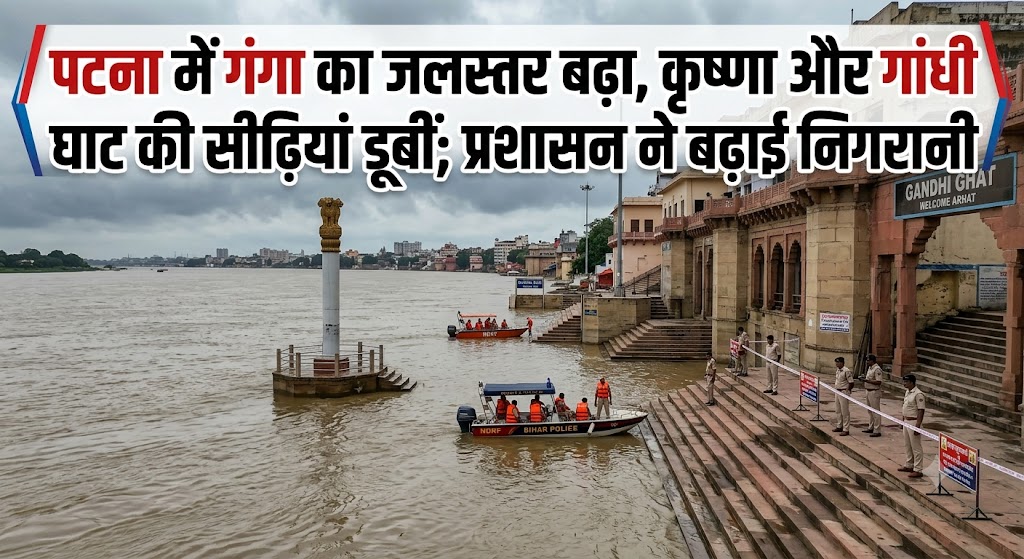
Patna: The water level of the Ganga River rose rapidly in Patna on Wednesday, August 19, 2026. As the river level increased, the lower steps of several major ghats, including Krishna Ghat and Gandhi Ghat, were submerged. In view of the situation, the administration has increased monitoring and is advising people to remain cautious near the river.
The rising water level is clearly visible along Patna's riverfront. Several steps normally used by people for bathing, religious rituals and other activities are now under water. This has increased the risk of slippery surfaces and deep water at the ghats.
Authorities are continuously monitoring the situation. People, particularly children and elderly citizens, are being advised to avoid going close to the river and to follow all safety instructions issued by the administration.
Ganga Water Level Rising Rapidly
The increase in the Ganga's water level has changed the appearance of Patna's riverfront. Water has gradually moved toward the ghats, submerging the lower sections.
The rise in the Ganga's water level may be linked to increased rainfall and higher water discharge from upstream catchment areas. However, the exact reasons and the forecast for the coming days should be assessed on the basis of official data from the concerned water resources and administrative authorities.
A rise in the Ganga's water level during the monsoon is not unusual in Patna. However, a rapid increase can create additional challenges for the administration and residents living near the river.
Several Steps at Krishna Ghat Submerged
The rising water has also affected Krishna Ghat. The lower steps of the ghat have gone under water, while the river continues to move toward the upper sections.
People visiting the ghat may find it difficult to judge the depth of the water. The presence of water on the steps also increases the possibility of slipping and falling.
Authorities are advising people not to enter the river under such conditions. Special care is particularly necessary when children are present near the ghat.
Gandhi Ghat Also Affected
The impact of the rising water level is also visible at Gandhi Ghat, one of Patna's prominent riverfront locations.
The submergence of the lower steps has affected normal activities at the ghat. Gandhi Ghat attracts people for religious activities, sightseeing and other purposes.
With the water level rising, visitors are being advised to maintain a safe distance from the river and avoid entering the water.
Need for Increased Safety Measures
As the Ganga continues to rise, safety arrangements at the ghats become increasingly important.
Warning signs, barricades and security personnel can help prevent people from entering dangerous areas. Such measures are particularly important where the steps have already been submerged.
Once the steps disappear under the water, visitors may not be able to accurately judge the depth or the condition of the riverbed.
Devotees and Visitors Advised to Exercise Caution
A large number of people visit the Ganga ghats for bathing and religious rituals. However, entering the river can become dangerous when the water level rises.
People are being advised to avoid going into deep water and to follow any barricades or warnings placed by the administration.
Children should be kept away from the riverfront, especially when the current is strong. Even a moment of carelessness can result in an accident.
Boat Operations Also Require Monitoring
The rising water level also makes it important to monitor boat operations on the river.
Travelling in small boats can become risky when the current is strong. Boat operators need to make decisions based on the prevailing river and weather conditions.
Authorities may also monitor boat operations and other activities on the river and impose additional restrictions if the water level rises further.
Low-Lying Areas Under Observation
Residents of low-lying areas along the Ganga may also be concerned about the rising water level.
At present, the main visible impact is the submergence of steps at the ghats. However, if the water level continues to rise, other areas near the river could also be affected.
The administration will need to continue monitoring such areas, while residents should follow official instructions in case the situation becomes more serious.
Relief and rescue arrangements can be activated if necessary.
Monsoon Increases Pressure on Rivers
During the monsoon, water levels in the Ganga and other rivers in Bihar frequently fluctuate.
Continuous rainfall in upstream areas can increase the flow of water into rivers. In Patna, the impact of rising Ganga levels is usually first visible at the river ghats.
The submergence of lower steps is a clear indication that the river level has increased.
However, the submergence of ghat steps alone cannot determine whether a major flood threat exists. Such an assessment requires official water-level data from agencies such as the Central Water Commission, the Water Resources Department and the local administration.
Administration Monitoring the Situation
With the Ganga rising, the responsibility of the administration has also increased.
Officials need to monitor the condition of the ghats and ensure public safety. Police and disaster-management teams can be deployed at vulnerable locations if required.
The administration must also ensure that warnings reach residents and visitors in time.
If the river approaches critical levels, authorities may need to identify potentially affected areas in advance and prepare evacuation or relief measures.
People Advised Not to Believe Rumors
During periods of rising river levels, unverified information can spread rapidly through social media.
Residents are therefore advised to rely on official information from the administration and concerned departments rather than rumors.
People should avoid forwarding unverified claims about flooding or river levels.
Accurate and timely information can help residents make safer decisions.
Special Care Needed for Children and Elderly People
Children and elderly people require special attention near the ghats.
Children should never be allowed to go near the river alone. Elderly people should also avoid entering the water, particularly when the steps are submerged and slippery.
Families visiting the ghats should remain alert and follow all safety restrictions imposed by authorities.
Situation Could Become More Challenging if Water Continues to Rise
If the Ganga's water level continues to increase at the same pace, more ghats in Patna could be affected.
The pressure on low-lying areas could also increase if the river rises further. In such circumstances, the administration may have to take additional precautionary measures.
The next few days could therefore remain important as officials continue monitoring water-level data and river flow.
Residents should avoid unnecessary visits to the riverfront until the situation becomes safer.
The Ganga's water level rose significantly in Patna on Wednesday, August 19, 2026, resulting in the submergence of the lower steps at several major ghats, including Krishna Ghat and Gandhi Ghat.
The administration has increased monitoring of the situation and is advising people to remain cautious near the river.
Residents and devotees are being urged to avoid entering deep water, keep children away from the river and follow official safety instructions.
Fluctuations in the Ganga's water level are common during the monsoon, but rapid increases require additional caution. People should avoid unnecessary risks and rely on official updates rather than rumors.
If the water level continues to rise, authorities may need to strengthen security arrangements at the ghats and prepare for possible impacts on low-lying areas. For now, continuous monitoring and public awareness remain the key measures to ensure safety along Patna's Ganga riverfront.