
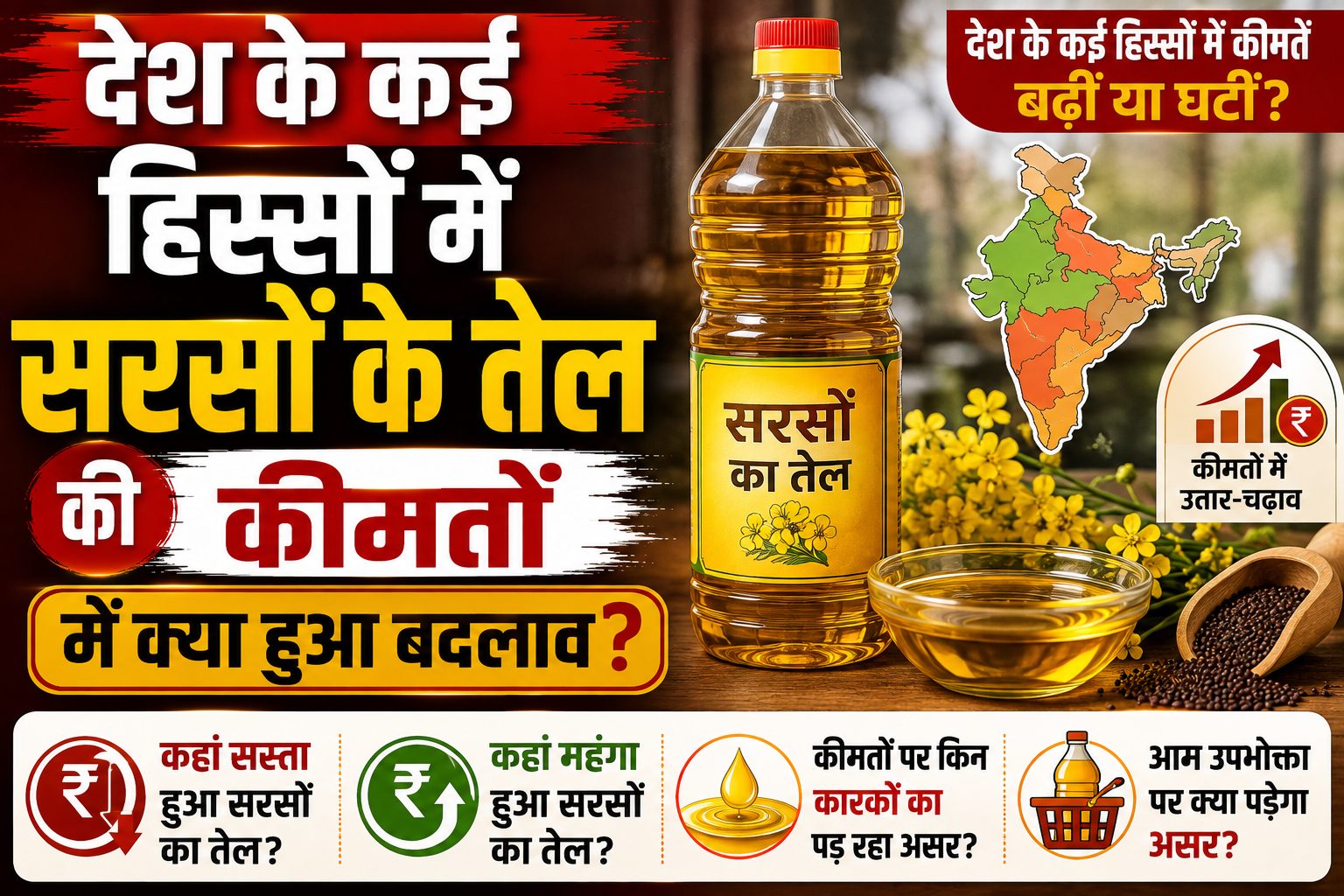
Mustard Oil Crosses ₹200 Mark in Several Parts of the Country Heavy Blow to Common Man's Pocket Due to Inflation, Prices Skyrocket in Retail Markets
New Delhi/Patna (Special Correspondent): Concerning and distressing news regarding inflation has emerged once again from kitchens across the country. Mustard oil, which counts among essential food items, is fast slipping beyond the reach of the common man in several parts of the country. The situation has escalated to a point where mustard oil is retailing past the ₹200 per litre mark in multiple states and local retail markets. This sudden, steep surge has completely disarrayed the monthly household budgets of middle-class families and economically weaker sections. With essential edible oil prices climbing right ahead of the festive season, deep disappointment and outrage are visible among general consumers.
Which Regions Have Seen Prices Cross ₹200 and Why?
According to recent market reports, wide variations are visible in retail prices of mustard oil across different states of the country:
The Plight of Remote and Rural Areas: In several rural and semi-urban markets across Uttar Pradesh, Bihar, Jharkhand, and Madhya Pradesh, both branded and loose mustard oil are retailing between ₹180 and ₹200 per litre. Driven by transportation costs, local taxes (GST), and retail margins, consumers are forced to purchase them at even steeper rates.
Hilly and Northeastern States: Due to logistic hurdles and higher freight expenses, premium-quality mustard oil is already trading past ₹200 to ₹210 per litre in northeastern states and hilly tracts (such as remote pockets of Himachal Pradesh and Uttarakhand).
Urban and Retail Store Status: Leaving aside major metropolitan hubs, retail outlets in Tier-2 and Tier-3 cities are witnessing packaged mustard oil rates hover around ₹170 to ₹190 per litre, while loose unbranded oil fetches up to ₹200.
Key Drivers Behind the Steep Surge in Mustard Oil Prices
Edible oil market experts and analysts believe that multiple economic and geopolitical factors are responsible for this sharp spike in mustard oil prices:
Reliance on Imported Edible Oils and Global Trends: India meets a massive share (roughly 55-60%) of its domestic consumption needs via imports of palm oil, soybean oil, and sunflower oil. Surging prices of palm and soy oils in international markets have exerted upward pressure on domestic edible oil prices as well.
Lower Arrivals of Mustard in Domestic Mandis: As the year progresses past the Rabi harvesting season, arrivals of mustard seed in wholesale mandis taper off. This is frequently exploited by stockists and hoarders to create artificial scarcity and push prices higher.
Rise in Production Costs: With continuous increases in expenses related to fertilizers, seeds, irrigation, and harvesting for farmers, the minimum support prices and market rates for mustard crops have hovered at elevated levels this season, forcing millers and manufacturers to procure raw materials at high costs.
Household Budgets Upset, Growing Anxiety Among Common Public
The escalation of mustard oil prices past the ₹200 mark has dealt its heaviest blow to housewives and middle-class families across the nation:
Impact on Domestic Budgets: While pulses, sugar, flour, and vegetables have already remained elevated in price, expensive cooking oil further disrupts the financial math of the kitchen.
Hardships for Small Businesses and Dhaba Owners: Small restaurants, dhabas, snack manufacturers, and street-side food vendors find it increasingly difficult to operate under such high operational costs. High oil prices directly eat into their profit margins.
Government and Market Vigil
To curb rising inflation, the Ministry of Consumer Affairs and the Department of Food and Public Distribution periodically implement interventions like import duty adjustments and stock limits. However, consumers have yet to experience direct relief from these measures in retail markets. Experts opine that substantial price relief remains unlikely until international edible oil prices soften and fresh crop arrivals commence.
News of mustard oil selling above ₹200 per litre in parts of the country has reignited concerns regarding inflation for both the government and common citizens. There is an imperative need for administration to maintain strict surveillance on hoarders and profiteers to ensure that this essential food commodity remains accessible to common consumers at fair and controlled rates.