

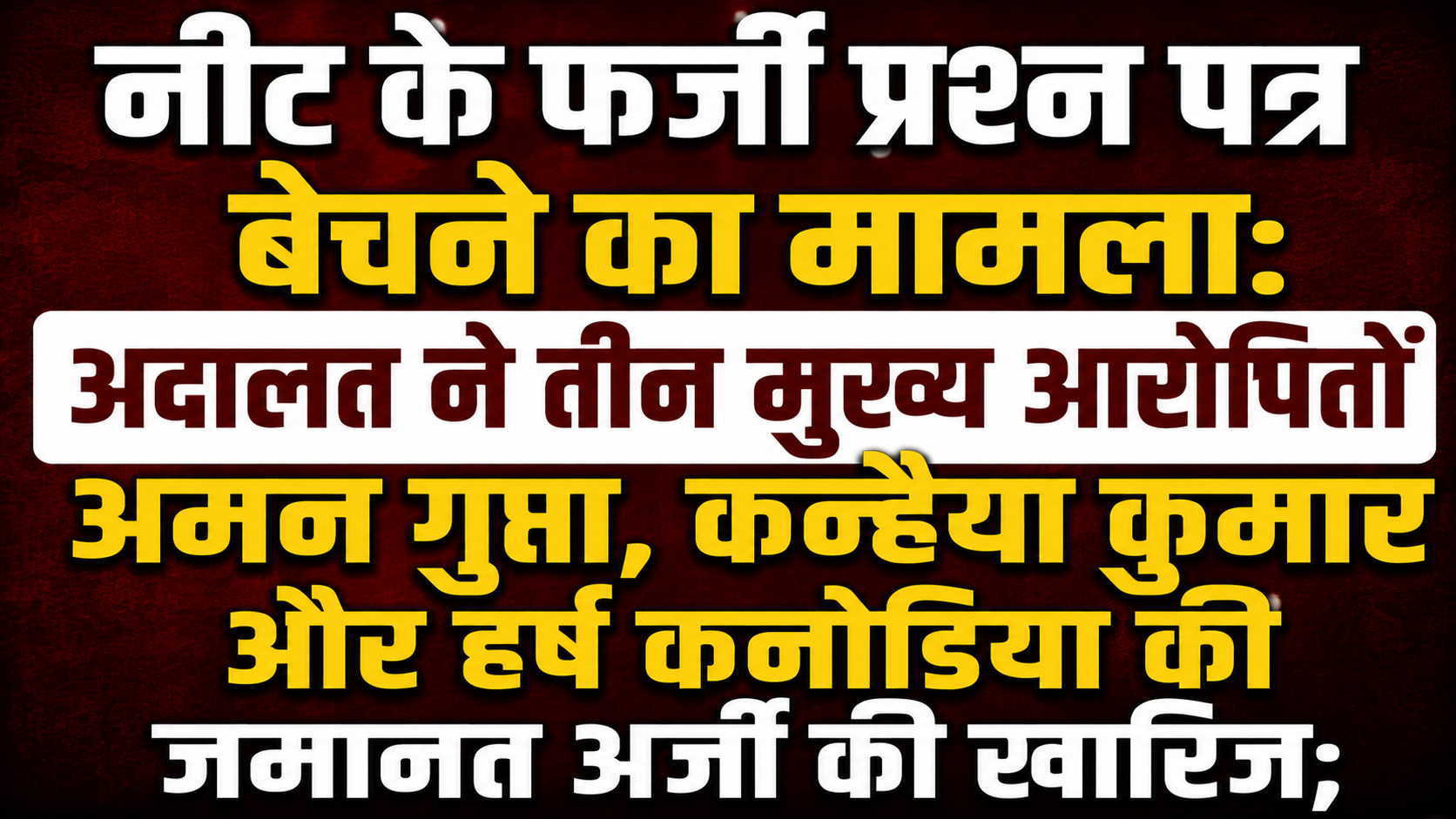
NEET Fake Question Paper Selling Case: Court Rejects Bail Petitions of Three Main Accused—Aman Gupta, Kanhaiya Kumar, and Harsh Kanodia;
A major and sensational case has surfaced regarding NEET (National Eligibility cum Entrance Test), ranked among the country's most prestigious and highly anticipated entrance examinations. In a massive fraud that tore apart the sanctity of the exam and swindled innocent students and their parents, the accused have suffered a major blow from the Muzaffarpur or related court. The court has outright rejected the bail petitions of three key accused arrested on charges of selling fake question papers for NEET and engaging in this illegal trade: Aman Gupta, Kanhaiya Kumar, and Harsh Kanodia.
The exposure of this interstate and organized fraud network came to light when the prime fraudster, Manish Kumar, was earlier arrested by the police. Manish Kumar faces grave charges of duping students out of lakhs of rupees under the pretext of providing them with fake question papers right before the exam. With the court now rejecting the bail pleas of the three accused, it has become clear that the legal noose is tightening against education mafias. Let us analyze in detail this massive fraud committed in the name of the NEET exam, the roles of the arrested accused, and this strict ruling by the court.
Background: How Was the NEET Fake Question Paper Racket Exposed?
Millions of students work day and night to succeed in an all-India level medical entrance examination like NEET. To capitalize on this, some cunning minds and organized gangs became active, running short-cut businesses to get rich overnight and exploit students' vulnerabilities.
The Web of Fraud: The main accused, Manish Kumar, is said to be the mastermind behind this entire racket, who posed as a well-connected individual and lured NEET aspirants with the promise of leaking or providing the real exam question paper prior to the test.
Extortion of Lakhs of Rupees: These fraudsters trapped numerous students and their parents, illegally extorting lakhs of rupees per student in exchange for question papers. When students cross-checked their matched questions after the examination, they discovered that the papers provided to them were entirely fake. Subsequently, the victims knocked on the police's doors.
Roles of the Accused: Aman Gupta, Kanhaiya Kumar, and Harsh Kanodia
Investigations by the police and investigative agencies revealed that Manish Kumar was not alone in this game; several other associates were also part of this nefarious network.
Aman Gupta: This accused played a key role in hunting for students, luring them with fake question papers, and handling monetary transactions.
Kanhaiya Kumar: He is accused of circulating fake documents and question papers via digital channels, social media, or other secret methods, as well as stashing away the defrauded money.
Harsh Kanodia: Harsh Kanodia was responsible for staying in direct contact with NEET examinees and their parents, assuring them, and executing agreements.
After the police arrested these three based on various pieces of evidence and technical surveillance, they have been lodged in jail under judicial custody ever since.
Court's Ruling: Why Were the Bail Petitions Rejected?
When lawyers for these three accused (Aman Gupta, Kanhaiya Kumar, and Harsh Kanodia) filed petitions for their regular bail in the lower court or the concerned sessions court, the prosecution strongly opposed it.
Category of Grave Crime: The court held that committing fraud in an examination tied to the futures of crores of youth like NEET, and selling fake question papers to spread educational anarchy in society, constitutes a severely grave and non-bailable offense.
Apprehension of Tampering with Evidence: The judge also argued that if these accused are released on bail at this stage, they could influence other witnesses in the case or abscond. Considering all these grounds, the court dismissed the bail petitions of all three in one stroke.
Earlier Arrest of Prime Accused Manish Kumar
To reach the roots of this entire gang, investigative agencies first had to reach the prime fraudster, Manish Kumar. Manish Kumar was the very individual operating this entire empire of fraud.
Secrets Unraveled After Manish's Arrest: It was only following Manish Kumar's arrest by the police that it was revealed how an entire syndicate worked to swindle students. Following Manish's arrest, the names of other pawns like Aman Gupta, Kanhaiya Kumar, and Harsh Kanodia surfaced, and the police brought them under their grip.
Social and Educational Impact
Such frauds represent a grave injustice to the country's education system and hardworking students:
Demoralization of Meritorious Students: When students who toil day and night all year round see such frauds emerge, their trust in the system begins to erode.
Fear of the Law: The rejection of bail by the court sends a clear message that those committing fraud in the name of education will not be easily spared.
The rejection of bail petitions for Aman Gupta, Kanhaiya Kumar, and Harsh Kanodia by the Muzaffarpur or related court in the NEET fake question paper selling case demonstrates the victory of justice and the sensitivity of the judiciary. Ever since the arrest of the master fraudster Manish Kumar, the legal noose has been tightening around every single pawn in this racket. This ruling serves as a stern warning to all fraudsters and education mafias who contemplate playing with the futures of students. Now it remains to be seen what harsh punishments they receive under further legal proceedings in this case.