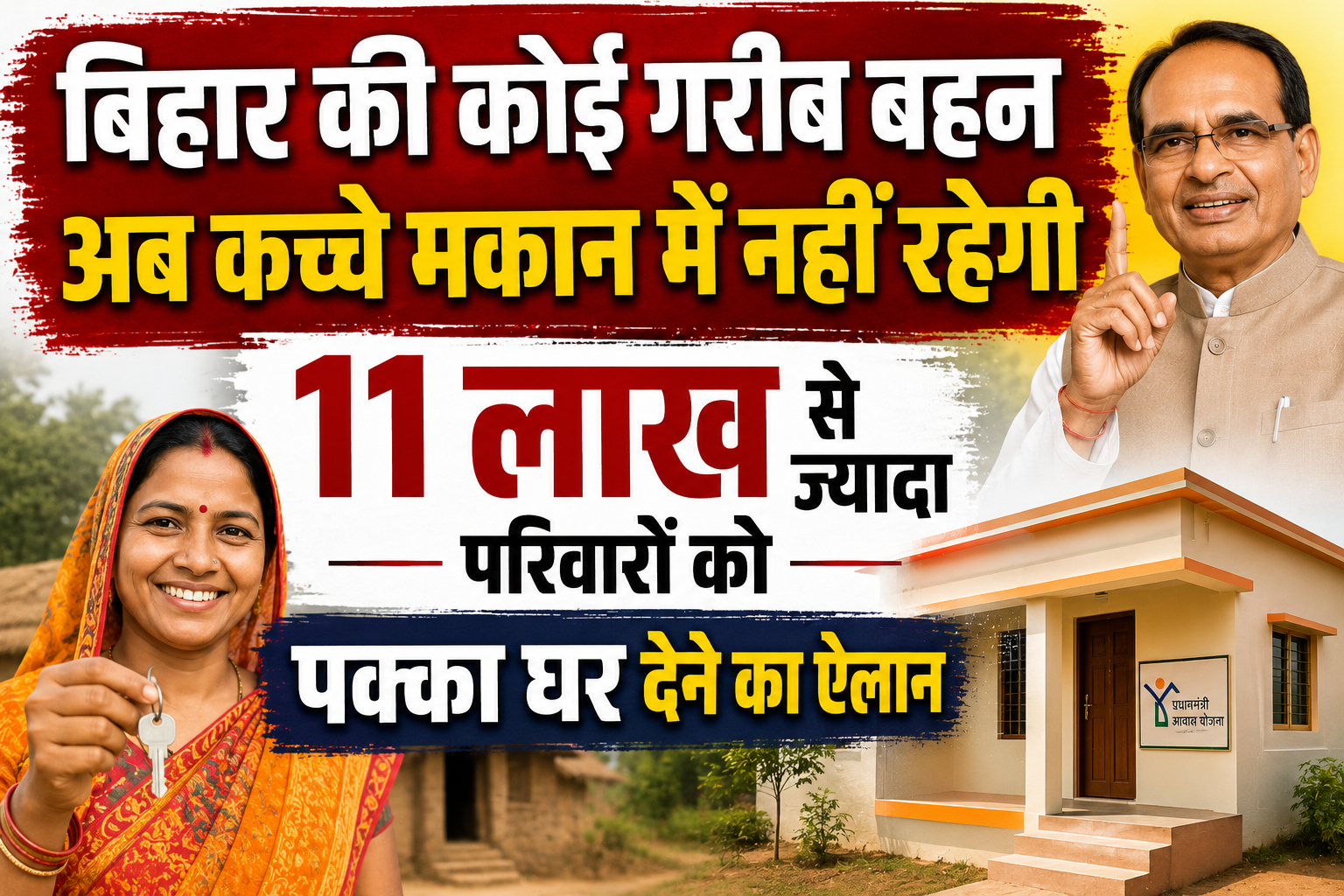
No Poor Woman in Bihar Will Live in a Temporary House, Over 11 Lakh Families to Get Permanent Homes
Patna: A major announcement has been made for poor and needy families in Bihar. Union Rural Development Minister Shivraj Singh Chouhan has said that no poor woman in Bihar will have to continue living in a temporary house. The government has announced plans to provide permanent houses to more than 11 lakh families across the state.
The announcement has raised hopes among families who have been living in temporary, damaged or unsafe houses for years. The initiative is being viewed as an important step toward improving housing security for poor families, particularly in rural Bihar.
More Than 11 Lakh Families to Get Permanent Houses
Union Rural Development Minister Shivraj Singh Chouhan has announced a major housing target for Bihar. According to the announcement, more than 11 lakh poor families will be provided permanent houses.
The initiative is expected to directly benefit families that are currently living in temporary structures. Such families often face serious difficulties during heavy rain, floods, strong winds and other adverse weather conditions.
Receiving a permanent house could provide them with not only a secure roof but also greater stability in their daily lives.
Major Relief for Poor Families
For low-income families, constructing a permanent house is often extremely difficult. The cost of construction materials, labour and other expenses can make it impossible for them to build a house using their own resources.
Many families spend years repairing temporary homes with whatever limited resources they have. During the monsoon, problems such as leaking roofs, damaged walls and waterlogging become particularly severe.
Government assistance for permanent housing could therefore bring significant relief to such families.
Special Importance for Women
The reference to poor women in Shivraj Singh Chouhan's announcement has also highlighted the importance of housing security for women.
A safe and permanent home can provide women and children with a more secure living environment. It can also reduce the financial burden of repeatedly repairing temporary houses.
Money that would otherwise be spent on repairs could potentially be used for children's education, healthcare and other essential household needs.
Relief From Temporary Houses
Many rural areas of Bihar still have families living in houses made of mud, thatch, tiles or other temporary materials.
The condition of these houses often deteriorates during the monsoon. Continuous rainfall can weaken walls and roofs and increase the risk of structural damage.
For families living in flood-prone areas, the problem can become even more serious. A permanent house can provide greater protection against such environmental challenges.
Rural Bihar Could See a Major Transformation
The construction of a large number of permanent houses could significantly change the appearance and living conditions of rural Bihar.
As temporary houses are replaced with permanent structures, demand for basic facilities such as electricity, roads, drinking water, drainage and sanitation may also increase.
Expansion of these facilities alongside housing could contribute to an overall improvement in rural living standards.
Construction Could Generate Local Employment
Large-scale housing construction could also stimulate local economic activity.
Construction projects require masons, labourers, carpenters, electricians, plumbers and other workers. There could also be increased demand for bricks, cement, sand, stone, steel and other construction materials.
This could support local businesses and create employment opportunities in rural areas.
Selection of Beneficiaries Will Be Important
Providing permanent houses to more than 11 lakh families is a major target. Therefore, identifying the right beneficiaries will be extremely important.
The government and local administration will need to ensure that the scheme reaches families who genuinely qualify and who do not have adequate permanent housing.
Maintaining transparency in beneficiary selection will be important for strengthening public confidence in the scheme.
Construction Quality Must Also Be Ensured
Increasing the number of houses alone will not be enough. The quality of construction will also need to receive adequate attention.
The houses should be strong, safe and suitable for long-term occupation.
Regular inspections, monitoring of construction work and compliance with prescribed standards will be important responsibilities for the administration.
Timely Financial Assistance Is Essential
Providing government assistance to beneficiaries on time will also be crucial. Delays in financial support can slow down or interrupt construction.
Authorities will need to ensure that beneficiaries understand the scheme's procedures, required documents and construction-related guidelines.
Better coordination between beneficiaries, panchayats and government officials could help ensure that the housing target is achieved within the stipulated period.
A Permanent Home Means More Than a Roof
For a poor family, a permanent house represents much more than four walls and a roof. It is closely linked to security, dignity and social stability.
Having a permanent home can give families greater confidence about their future. Children can have a more stable environment for education, while families can avoid repeatedly spending money on repairing temporary structures.
This is why rural housing programmes are considered important instruments for improving the lives of economically weaker families.
Major Responsibility for the Government
Following the announcement of permanent houses for more than 11 lakh families, implementing the programme effectively will be a major responsibility for the government and administration.
The entire process—from identifying beneficiaries and approving applications to providing financial assistance, monitoring construction and completing the houses—will need to be handled efficiently.
Authorities must also ensure that no eligible family is left out and that ineligible beneficiaries do not receive benefits improperly.
Growing Hope Among Rural Families
The announcement has increased expectations among rural families who have been waiting for permanent housing for years.
Many families with limited incomes cannot afford to construct houses on their own. Government support can therefore become a major source of assistance for them.
If the benefits reach eligible families on time, Bihar could see a significant improvement in rural housing conditions in the coming years.
The central government has made a major announcement for poor families in Bihar. Union Rural Development Minister Shivraj Singh Chouhan has said that no poor woman in Bihar will have to live in a temporary house, with more than 11 lakh families set to receive permanent homes.
The initiative is expected to provide significant relief to families who have been living in temporary and unsafe houses for years. Permanent housing can provide greater protection from extreme weather, improved living conditions and greater social stability.
However, transparency in beneficiary selection, timely financial assistance, construction quality and regular monitoring will be essential for the success of the programme.