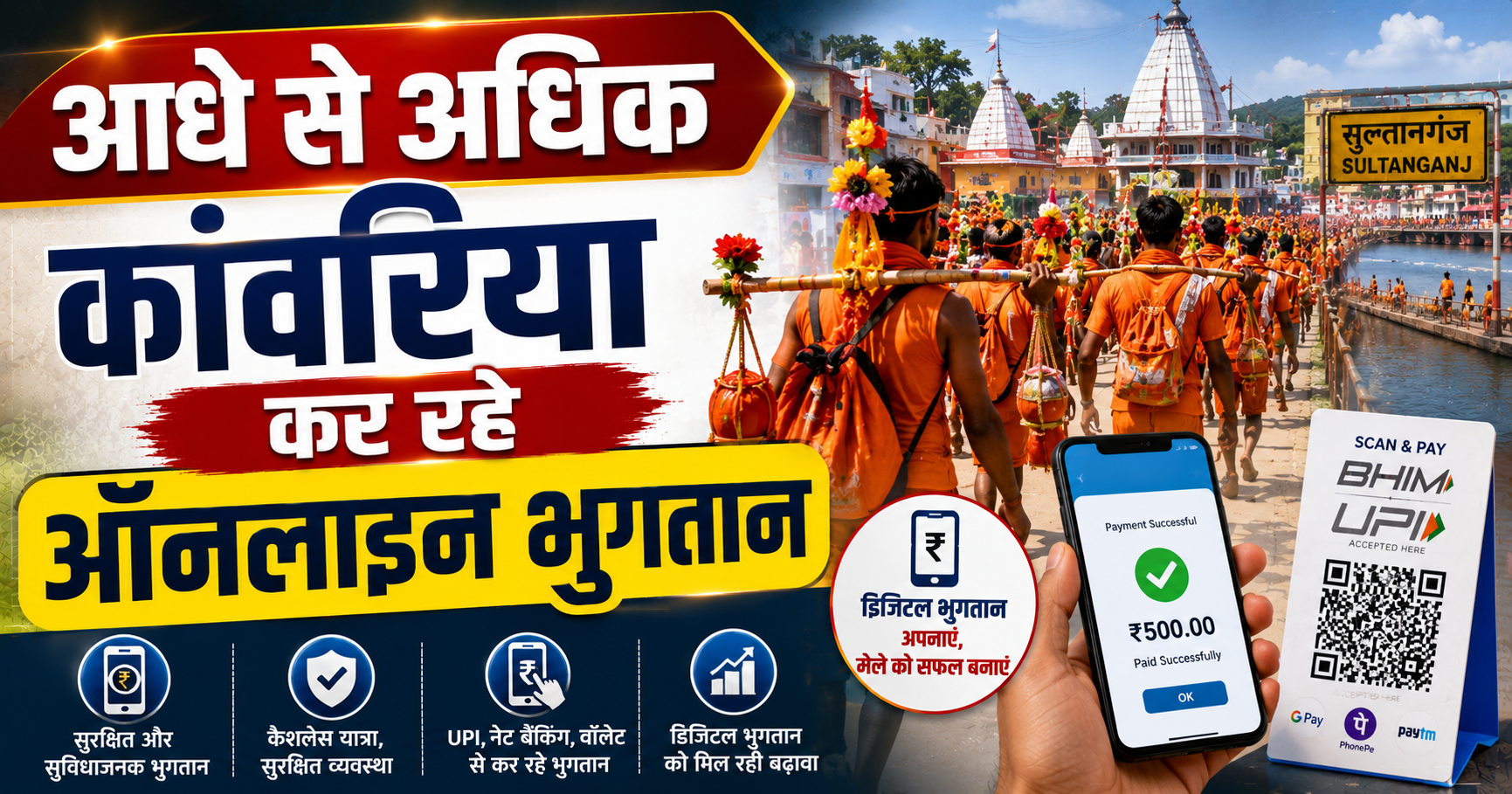
Over Half of Kanwariyas Making Online Payments; Temporary Shopkeepers and Small Vendors Along Remote Kanwar Routes Embracing UPI Technology
Bhagalpur/Deoghar (Special Correspondent): In the world-famous Shravani Mela held between Deoghar and Sultanganj, a unique confluence of faith and modern technology is unfolding this time, astonishing everyone. In this Kanwar pilgrimage, traditionally known for cash transactions for centuries, the digital revolution has firmly planted its roots this year. According to a recent report, over half of the Kanwariyas (more than 50% of pilgrims) visiting this sacred fair are now using cashless or online methods for their purchases, food, and ritual items. Most interestingly, not just large hotels or malls, but small vendors, tea stall owners, fruit sellers, and ritual item vendors setting up temporary shops amidst pebbles and huts along the Kanwar route are freely using UPI scanners like 'PhonePe', 'Google Pay', and 'Paytm'. This shift has made life much easier for both Kanwariyas and shopkeepers.
Cashless Splendor Along the Kanwar Route: What Is the Ground Reality?
Traditionally, it was believed that cash reigned supreme in religious fairs and long foot marches due to network issues and the scarcity of loose change (chillar). However, the picture of this year's Shravani Mela is entirely different:
Hassle of Keeping Cash in Pockets Eliminated: Kanwariyas traversing the 105-kilometer long Sultanganj-Deoghar route (covering Asarganj, Katoriya, Banka, Dumka, and Deoghar routes) are now avoiding carrying heavy cash. With smartphones in their pockets and gamchhas tied around their necks, Shiva devotees are executing "Scan & Pay" in a snap.
Freedom from the Problem of Loose Change: Earlier, frequent arguments or bargaining over loose change used to occur between shopkeepers and Kanwariyas. Now, digital payments down to the very last rupee have completely eradicated this old headache.
In the Words of Temporary Shopkeepers: "Digital Payments Have Made Business Easier"
The Shravani Mela lasts for only a month, for which local villagers and small business owners set up temporary shops (hut-style hotels, tea and breakfast stalls, juice corners, and toy shops). This time, immense enthusiasm regarding digital transactions is being observed among these shopkeepers:
Experience of Shopkeeper Mohan Yadav: Mohan Yadav, who runs a tea stall along the Kanwar route beyond Sultanganj, shares: "Earlier, Kanwariyas carried large currency notes, and we didn't have loose change, which often halted sales. This time, we got a QR code generated from the bank. More than half the Kanwariyas pay directly through their mobile phones after having tea. This has made bookkeeping much easier as well."
Security Concerns Put to Rest: Amidst the massive crowds swelling at the fair, the fear of pickpockets and thieves always persisted. Shopkeepers state that with digital payments, there is no longer any need to keep excess cash in the cash box, significantly reducing the risk of theft or snatching.
Blending Technology and Faith: Support from Networking and Banking
Behind this boom in digital payments at this year's Shravani Mela lie certain key factors and administrative arrangements:
Strengthening of Mobile Networks: Over the past few years, telecom companies (Jio, Airtel, etc.) have significantly improved network connectivity and tower capacities along the Kanwar route, enabling UPI transactions to function seamlessly even in dense forests and hilly terrains (such as Katoriya and Dumka regions).
Digital Literacy in Rural Areas: The impact of the government's 'Digital India' campaign can now be clearly witnessed down to rural and remote areas. From cart vendors to elderly shopkeepers, everyone has learned to operate smartphones and check payment notifications.
Impact of Young Kanwariyas and Technology
A large number of young and tech-savvy Kanwariyas traveling with friends or family are participating in this year's fair:
Trend of Digital Wallets and QR Codes: Young Kanwariyas express that they do not feel the need to carry purses or wallets at all. Just a smartphone and UPI apps are sufficient for them during the journey.
Transparency and Security: The likelihood of fraud or counterfeit currency circulation has also dropped close to zero with digital payments, making both traders and buyers feel secure.
The adoption of online payments by over half of the Kanwariyas and its embrace by temporary shopkeepers in the Shravani Mela prove that India's digital infrastructure has now deeply entrenched itself even within the country's most arduous and traditional religious gatherings. This integration of technology in a grand festival of faith is not only streamlining management but also demonstrating how citizens of modern India are moving forward in harmony with tradition and progress.