PMCH Reserves First OPD Counter for Elderly and Divyang Patients; Doctors Will Also Give Them Priority
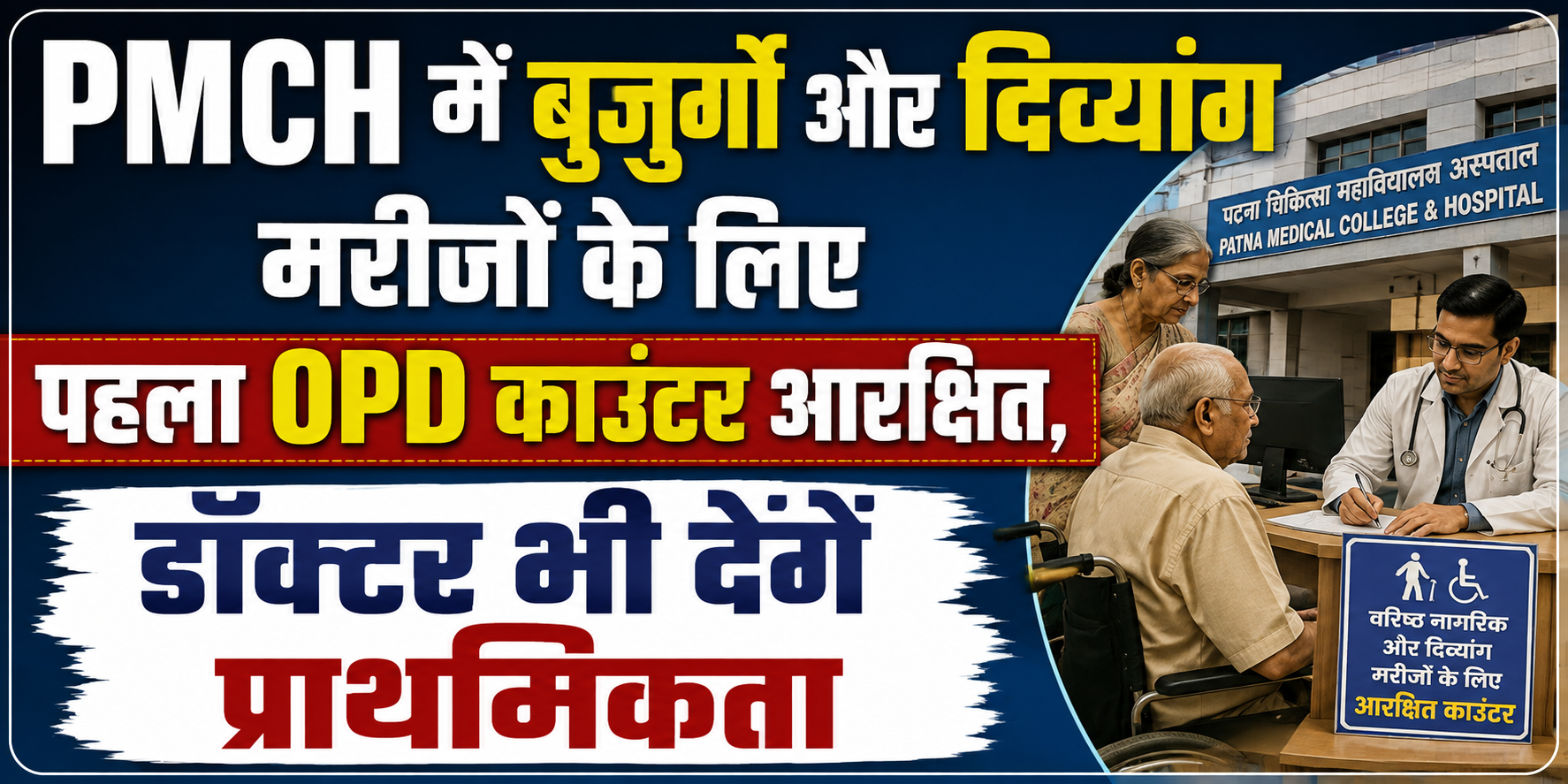
Patna: Elderly and differently-abled patients visiting Patna Medical College and Hospital (PMCH) for treatment are expected to receive greater convenience while registering for OPD services and consulting doctors. The hospital administration has reserved the first OPD counter exclusively for elderly and differently-abled patients. General patients will not be issued registration slips at this counter.
The objective of the new arrangement is to protect elderly and differently-abled patients from the difficulties of standing in long queues and to ensure that they receive medical attention on a priority basis.
Under the new system, elderly and differently-abled patients will be able to visit the designated counter directly and obtain their OPD registration slips. They will also receive priority when consulting doctors. The hospital administration believes that making elderly patients stand in queues for long periods can cause considerable discomfort. Similarly, differently-abled patients may find it difficult to wait in crowded queues.
First Counter Reserved Exclusively for Elderly and Divyang Patients
A large number of patients visit the PMCH OPD every day. Patients coming for consultations in different departments have to complete the registration and slip-generation process before meeting doctors. During periods of heavy patient turnout, people may have to wait in queues for a long time.
Under the new arrangement, the first OPD counter has been designated specifically for elderly and differently-abled patients. Registration slips for general patients will not be issued at this counter. This will eliminate the need for eligible patients to stand in long queues.
The hospital administration is expected to keep the registration process at the reserved counter simple and efficient. This could also reduce the amount of time patients and their attendants have to spend inside the hospital.
Doctors Will Also Prioritize Elderly Patients
The facility will not be limited to registration. Doctors will also give priority to elderly patients during OPD consultations. This means that after registration, senior patients reaching the relevant OPD will be given preference when their turn to see the doctor comes.
Normally, patients have to wait for their turn during OPD consultations. When there is a heavy rush, elderly patients may have to remain seated or standing for long periods. Giving them priority can help reduce this inconvenience.
Older patients may particularly face difficulties in standing for long periods, remaining in crowded areas or repeatedly moving from one location to another inside a hospital. Making the process easier for them is an important aspect of patient-friendly healthcare services.
Divyang Patients Will Also Benefit
The reserved counter is also expected to be particularly useful for differently-abled patients. Many such patients may have mobility-related difficulties, while some may require wheelchairs or other assistive devices. Standing in a long queue alongside other patients can therefore be challenging.
The reserved counter will make the registration process easier for them. Priority during doctor consultations could further reduce the amount of time they have to spend at the hospital.
Clear signage and information at the counter will also be important so that eligible patients and their attendants know exactly where to go and how to complete the registration process.
Large Number of Patients Visit PMCH Every Day
PMCH is one of Bihar’s major government hospitals. Patients from Patna as well as different districts across the state visit the hospital for treatment. A large number of patients also come to the OPD and other departments for treatment of serious and complex medical conditions.
Because of the high patient volume, crowded registration counters and queues outside doctors’ rooms are common during OPD hours. In such circumstances, creating a separate facility for elderly and differently-abled patients could be an important step toward better crowd management.
If implemented effectively, the arrangement could not only benefit elderly and differently-abled patients but may also help make queues for general patients more organized.
Relief for Family Members and Attendants
Elderly and differently-abled patients are often accompanied by family members or caregivers. When registration and doctor consultations take a long time, attendants also have to remain at the hospital for several hours.
A reserved counter could speed up the registration process. Priority during medical consultations could further reduce the waiting time for both patients and their attendants.
However, the system will provide its intended benefits only if adequate staff are available at the reserved counter and the identification and registration process is managed efficiently.
Proper Monitoring Will Be Necessary
Monitoring will be important for the successful implementation of any reserved facility. The hospital will have to ensure that the special counter is used only by patients who qualify for the facility. If general patients approach the counter, they will need to be properly directed to the appropriate registration counter.
At the same time, elderly and differently-abled patients should be given clear information about eligibility, including any applicable age criteria or categories. Clearly defined rules can reduce confusion among patients and hospital staff.
Proper coordination among different departments will also be necessary to ensure that priority arrangements at the doctors’ level work effectively. Merely providing a separate registration counter will not be enough; the entire process, from registration to medical consultation, needs to remain patient-friendly.
A Step Toward More Sensitive Healthcare Services
A separate facility for elderly and differently-abled patients can be viewed not merely as an administrative convenience but also as a step toward making healthcare services more sensitive and accessible.
Elderly patients often deal with multiple health-related problems at the same time. Making them wait for extended periods during a lengthy hospital process can add to their difficulties.
Similarly, differently-abled patients may face additional challenges because of crowded hospital environments and physical accessibility issues. Making registration, waiting and medical consultation easier for them is therefore important.
Patients Hope for Better Facilities
The new arrangement is expected to bring relief to elderly and differently-abled patients. The benefit could be particularly significant for patients traveling to PMCH from rural and distant areas, for whom saving time is important.
Many patients have to reach the hospital early in the morning for treatment. Long queues and waiting times can result in several hours being spent at the hospital. If the reserved counter and priority consultation system are implemented properly, the overall process could become considerably more convenient.
Possibility of Further Expansion
If the reserved-counter system proves successful, the hospital administration may consider introducing additional facilities for other patients requiring special assistance. Given the large patient turnout at PMCH, facilities such as digital registration, clearer signage, help desks and improved wheelchair access could also be strengthened.
At a large hospital such as PMCH, even small administrative changes can have a significant impact on patients’ experiences. Reserving the first OPD counter for elderly and differently-abled patients is being viewed as an important step in this direction.
The key challenge will now be ensuring that the facility reaches the patients who genuinely need it. The decision to prevent registration of general patients at the reserved counter and to give elderly patients priority during doctor consultations is expected to make the OPD process more convenient and patient-friendly. The effectiveness of the initiative will become clearer in the coming days based on its implementation and feedback from patients.