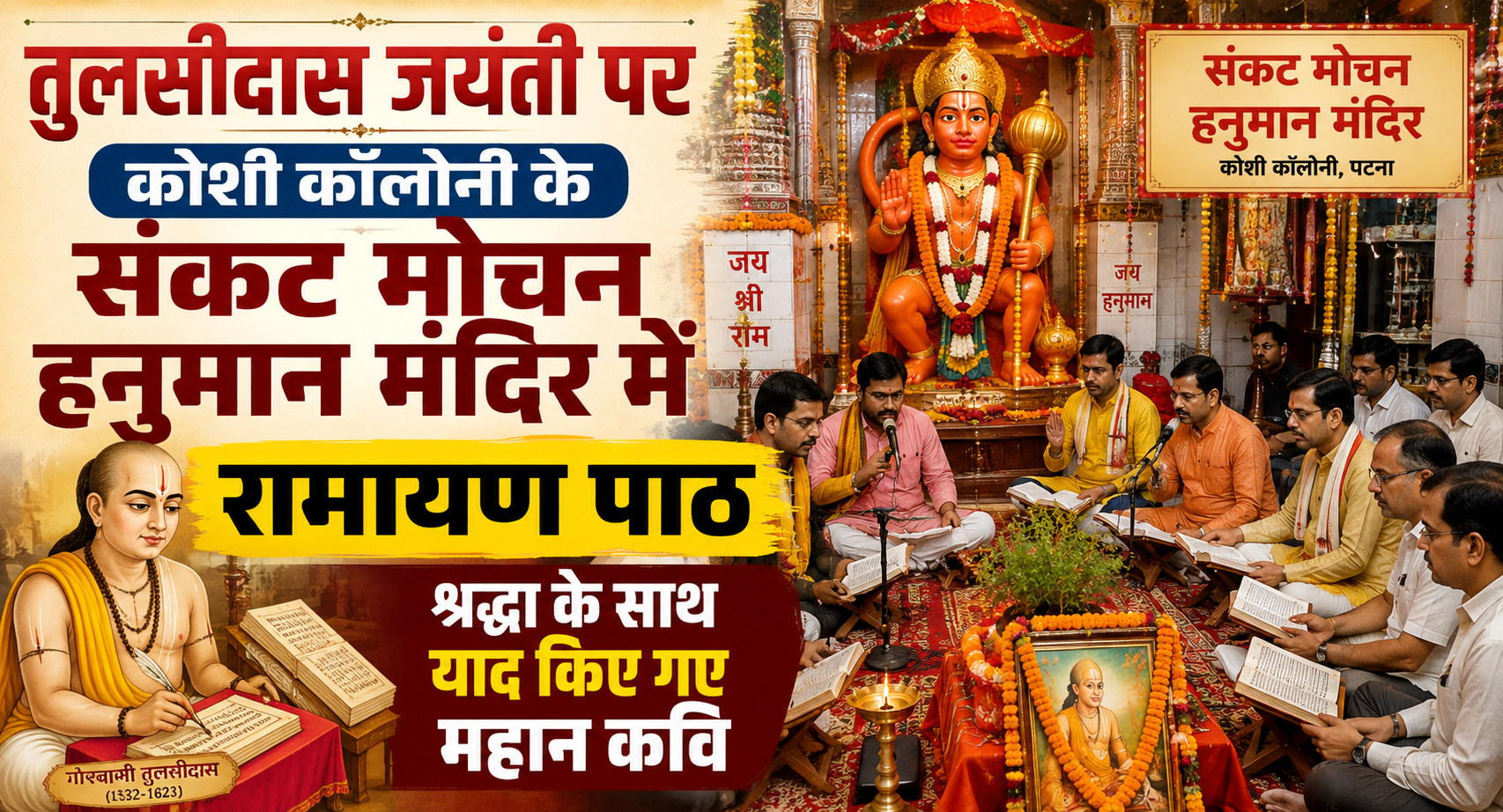
Ramayana Recitation Held at Sankat Mochan Hanuman Temple in Kosi Colony on Tulsidas Jayanti
Purnia: On the occasion of the birth anniversary of the great poet and writer Goswami Tulsidas, a special religious and literary program was organized at the Sankat Mochan Hanuman Temple located in Kosi Colony, Purnia. A Ramayana recitation was held at the temple, in which devotees and local residents participated with devotion. During the event, speakers highlighted Tulsidas's life, literary contribution and the ideals associated with Lord Shri Ram.
Goswami Tulsidas is regarded as one of the great figures of Indian devotional literature. Through his writings, he brought the character, ideals and values associated with Lord Shri Ram to ordinary people. His most famous work, Ramcharitmanas, continues to be read and respected across India and beyond. The Ramayana recitation organized on Tulsidas Jayanti was an effort to continue this literary and spiritual tradition.
Special Program Organized at Sankat Mochan Hanuman Temple
Special arrangements were made at the Sankat Mochan Hanuman Temple in Kosi Colony to mark Tulsidas Jayanti. The temple premises were prepared for the religious gathering, and a Ramayana recitation was organized following prayers.
During the recitation, various episodes associated with Lord Shri Ram, Mata Sita, Lakshman and Lord Hanuman were presented. Devotees listened to the verses and episodes of the Ramayana with devotion.
The atmosphere at the temple remained spiritual throughout the event. Devotees raised chants in praise of Lord Shri Ram and Lord Hanuman and remembered the literary and spiritual legacy of Goswami Tulsidas.
Tulsidas's Life and Literary Contribution Discussed
The program also focused on the life and literary contribution of Goswami Tulsidas. Speakers said that through his writings, Tulsidas conveyed messages related to religion, duty, morality, service, sacrifice and human values.
His language was accessible and easy for ordinary people to understand. This was one of the reasons why Ramcharitmanas became widely popular and remains an important part of India's religious and cultural traditions.
Speakers emphasized that Tulsidas's literature should not be viewed only as religious literature. It also contains values and messages related to different aspects of human life, including family, society, duty, compassion and humanity.
Ramcharitmanas Spread the Message of Lord Shri Ram
Ramcharitmanas, one of Tulsidas's most celebrated works, presents the life and ideals of Lord Shri Ram. Through the work, Tulsidas made the character of Shri Ram accessible to a wide section of society.
Lord Shri Ram is portrayed as a symbol of duty, morality and an ideal way of life. Themes such as a son's duty toward his parents, brotherhood, friendship, sacrifice and responsibility toward society appear throughout the work.
The Ramayana recitation on Tulsidas Jayanti served as a reminder of this literary and spiritual tradition. The event also sought to introduce younger generations to Tulsidas's writings and teachings.
Religious Event Also Carried a Literary Message
The program at Kosi Colony combined religious devotion with a literary and cultural message. Tulsidas was remembered not only as a devotional poet but also as an important figure in Indian literature.
The event highlighted the idea that religious and literary traditions can help connect society with cultural values and moral principles.
During the Ramayana recitation, devotees listened to various episodes and reflected on the ideals associated with Lord Shri Ram.
Need to Connect Youth With Literature
The importance of connecting younger generations with Indian literature and culture was also emphasized during the event. In today's digital age, children and young people may have fewer opportunities to engage with traditional literature.
Programs such as these can introduce young people to India's literary heritage. The moral and social messages found in Tulsidas's writings can also remain relevant to today's youth.
Organizing programs related to the Ramayana, Ramcharitmanas and Indian devotional literature in schools and through social organizations could help preserve and pass on the country's cultural heritage.
Message of Brotherhood and Harmony
Human values and social harmony occupy an important place in the works associated with Tulsidas. The Ramayana recitation also conveyed messages of mutual respect, brotherhood, love and social harmony.
Religious gatherings provide communities with opportunities to come together and participate collectively in spiritual activities. Such programs can also contribute to strengthening social bonds.
The participation of local devotees in the Kosi Colony temple program reflected this sense of community.
Special Significance of Hanuman Devotion
Since the program was held at the Sankat Mochan Hanuman Temple, devotion to Lord Hanuman was also an important part of the atmosphere. Lord Hanuman plays a significant role in various episodes of the Ramayana.
Hanuman is widely regarded as a symbol of devotion, service, courage and dedication. During the Ramayana recitation, devotees listened with reverence to episodes associated with Hanuman.
The religious rituals and recitation created a deeply devotional atmosphere throughout the temple premises.
Cultural Role of Religious Events
Purnia has a long tradition of religious and cultural gatherings. Events organized at temples often provide opportunities for local communities to come together.
The Tulsidas Jayanti program became an occasion not only for religious observance but also for remembering an important figure in Indian literature. It provided participants with an opportunity to learn more about the country's devotional literary tradition.
Such events can also encourage cultural activities at the local level.
Tulsidas Remains Relevant Today
Speakers said that the writings of Tulsidas remain relevant even today. Values such as duty, service, self-discipline, sacrifice and compassion found in his literature continue to have significance in modern society.
Social life is changing rapidly, making it increasingly important to understand moral and human values through literature and culture.
Tulsidas's writings encourage people to understand their responsibilities toward family and society. This is one reason why his works continue to be read, recited and discussed centuries after they were written.
Devotees Remembered the Religious and Cultural Message
Devotees who attended the Ramayana recitation observed Tulsidas Jayanti with devotion. The event provided participants with an opportunity to learn about Tulsidas's literary contribution and the ideals associated with Lord Shri Ram.
The collective recitation created a sense of spiritual connection among participants. Listening to the Ramayana together also strengthened the community's cultural and religious bond.
Need for More Such Programs
Organizing Ramayana recitations, literary discussions and cultural programs on occasions such as Tulsidas Jayanti can increase awareness of India's literary and cultural traditions.
It is particularly important to involve children and young people in such activities. Combining religious programs with literary, educational and social themes can make these events more meaningful and beneficial to the wider community.
Regular cultural and literary programs can help connect local communities with their heritage while promoting social harmony and cultural awareness.
The Ramayana recitation organized at the Sankat Mochan Hanuman Temple in Kosi Colony, Purnia, on the occasion of Goswami Tulsidas's birth anniversary brought together devotion, literature and culture. The event remembered Tulsidas's life and literary contribution while highlighting the ideals associated with Lord Shri Ram.
Through the Ramayana recitation, devotees remembered Tulsidas's literary legacy and the ideals of Lord Shri Ram. The program also highlighted the importance of passing India's literary and cultural traditions on to younger generations. Continued organization of such religious, literary and cultural events at the local level can help strengthen social values, harmony and awareness of India's rich cultural heritage.