Worms Allegedly Found in Soybean Curry Served for Mid-Day Meal in 75 Arwal Schools, Food Distribution Halted; Several Children Went Hungry
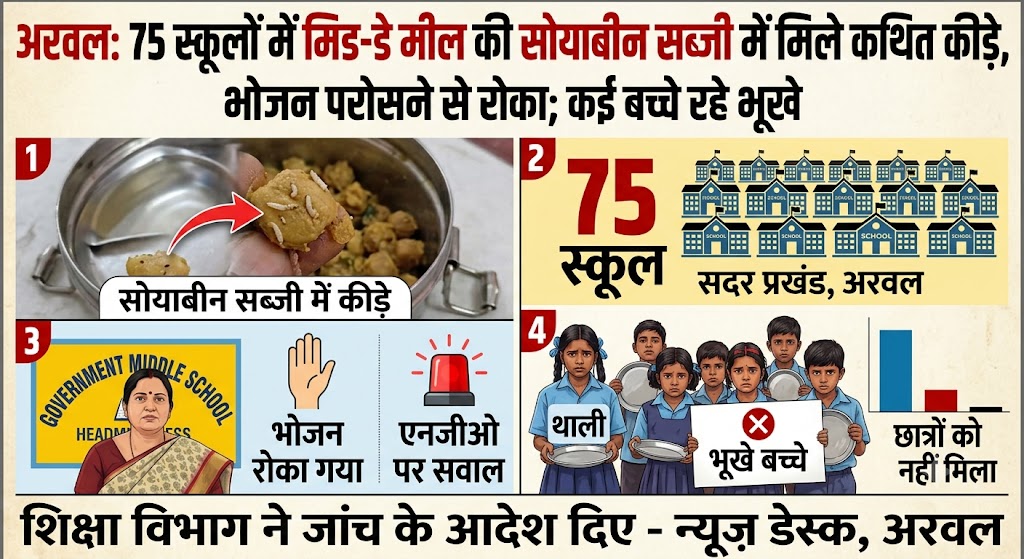
Arwal: A serious case of alleged negligence regarding the quality of the mid-day meal provided to schoolchildren has come to light in Arwal district, Bihar. Worms were reportedly found in soybean curry sent for children in around 75 schools under the Sadar block. The issue came to light during inspection before the food was served to students. After noticing the worms, several headmasters immediately stopped the distribution of the meal.
The incident has raised concerns among school authorities, education officials and those responsible for the mid-day meal system. Headmasters of several schools, including those in Umairabad, Ahiyapur and Sakri Ibrahimpur, reportedly submitted complaints to the district mid-day meal authority regarding the quality of the food.
The most concerning aspect was that several children could not receive their scheduled mid-day meal that day. Food had already been prepared and delivered for the students, but it was not served after its quality was found to be questionable. As a result, several children reportedly remained without food during school hours.
Problem Detected During Inspection Before Serving
Food served under the mid-day meal programme is generally inspected before being distributed among students. During this inspection, worms were reportedly noticed in the soybean curry.
After observing the problem, the headmasters decided not to serve the food to the children. Had the meal been distributed without inspection, it could potentially have affected the health of several students.
Instead of distributing the questionable food, school authorities informed the concerned officials. The matter was subsequently brought to the attention of the district mid-day meal authority.
Food Had Been Sent to Around 75 Schools
The soybean curry was reportedly supplied to around 75 schools in the Sadar block. Complaints regarding the presence of worms emerged during inspections at several schools.
If similar complaints are received from a large number of schools, the issue goes beyond an individual school's functioning and raises questions about the entire food preparation, storage, transportation and distribution system.
However, the exact reason why worms were allegedly found in the food and who was responsible will only become clear after an official investigation. Authorities may need to examine food samples and determine whether the problem occurred during preparation, storage or transportation.
Headmasters Stopped Food Distribution
Headmasters were faced with an important decision—whether to serve the food to children or stop distribution after identifying the alleged contamination.
After worms were reportedly spotted, the headmasters prioritized the safety of the students and stopped the distribution of the food.
The objective of the mid-day meal programme is to provide nutritious food to children and encourage regular school attendance. Poor-quality food can therefore undermine the fundamental purpose of the programme.
The headmasters reportedly considered it inappropriate to serve the questionable food and immediately informed the relevant authorities.
Several Children Were Deprived of Their Meal
The decision to stop food distribution directly affected the students. Children who were expecting their scheduled mid-day meal did not receive it that day.
For children from economically weaker families, school meals can be particularly important. For some students, the mid-day meal is one of their major meals of the day. Not receiving it can therefore cause considerable inconvenience.
Mid-day meal programmes are designed to support children's nutritional needs alongside their education. Ensuring both the quality and regular availability of food is therefore essential.
Complaints From Schools in Umairabad, Ahiyapur and Sakri Ibrahimpur
Headmasters from several schools, including those in Umairabad, Ahiyapur and Sakri Ibrahimpur, reportedly submitted complaints to the district mid-day meal authority.
The complaints informed officials about the alleged quality problem. Following the complaints, attention is now focused on what action the concerned department will take.
Officials may need to examine food samples, review the supply process and question the agency or personnel responsible for preparation and distribution.
If negligence is established through an investigation, appropriate action may be required. At the same time, the system will need to be strengthened to prevent similar incidents in the future.
Questions Raised Over Food Quality
The mid-day meal programme is directly linked to children's health and nutrition. Any negligence in its implementation is therefore a serious concern.
The alleged discovery of worms in the soybean curry has raised questions about the quality of the ingredients and their storage conditions.
Soybean and other food ingredients need to be stored properly. Exposure to moisture, heat or unhygienic conditions can increase the possibility of insect infestation.
For this reason, monitoring is required throughout the entire process—from the preparation unit to the school. Food must be prepared hygienically, packed safely, transported properly and delivered to schools under appropriate conditions.
Need to Investigate the Food Supply System
Following the incident, an investigation into the food supply chain becomes important. Authorities may need to determine where the ingredients came from, how they were stored and whether quality checks were conducted before the food reached the schools.
It will also be important to establish whether food samples had been collected earlier for quality testing. If a quality-control mechanism was already in place, authorities may need to determine why the alleged problem was not detected earlier.
If similar complaints are received from multiple schools, the department may need to conduct a comprehensive review of the entire supply chain rather than limiting the investigation to individual schools.
Concerns Over Children's Health
The alleged presence of worms in the food naturally raises concerns about children's health. However, the fact that the issue was reportedly detected before the food was served helped prevent students from consuming potentially unsafe food.
Had the food been distributed, it could potentially have resulted in food poisoning or other health problems.
The school authorities' decision to inspect the food before serving it therefore becomes particularly important. If any student consumed questionable food and subsequently develops health problems, the local health authorities would need to monitor the situation.
Need to Strengthen Mid-Day Meal Monitoring
The incident has once again highlighted the need for stronger monitoring of the mid-day meal system.
Regular inspections and food-sample testing are essential for ensuring the quality of meals served to children. Although headmasters and teachers inspect meals at the school level, officials from the concerned department should also conduct periodic inspections.
Every stage—from storage and hygiene to cooking and transportation—requires proper monitoring. Negligence at any one stage can directly affect children's health.
Parents May Also Be Concerned
The incident is also likely to cause concern among parents. Every parent expects their children to receive safe and nutritious food at school.
Questions over the quality of school meals can affect parents' confidence in the system. It is therefore important for the department to conduct a transparent investigation and clarify the actual circumstances.
Parents should also inform school authorities and health officials if their children develop any health-related symptoms after consuming school meals.
Demand for Action if Negligence Is Established
Following the incident, there is likely to be a demand for action against any individual, agency or official found responsible for negligence.
Authorities will also need to ensure that food ingredients supplied to schools meet the required quality standards. Any compromise in food quality can create risks for children's health.
Clear accountability will be important to ensure that such incidents do not happen again.
What Happens Next?
Attention is now focused on the district administration and the mid-day meal authority. Several questions will need to be answered: How did worms allegedly get into the food? How many schools were affected? Where did the food ingredients come from? And were proper quality checks conducted before the food was supplied?
The answers will become clear only after an official investigation.
If food samples are sent for laboratory testing, the reports could provide important evidence regarding the condition and quality of the meal.
The department will also need to consider how children who missed their scheduled meal can receive the nutritional benefits intended under the programme. Simply leaving students without food does not fulfill the purpose of a school meal scheme.
The alleged discovery of worms in soybean curry supplied to around 75 schools in Arwal's Sadar block has raised serious questions about the quality-control and monitoring mechanisms of the mid-day meal system.
The fact that headmasters reportedly inspected the food before serving helped prevent a potential health risk, but it also meant that several children were deprived of their scheduled mid-day meal that day.
After complaints from schools including Umairabad, Ahiyapur and Sakri Ibrahimpur, the authorities now need to conduct a detailed investigation. Every stage of the process—from procurement and storage to preparation, transportation and distribution—should be reviewed.
Most importantly, the mid-day meal programme is a vital part of children's nutrition and education system. Therefore, any negligence regarding food quality cannot be taken lightly. Based on the findings of the investigation, responsibility should be fixed wherever necessary, while stronger quality-control mechanisms should be introduced to ensure that children receive safe, hygienic and nutritious meals in the future.