

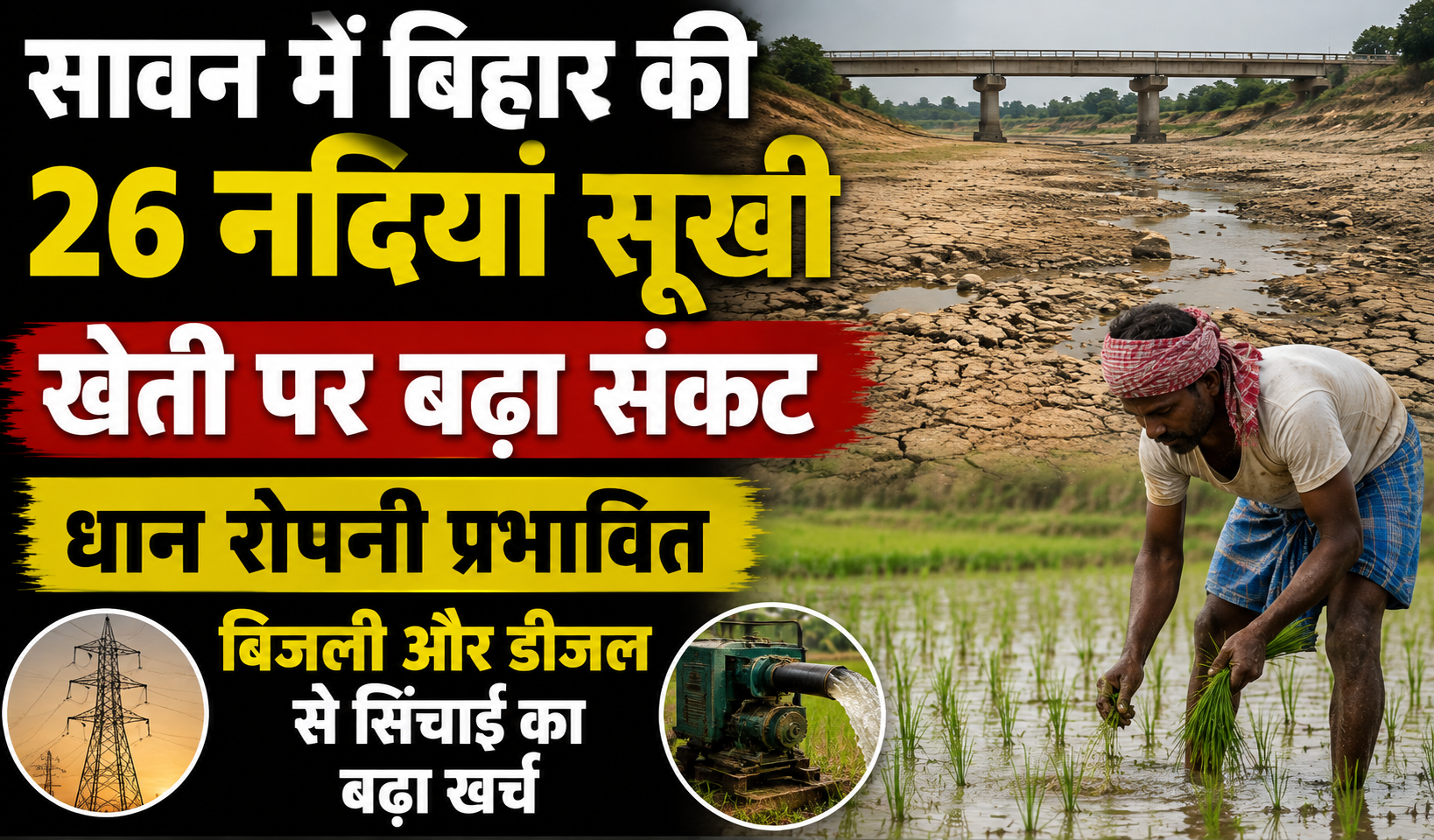
26 Rivers in Bihar Dry Up During Sawan, Agriculture Hit; Paddy Planting Affected, Irrigation Costs Rise
Patna: As Bihar observes the month of Sawan, a period generally associated with rainfall and agricultural activity, reports that 26 rivers in the state have dried up have raised concerns over the condition of farming. The shortage of water is affecting irrigation in several areas, while paddy transplantation is reportedly not progressing as expected. Farmers are increasingly depending on electricity-powered pumps and diesel pumps to irrigate their fields, adding to the cost of cultivation.
The situation is particularly concerning because Bihar's agricultural economy depends heavily on the monsoon and various water resources. Sawan is considered a crucial period for paddy cultivation, when farmers undertake transplantation on a large scale. Insufficient water availability and inadequate rainfall can therefore create significant difficulties for farmers.
The impact of drying rivers is not limited to agriculture. Livestock owners may also face difficulties in arranging adequate fodder and drinking water for cattle and other animals. In rural areas, rivers, ponds and traditional water bodies often serve as important sources of water for both farming and livestock.
Dry Rivers During Sawan Raise Concerns
Sawan is traditionally considered one of the most important months for rainfall and greenery in Bihar. Agricultural activities increase considerably during this period, particularly in paddy-growing regions.
However, the reported drying of 26 rivers indicates growing concerns over water availability in different parts of the state. Reduced water flow in rivers can also affect the availability of natural irrigation water for surrounding agricultural land.
Farmers who do not have access to adequate irrigation facilities are likely to face the greatest difficulties.
In many rural areas, farmers are waiting for sufficient rainfall to ensure adequate moisture in their fields. If rainfall remains below expectations, paddy transplantation can be delayed. Once paddy seedlings are ready, delays in transplantation can also increase cultivation expenses.
Paddy Transplantation Directly Affected
Paddy is one of Bihar's major Kharif crops. Adequate water and soil moisture are essential for paddy cultivation, particularly during the transplantation stage.
Under normal circumstances, monsoon rainfall provides farmers with much of the water required for transplantation. However, water shortages in several areas are reportedly forcing farmers to either delay transplantation or arrange additional irrigation.
Delayed transplantation can potentially affect crop growth and productivity. If seedlings are not transplanted at the appropriate time, the crop cycle can be disrupted, which may ultimately affect yields and farmers' incomes.
Dependence on Electricity and Diesel Irrigation Increases
With natural water sources running low, farmers are increasingly turning to alternative irrigation methods. Many are using electric motor pumps or diesel-powered pumps to bring water to their fields.
Diesel irrigation can be an expensive option. Farmers need additional quantities of diesel whenever fields require repeated watering, increasing the overall cost of cultivation.
Electric-powered irrigation can be comparatively cheaper, but it depends on reliable electricity supply and access to suitable pumping equipment. If electricity supply becomes irregular, farmers may once again have to rely on diesel pumps.
Rising Concern Over Farming Costs
Agriculture involves several expenses, including seeds, fertilisers, labour, ploughing, transplantation and irrigation. When rainfall is inadequate, additional irrigation expenses can significantly increase the total cost of cultivation.
For farmers already concerned about rising agricultural costs, the additional burden can be difficult to manage. If crop yields also fall below expectations, the gap between cultivation expenses and farm income could widen further.
Farmers often depend heavily on natural resources, making weather uncertainty one of the biggest challenges they face. When rainfall is delayed, they are forced to spend more on private irrigation arrangements.
Fodder and Water Shortage for Livestock
The shortage of water in rivers can also affect livestock farming. Cattle rearing is an important source of income for many rural households, and animals such as cows, buffaloes and goats require sufficient water and fodder.
Reduced rainfall and drying water bodies can affect the availability of green fodder. If sufficient vegetation is not available around villages and agricultural areas, livestock owners may have to purchase fodder from outside.
A shortage of drinking water can also force farmers to take their animals farther away to find water, increasing the time and effort required for livestock care.
Increasing Pressure on Rural Water Sources
Apart from rivers, ponds, traditional water bodies and other local irrigation structures are important sources of water in rural Bihar.
If these sources also have insufficient water, the problems faced by villagers could become more serious. Many farmers depend on local ponds and other water bodies for irrigation.
As surface water availability decreases, dependence on groundwater may increase. Excessive groundwater extraction can create additional long-term problems, making water conservation and rainwater harvesting increasingly important.
Small Farmers Face Greater Risk
The impact of water shortages is not the same for all farmers. Farmers with private borewells, pumps or other irrigation facilities may be able to protect their crops to some extent.
However, small and marginal farmers often have limited resources. Many depend on rented pumps or diesel engines for irrigation, meaning they have to pay additional charges each time their fields require watering.
If rainfall remains inadequate and rivers and ponds do not receive enough water, these farmers could face the greatest financial risk.
Farmers Waiting for Rain
Farmers are now closely watching the weather for the coming days. Good rainfall could increase soil moisture, accelerate paddy transplantation and improve water levels in rivers and other water bodies.
However, if rainfall remains weak, farmers may have to continue depending on alternative irrigation methods. This could increase cultivation costs and create greater uncertainty about crop production.
Challenge for the Administration
The situation also presents a challenge for the state administration. Authorities may need to ensure adequate irrigation facilities, reliable electricity supply and agricultural support for affected farmers.
In areas where paddy transplantation has been affected, local assessments could help determine the extent of the problem. Farmers can also be provided with information about alternative crops, irrigation methods and available government schemes.
Need for Long-Term Water Management
The uncertainty of the monsoon highlights the need for long-term water-management planning in Bihar.
Instead of depending entirely on rainfall, greater emphasis could be placed on rainwater harvesting, conservation of rivers and revival of traditional water bodies.
Protecting rivers, ponds and traditional structures can provide long-term benefits to agriculture and the rural economy. Modern irrigation projects and efficient irrigation technologies can also play an important role.
Farmers' Hopes Rest on Rainfall
For now, Bihar's farmers are largely dependent on rainfall for relief. If the state receives adequate rain during Sawan, paddy transplantation could accelerate and water levels in dry rivers and other water bodies could improve.
However, if rainfall remains weak, dependence on electricity and diesel irrigation will increase, further raising cultivation costs. The effects could also extend to livestock farming, fodder availability and the wider rural economy.
The reported drying of 26 rivers during Sawan highlights concerns about both agriculture and water management in Bihar. The rainfall pattern in the coming days will determine whether farmers receive relief or whether the water shortage becomes more severe.
For the time being, farmers need to make efficient use of available irrigation resources and closely monitor weather conditions, while the administration faces the important task of supporting farmers and rural communities dealing with the potential water shortage.