

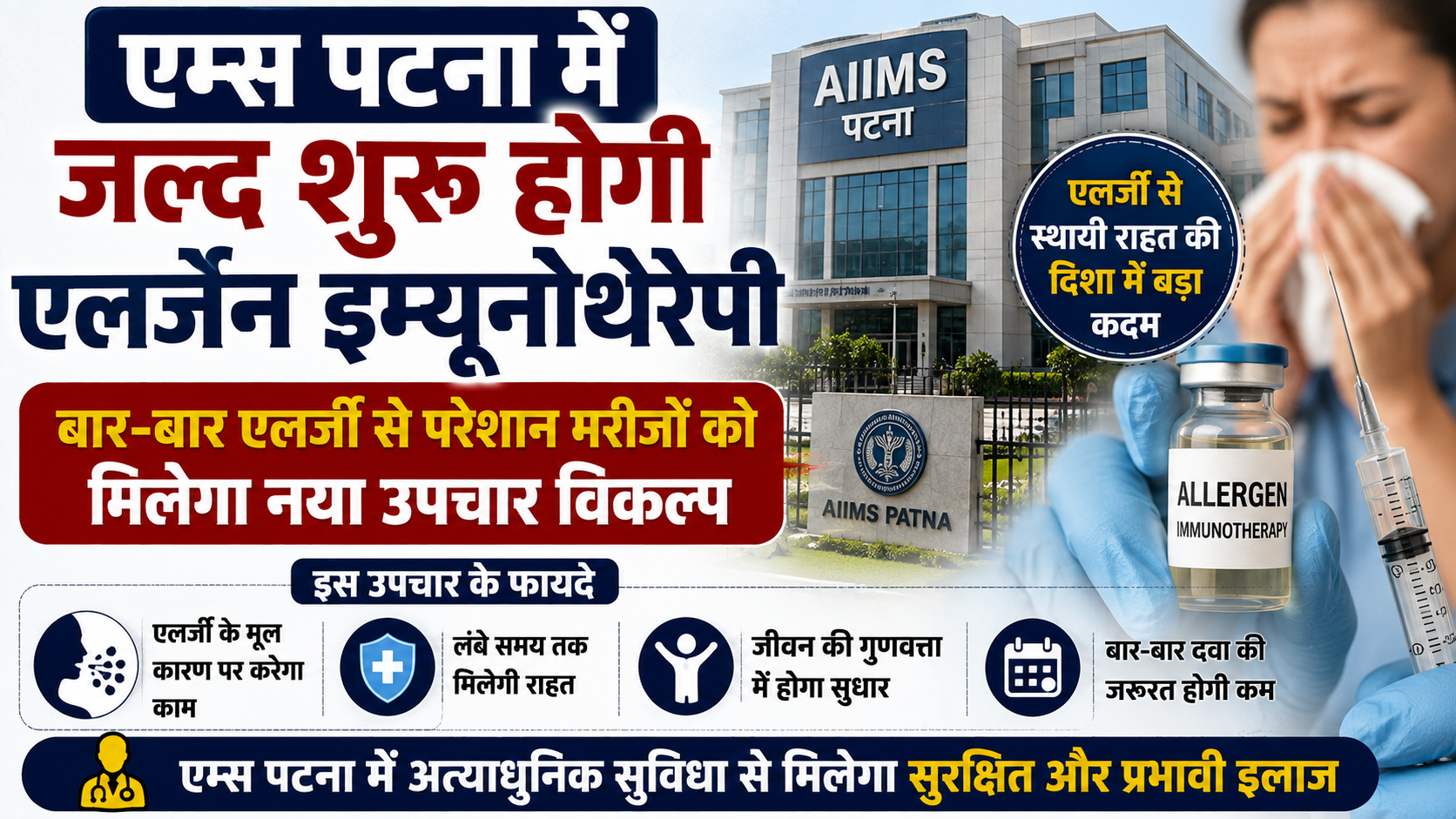
AIIMS Patna to Soon Start Allergen Immunotherapy, New Treatment Option for Patients With Recurrent Allergies
Patna: People suffering from recurrent allergy symptoms such as frequent sneezing, a runny nose, itchy eyes, skin rashes or breathing difficulties may soon have access to a new treatment option at AIIMS Patna. The institute is preparing to start Allergen Immunotherapy, a treatment that can be considered for patients who repeatedly develop allergic reactions because of exposure to a specific substance or allergen.
The information was shared during a CME programme organized by the Department of Pulmonary Medicine on “Immunotherapy in Allergic Diseases.” Experts discussed allergic diseases, their diagnosis, treatment and modern approaches for long-term management.
Dr. Dipendra Kumar Rai, Head of the Department of Pulmonary Medicine, said that allergy testing facilities are already available at AIIMS Patna and that allergen immunotherapy will soon be introduced. The treatment could be a suitable option for selected patients who continue to experience recurrent allergy symptoms despite taking medication repeatedly.
Allergies Should Not Be Ignored
Allergy occurs when the body's immune system reacts excessively to a substance that is generally harmless to most people. Different people can be allergic to different substances.
Some people may develop allergies because of dust, pollen or mold, while others may react to animal dander, certain foods or other environmental substances. Allergy symptoms can include repeated sneezing, a blocked or runny nose, itchy or watery eyes, skin rashes and breathing difficulties.
Many people mistake these symptoms for common cold or seasonal problems and continue to ignore them. Others repeatedly take medicines to control the symptoms. However, when the problem keeps returning, it may be associated with sensitivity to a particular allergen.
In such cases, proper diagnosis and consultation with a specialist become important.
What Is Allergen Immunotherapy?
Allergen immunotherapy is a treatment approach designed to gradually reduce the body's sensitivity to a specific allergen.
Under medical supervision, patients are given controlled amounts of the identified allergen according to a prescribed treatment plan. The aim is to gradually modify the body's immune response and reduce its sensitivity to that allergen.
However, immunotherapy is not required or suitable for every allergy patient. Doctors determine whether a patient is a suitable candidate based on the type and severity of allergy, test results, symptoms and overall health condition.
Patients should therefore never attempt to start immunotherapy on their own.
Who May Benefit?
According to the information shared during the CME, allergen immunotherapy may be considered particularly for patients who have recurrent symptoms caused by an identified allergen and whose condition remains troublesome despite conventional treatment.
If a person repeatedly develops allergic symptoms and has to rely on medicines over a prolonged period, a specialist may evaluate the patient and consider immunotherapy as a possible treatment option.
The approach can be used in the management of certain allergic respiratory conditions and allergic nasal problems, among other situations. However, its suitability varies from patient to patient.
Identifying the Allergen Is Important
Before starting immunotherapy, doctors need to determine what substance is triggering the patient's allergic reaction. This requires appropriate medical evaluation and allergy testing.
AIIMS Patna already has facilities for allergy testing. Doctors can use the patient's symptoms, medical history and test results to identify possible allergens.
Based on the findings, specialists can determine whether avoiding the allergen and using conventional medicines are sufficient or whether immunotherapy should be considered.
A Potential Option for Patients Taking Repeated Medication
For many allergy patients, symptoms improve temporarily after taking medicines but return once the medication is stopped. This can significantly affect daily life.
Frequent sneezing and a runny nose can interfere with work and studies. Itchy and watery eyes can cause considerable discomfort. In some patients, respiratory allergies can also become more troublesome.
In such situations, identifying the underlying allergen and developing a long-term management strategy becomes important rather than simply controlling symptoms repeatedly.
This is where allergen immunotherapy can potentially serve as a longer-term treatment option for selected patients.
Initiative by the Department of Pulmonary Medicine
The CME organized by the Department of Pulmonary Medicine at AIIMS Patna focused on modern approaches to allergic diseases and the role of immunotherapy.
During the programme, experts discussed the causes of allergies, methods of identifying patients, the importance of allergy testing and modern treatment options.
Dr. Dipendra Kumar Rai emphasized the importance of accurate diagnosis and effective management of allergic diseases. He said that allergy testing is already available at AIIMS Patna and that allergen immunotherapy is expected to begin soon.
Seasonal Changes Can Worsen Allergies
Changes in weather can aggravate allergy symptoms in some people. Dust, pollen, pollution and other particles in the environment may trigger reactions among individuals who are particularly sensitive.
Environmental conditions can change with the seasons, potentially affecting people with allergies. However, the cause of an allergic reaction varies from person to person.
Therefore, rather than assuming that weather is always responsible, patients with recurring symptoms should undergo appropriate medical evaluation to identify the actual trigger.
Avoiding the Allergen Is Also Important
Along with medical treatment, patients may be advised to reduce exposure to substances that trigger their allergies.
For example, people with dust allergies may be advised to minimize exposure to dust, take appropriate precautions while cleaning and follow their doctor's recommendations.
Similarly, if a particular substance is confirmed as an allergen, avoiding or reducing exposure to it can help control symptoms.
Immunotherapy is intended to modify the body's response to a specific allergen, but it must be administered under appropriate medical supervision.
Patients Should Not Self-Medicate
Although allergy symptoms can appear minor, recurring symptoms should not be ignored. Patients should consult a doctor rather than repeatedly taking medicines on their own.
If allergy symptoms are accompanied by significant breathing difficulties, chest tightness or signs of a severe allergic reaction, immediate medical attention may be required.
Immunotherapy should also only be started after evaluation by a qualified specialist. Not every patient with an allergy is suitable for this treatment.
A New Direction in Allergy Management
The introduction of allergen immunotherapy at AIIMS Patna is expected to expand treatment options for patients who have been suffering from recurrent allergies for a long time.
A combination of accurate allergy identification, avoidance of triggers, appropriate medication and immunotherapy when indicated could help selected patients achieve better long-term control of their symptoms.
The duration and outcome of treatment, however, will depend on the patient's condition, type of allergy and individual medical circumstances.
Greater Public Awareness Needed
Increasing public awareness about allergies is also important. Many people continue to consider repeated sneezing, a runny nose or itchy eyes to be minor problems and do not seek medical advice.
When such symptoms occur repeatedly, people should consider the possibility of an underlying allergy and consult a specialist. Timely testing can help identify potential allergens and allow doctors to develop an appropriate treatment plan.
With allergy testing already available and allergen immunotherapy expected to be introduced soon, AIIMS Patna could provide an additional treatment option for patients struggling with recurrent allergic conditions.
Overall, the planned introduction of allergen immunotherapy at AIIMS Patna could be an important development for people who continue to suffer from recurring allergies despite conventional treatment. Proper diagnosis, specialist consultation and an individualized treatment plan will remain essential to determine whether immunotherapy is appropriate for each patient.