

Bihar Could Earn ₹6,000–7,000 Crore Annually from Mineral Resources; Major Reserves Identified Across Several Districts
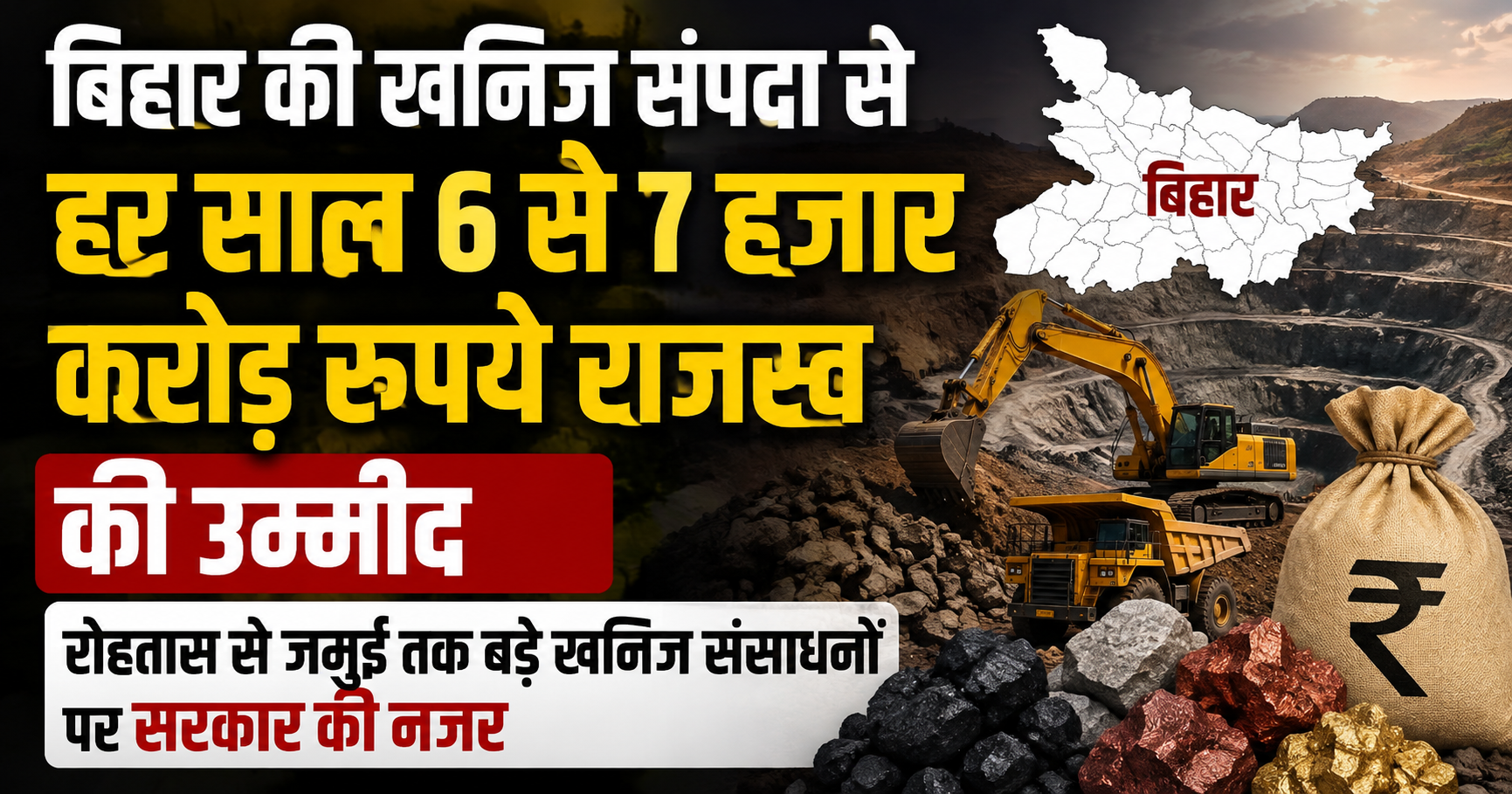
Patna: Highlighting Bihar’s significant potential in the mineral sector, the Chief Minister has said that the state could generate annual revenue of approximately ₹6,000–7,000 crore through the better utilization and systematic extraction of its mineral resources.
According to the Chief Minister, Rohtas has substantial limestone resources, while mineral resources referred to as magnet have been identified in Jehanabad and Jamui. In addition, major mineral resources are believed to be available in Aurangabad, Gaya, Banka and Bhagalpur.
The government believes that proper identification, scientific mining and transparent management of these resources could provide a new boost to Bihar’s economy. Apart from generating revenue for the state, mining activities could create employment and encourage transportation, trade and other economic activities at the local level.
However, the government will also need to ensure that mining is carried out according to environmental standards and scientific regulations.
Mineral Resources Could Become an Economic Strength
Bihar’s economy has traditionally relied heavily on agriculture and the service sector. Better utilization of mineral resources could add a new dimension to the state’s economic development.
If detailed scientific surveys are conducted to determine the actual quantity and quality of mineral resources available in different districts, the government could formulate more effective mining and industrial policies.
The development of mineral-based industries could also encourage private investment. However, one of the biggest challenges will be ensuring that mineral extraction benefits local communities while minimizing its environmental impact.
Importance of Limestone in Rohtas
The Chief Minister specifically highlighted the limestone resources available in Rohtas. Limestone is an important raw material used in several industrial activities and has considerable importance for construction-related industries.
Systematic utilization of Rohtas’ limestone resources could encourage industrial activity in the region. If mineral-based industries are established locally, businesses related to transportation, machinery, labor, construction materials and other services could also benefit.
The development of mineral resources can also lead to improvements in infrastructure around mining areas. Greater investment in roads, electricity, transportation and other facilities could provide additional momentum to the local economy.
Mineral Potential in Jehanabad and Jamui
The Chief Minister also mentioned mineral resources referred to as magnet in Jehanabad and Jamui. If detailed scientific assessments establish the availability and commercial viability of these resources, the regions could see increased mining activity in the future.
In districts such as Jamui, the development of mineral-based activities could create new employment opportunities for local youth. Apart from direct employment in mining, indirect jobs could emerge in transportation, logistics, equipment maintenance, construction and other supporting businesses.
Similarly, if commercially viable mineral resources are identified in Jehanabad and surrounding areas, they could become an additional source of income for the local economy.
Major Resources in Aurangabad, Gaya, Banka and Bhagalpur
According to the Chief Minister, significant mineral resources are also available in Aurangabad, Gaya, Banka and Bhagalpur. Identifying these resources and assessing their potential could become an important part of the government’s future strategy.
Gaya and Aurangabad are already important economic and tourism centers of Bihar. The development of mineral-based industries in these areas could provide new opportunities for local businesses.
Similarly, exploring mineral-based industrial opportunities in Banka and Bhagalpur could contribute to regional development. Before starting any project, however, factors such as the quantity and quality of resources, mining costs, market demand and environmental impact would need to be studied carefully.
Estimated Annual Revenue of ₹6,000–7,000 Crore
According to the government’s assessment, better utilization of Bihar’s mineral resources could generate annual revenue of around ₹6,000–7,000 crore.
Such a significant source of revenue could support various development programs. Funds generated through minerals could potentially contribute to infrastructure, education, healthcare, irrigation, rural development and other public projects.
However, the actual revenue would depend on several factors, including the volume of mining, mineral prices, market conditions, royalty rates and other government charges. Therefore, the ₹6,000–7,000 crore figure should be viewed as an estimated potential rather than a guaranteed annual income.
Employment Opportunities for Local People
One of the biggest potential benefits of developing mineral resources could be employment generation. Mining projects can create both direct and indirect employment.
Transportation of minerals requires trucks and other vehicles. Employment can also be generated in machinery operations, maintenance, security, construction, mine management and various support services.
If mineral-based industries are established near the mining areas, employment opportunities could increase further. This could provide local youth with more opportunities to work within their own districts and may help reduce migration to other states.
Need to Control Illegal Mining
The possibility of generating significant revenue from minerals also brings the challenge of controlling illegal mining. Weak monitoring could result in revenue losses for the government and lead to uncontrolled exploitation of natural resources.
The government would therefore need to strengthen monitoring of mining areas, transportation checks, digital tracking of minerals and action against illegal mining activities. Transparent auction and licensing systems would also be important.
The state can benefit fully from its mineral wealth only if mining activities follow established rules and revenue leakage is effectively controlled.
Environmental Protection Is Also Essential
Environmental protection will remain a major concern alongside mining activities. Before any mining project begins, its potential environmental impact needs to be assessed.
The impact of mining on land, water sources, forests and local ecosystems will have to be considered carefully. Governments and companies will need to focus on measures such as land rehabilitation, plantation, water conservation and restoration of mining areas.
The concerns of local communities should also be taken into consideration while planning mining projects.
Maintaining a balance between economic development and environmental protection will be essential for the sustainable utilization of Bihar’s mineral resources.
New Direction for Investment
If Bihar’s mineral potential is scientifically assessed and effectively presented to investors, the state could attract investment in mineral-based industries.
This could create opportunities for industries related to cement, construction materials, mineral processing and other sectors. The arrival of industries could also benefit local markets, transportation networks and service businesses.
For this to happen, the government would need to simplify processes related to land, electricity, transportation, approvals and other industrial requirements.
Potential Role in Bihar’s Development
Revenue generated from mineral resources could become economically significant for Bihar. If the potential annual income of ₹6,000–7,000 crore is effectively utilized for development projects, it could help strengthen the state’s infrastructure.
Development of mineral resources in districts such as Rohtas, Jehanabad, Jamui, Aurangabad, Gaya, Banka and Bhagalpur could also contribute to reducing regional economic disparities.
If industries and employment opportunities increase at the local level, residents could benefit through higher incomes and improved economic opportunities.
The major challenge before the government will be to scientifically assess the actual potential of these resources, establish a transparent mining system and ensure that industrial development takes place alongside environmental protection.
If these aspects are handled effectively, Bihar’s mineral wealth could become an important economic asset for the state.
The Chief Minister’s reference to the possibility of generating ₹6,000–7,000 crore in annual revenue indicates that the government views the mineral sector as a potentially important source of revenue and industrial development. The key issue now will be how much of the identified resources can be developed scientifically and sustainably, and how effectively the benefits reach both the state and the local communities.