

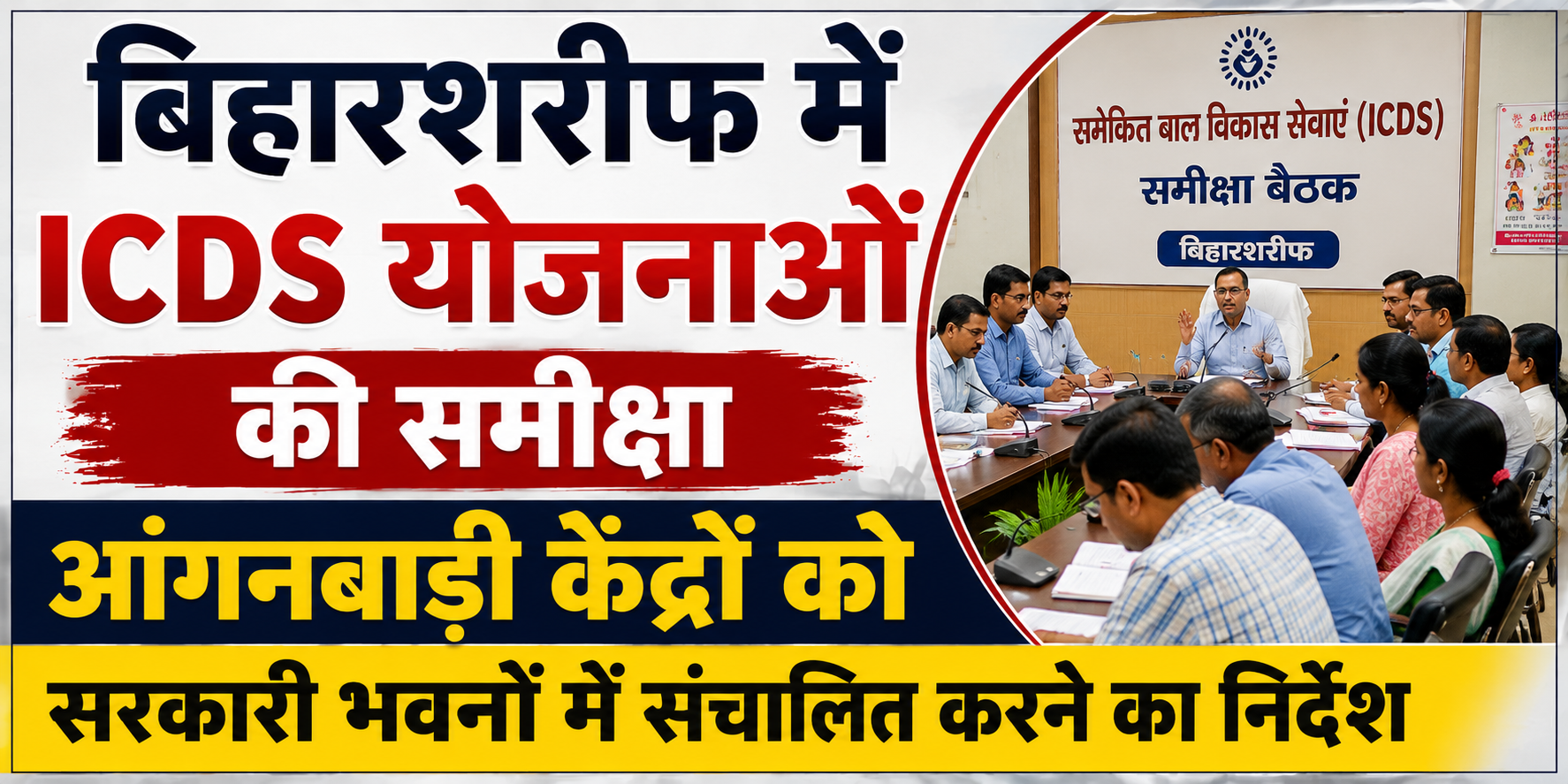
Biharsharif ICDS Schemes Reviewed, Instructions Issued to Operate Anganwadi Centres in Government Buildings
Biharsharif: A review meeting was held in the district to assess the progress of various schemes and programmes being implemented under the Integrated Child Development Services (ICDS). During the meeting, Deputy Development Commissioner (DDC) Rakesh Kumar issued necessary instructions to officials for effective implementation of the schemes and ensuring that eligible beneficiaries receive the intended benefits.
The DDC particularly stressed the need to improve the functioning of Anganwadi centres, ensure proper services for children and women, and strengthen regular monitoring of the schemes.
He said the real objective of government welfare schemes can only be achieved when their benefits reach the last person in society. Officials and field-level workers must therefore remain active at the grassroots level. He emphasised that Anganwadi centres play an important role in delivering nutrition and child-development services to children, pregnant women and lactating mothers.
Anganwadi Centres to Operate from Government Buildings
During the review meeting, DDC Rakesh Kumar directed officials to operate Anganwadi centres from government buildings wherever such facilities are available.
He said priority should be given to shifting Anganwadi centres to government buildings where suitable premises are available. This can provide children with a safer and more organised environment while also making regular monitoring and maintenance easier.
Anganwadi centres serve as important platforms for early childhood development and nutrition. They provide children with early learning and nutrition-related services while also supporting pregnant and lactating women through various government programmes.
Benefits Must Reach the Last Person
The DDC clearly instructed officials to ensure that all ICDS-related schemes reach eligible beneficiaries. He said merely completing paperwork is not enough; authorities must verify whether the intended beneficiaries are actually receiving services on time.
Officials were asked to regularly review the implementation of schemes at the grassroots level. If beneficiaries face difficulties in accessing any government programme, the reasons should be identified and corrective action taken promptly.
The administration considers connecting vulnerable sections of society, young children, pregnant women and lactating mothers with government welfare programmes to be a priority.
Special Focus on Child Nutrition
One of the major objectives of ICDS is to improve children's nutritional status. Issues related to child health and nutrition were therefore given importance during the meeting.
Officials were instructed to ensure that eligible children receive prescribed nutrition-related services regularly. Proper nutrition during the early years is essential for children's physical and mental development.
Malnutrition can adversely affect children's growth and development. Therefore, Anganwadi centres have an important role in identifying nutritional concerns and ensuring that children receive the required support.
The administration aims to ensure that children and women receive the services available through Anganwadi centres without unnecessary interruptions.
Regular Monitoring of Anganwadi Centres Necessary
The DDC also emphasised the need for regular monitoring of Anganwadi centres. He said officials should not rely solely on office reports to assess the condition of centres but should also conduct field inspections.
During inspections, officials can assess the physical condition of the centres, availability of facilities and implementation of various schemes. If basic infrastructure is found to be inadequate, the issue should be brought before the concerned department and steps should be taken to address it.
Regular monitoring can also help improve transparency and accountability in the implementation of welfare programmes.
Important Role of Anganwadi Centres
Anganwadi centres play an important role at the community level in both rural and urban areas. Along with providing early childhood care and development services, these centres help provide information related to nutrition and healthcare to women and families.
Anganwadi workers also help beneficiaries access information about various government schemes and connect eligible families with welfare programmes.
Therefore, ensuring the smooth functioning of these centres and providing adequate support and guidance to Anganwadi workers is essential.
Government Buildings Can Improve Operations
Operating Anganwadi centres from government buildings can help make better use of existing infrastructure. In many areas, government buildings are used for various administrative and social welfare activities.
The DDC directed officials to identify suitable government buildings and take necessary steps to operate Anganwadi centres from such premises wherever possible. This could provide centres with more permanent locations and help create a more organised environment for children.
However, effective coordination between the concerned departments and proper identification of available buildings will be necessary for implementation.
No Negligence in Scheme Implementation
Officials were instructed not to show any negligence in implementing government welfare programmes. The DDC said that providing resources for schemes is not enough; their effective implementation and regular monitoring are equally important.
He directed officials to report any problem arising at any level to senior authorities. Regular reviews can help identify shortcomings and resolve them before they affect beneficiaries.
This approach can help ensure that government services reach eligible people on time.
Better Services for Women and Children
The ICDS system focuses not only on children but also on pregnant women and lactating mothers. Providing nutrition and health-related information and assistance to women is an important component of the programme.
Officials were asked to ensure that eligible beneficiaries receive services according to the prescribed criteria. Special attention should be given to identifying vulnerable families and connecting them with relevant government welfare schemes.
Improved health and nutrition among women and children benefits not only individual families but society as a whole.
Need for Better Grassroots Coordination
Effective implementation of ICDS schemes requires coordination from the district level down to panchayats and individual Anganwadi centres. Better coordination among departments and local administration can help resolve implementation-related issues more quickly.
Officials were asked to monitor the progress of schemes at their respective levels and ensure timely exchange of relevant information.
Administration Focused on Effective Implementation
The main objective of the review meeting was to assess the actual status of ICDS schemes in the district and identify measures needed to improve their implementation.
DDC Rakesh Kumar made it clear that delivering government schemes to people is a key responsibility of the administration. He said welfare programmes should not remain limited to figures and reports; their impact should be visible in the lives of beneficiaries.
Regular monitoring, field inspections and timely corrective action will be important to achieve this objective.
The ICDS review meeting in Biharsharif placed special emphasis on improving the functioning of Anganwadi centres and ensuring that government welfare schemes reach the last eligible person. DDC Rakesh Kumar directed officials to operate Anganwadi centres from government buildings wherever suitable facilities are available, with the aim of providing children and women with better and safer environments.
The meeting also highlighted the importance of regular monitoring, child nutrition, services for pregnant and lactating women and effective grassroots implementation of government programmes.
If these instructions are implemented effectively, they could help improve the functioning of Anganwadi centres, strengthen early childhood development and nutrition services, and ensure better access to welfare schemes for women and children across the district.