


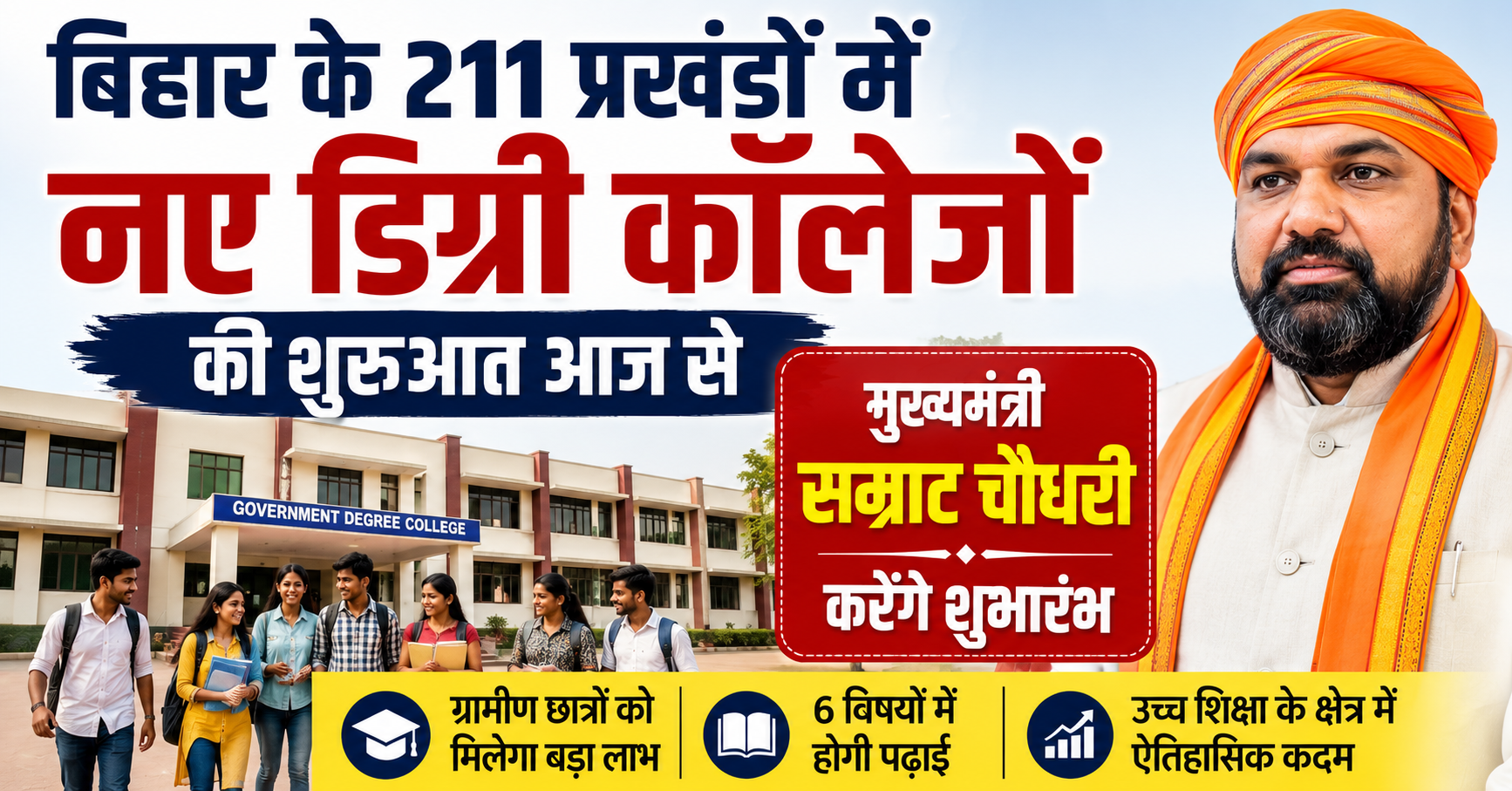
Classes Begin Today in New Degree Colleges Across 211 Blocks; Chief Minister Samrat Choudhary to Inaugurate the Initiative from Bhagalpur
Patna: Bihar is set to witness a landmark development in the field of higher education as regular academic sessions commence today in newly established degree colleges across 211 blocks of the state. The ambitious initiative, launched by the Bihar government, aims to expand access to higher education in rural and underserved regions. Chief Minister Samrat Choudhary will formally inaugurate the program from Bhagalpur district, marking the beginning of a new chapter in the state's education sector.
The new colleges will initially offer six undergraduate subjects, ensuring that students from remote areas have access to quality higher education closer to their homes. The government believes this initiative will significantly reduce the need for students to migrate to cities for college education.
A Historic Initiative for Higher Education
The Bihar government has been working toward establishing at least one degree college in every block to improve access to higher education. With academic activities beginning today in 211 newly established colleges, the state has taken a major step toward achieving that goal.
Officials from the Education Department believe the initiative will increase Bihar's Gross Enrollment Ratio (GER) in higher education while providing thousands of students with opportunities to pursue undergraduate studies within their own districts.
Statewide Launch from Bhagalpur
Chief Minister Samrat Choudhary will inaugurate the new degree colleges during a special ceremony in Bhagalpur. The event is expected to be attended by senior officials from the Education Department, vice-chancellors of various universities, public representatives, teachers, and a large number of students.
Similar inauguration ceremonies will also be organized at newly established colleges across the state, with many institutions expected to broadcast the launch event live.
Six Subjects to Be Offered Initially
During the first phase, the new colleges will begin teaching six undergraduate subjects selected according to local academic needs and university guidelines.
The government has indicated that additional disciplines, including science, commerce, computer studies, vocational education, and skill development courses, may be introduced in the future depending on student demand and available resources.
Major Relief for Rural Students
The initiative is expected to benefit students from rural and remote areas the most. Until now, many students had to travel between 40 and 80 kilometers to attend college, increasing both their financial burden and travel time.
With colleges now available within their own blocks, students will save time, reduce transportation costs, and have greater opportunities to continue their education.
Boost for Women's Higher Education
Education experts believe the scheme will have a particularly positive impact on female students. In many rural areas, girls often discontinue their education after completing higher secondary school because of long travel distances, transportation challenges, and safety concerns.
The availability of degree colleges closer to home is expected to encourage more young women to pursue higher education, contributing to women's empowerment and greater educational participation.
New Employment Opportunities
The establishment of new colleges is also expected to create employment opportunities at the local level. Faculty members, librarians, laboratory assistants, administrative staff, technical personnel, and support staff will be required to operate these institutions.
In addition, businesses such as bookstores, stationery shops, transport services, hostels, cafeterias, and other local enterprises are likely to benefit from increased student activity.
Affiliation with Universities
The new degree colleges have been affiliated with their respective universities. Academic activities, examinations, curricula, and evaluation systems will be conducted in accordance with university regulations.
The Education Department has directed universities to provide necessary academic support, teacher training, and administrative guidance to ensure the smooth functioning of the new institutions.
Focus on Modern Infrastructure
The Bihar government plans to equip these colleges with modern educational facilities in a phased manner. Future development plans include smart classrooms, digital libraries, computer laboratories, science labs, high-speed internet connectivity, and e-learning resources.
The institutions are also expected to gradually adopt multidisciplinary education and skill-based programs in line with the National Education Policy (NEP) 2020.
Experts Welcome the Initiative
Education experts have welcomed the government's decision, calling it a significant milestone for Bihar's higher education sector. They believe the initiative could transform educational opportunities across the state if supported by adequate infrastructure, qualified faculty, and regular academic activities.
However, experts also emphasized that the success of the project will depend on timely teacher recruitment, well-equipped laboratories, comprehensive libraries, and sustained investment in educational quality.
Enthusiasm Among Students and Parents
Students and parents have expressed excitement about the launch of the new colleges. Many students say they will no longer have to relocate to major cities such as Patna, Bhagalpur, Gaya, or Muzaffarpur to pursue undergraduate education.
Parents have also welcomed the initiative, stating that it will reduce educational expenses and make it easier for daughters to continue their studies without leaving their hometowns.
A New Direction for Bihar's Education System
Experts believe that if the new colleges maintain high academic standards and receive adequate institutional support, Bihar could make significant progress in expanding higher education. Increased access to college education is expected to improve the state's skilled workforce, enhance employment prospects, and contribute to long-term socio-economic development.
The commencement of classes in new degree colleges across 211 blocks of Bihar marks a major milestone in the state's higher education journey. With Chief Minister Samrat Choudhary inaugurating the initiative from Bhagalpur, thousands of students will now have access to undergraduate education closer to their homes. Beginning with six academic subjects, the initiative is expected to expand educational opportunities, particularly for rural youth and women, while strengthening Bihar's higher education infrastructure. If supported by quality teaching, modern facilities, and adequate staffing, the project has the potential to become a transformative step in the state's educational and social development.