

Community Toilet to Be Built in Lahna Village of Chewara at a Cost of ₹3 Lakh, Initiative Aims to End Open Defecation
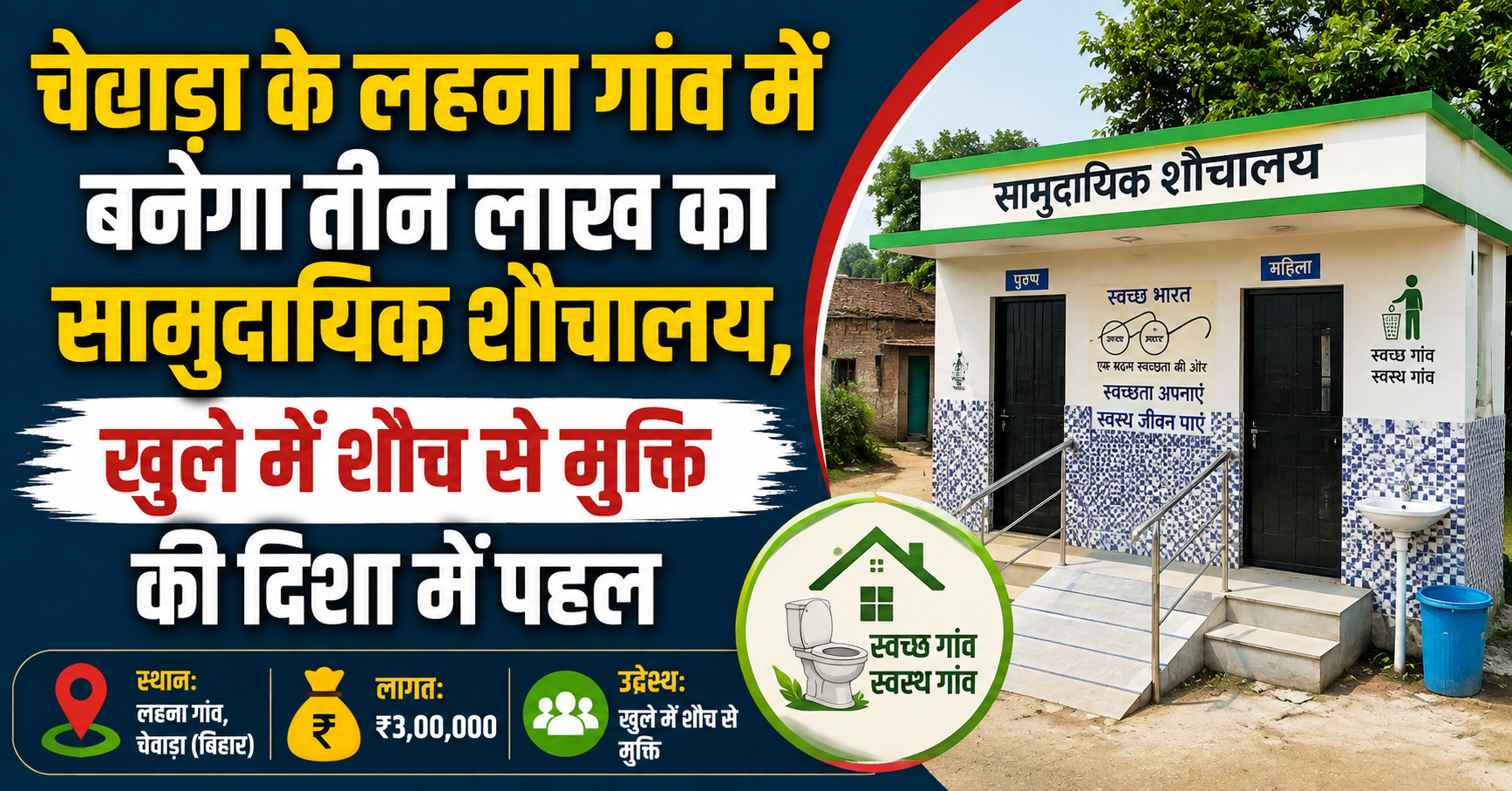
Chewara: A community toilet will be constructed in the Mahadalit settlement of Lahna village in Chewara block under the Swachh Bharat Mission. The facility, estimated to cost around ₹3 lakh, aims to provide residents with access to clean and safe sanitation facilities and help the village move towards becoming free from open defecation. A site inspection has already been conducted for the proposed construction.
The government has been taking several measures to strengthen sanitation facilities in rural areas. Along with individual household toilets, community toilets are being constructed in locations where adequate sanitation facilities are not available to all families. The proposed community toilet in Lahna village is part of these efforts.
Construction at an Estimated Cost of ₹3 Lakh
The proposed community toilet in the Mahadalit settlement of Lahna village will be constructed at an estimated cost of ₹3 lakh. Once completed, the facility will provide local residents with a designated place for sanitation.
The project is expected to particularly benefit families that do not currently have adequate toilet facilities at home. The availability of a community toilet can reduce the need for open defecation and help improve sanitation conditions in the village.
The site inspection carried out ahead of construction indicates that preparations are underway to move the project forward according to the prescribed process.
Step Towards Ending Open Defecation
Open defecation can pose challenges to both sanitation and public health in rural areas. It can affect the surrounding environment and increase the risk of contamination of water sources. Adequate access to toilets is therefore an important component of a clean and healthy community.
The main objective of the proposed community toilet in Lahna is to provide residents with a convenient sanitation facility. It can help discourage open defecation and encourage people to adopt better sanitation practices.
The broader objectives of the Swachh Bharat Mission also include promoting cleanliness and reducing open defecation. Construction of community toilets at the local level supports these objectives.
Mahadalit Settlement Residents Expected to Benefit
Residents of the Mahadalit settlement in Lahna village are expected to directly benefit from the proposed community toilet. For economically weaker families, constructing individual toilets can sometimes be difficult. In such circumstances, community facilities can play an important role.
The community toilet can provide access to sanitation facilities for local residents and reduce the difficulties faced by families without household toilets.
Access to safe and clean sanitation facilities is particularly important for women and children. Having a toilet facility close to the settlement can help women avoid the inconvenience associated with using open spaces.
Process to Move Forward After Site Inspection
A site inspection has been conducted for the proposed community toilet. Site inspection is an important preliminary step in any construction project, as it helps officials determine whether the proposed location is suitable and how the project can be implemented.
After completion of the inspection and other formalities, the construction process is expected to move forward. Coordination among the concerned departments and local authorities will be important for successful implementation.
Once construction begins, attention will also need to be given to quality and timely completion so that residents can start using the facility at the earliest possible opportunity.
Health Benefits Along With Improved Sanitation
Toilet facilities are not only related to cleanliness but also have a direct connection with public health. Open defecation can contribute to unhygienic conditions and increase the risk of infections. Providing adequate toilet facilities can help reduce these risks.
Along with construction, residents should also be encouraged to use the facility regularly and maintain cleanliness. Proper maintenance will be essential to ensure that the community toilet remains useful for a long period.
Therefore, arrangements for operation and maintenance will be as important as the construction itself.
Strengthening Rural Sanitation
Expanding basic sanitation infrastructure is necessary to improve cleanliness in rural areas. The proposed community toilet in the Mahadalit settlement of Lahna is a local initiative in this direction.
Adequate toilet facilities and regular usage can help keep the village environment cleaner. At the same time, behavioural changes and awareness among residents are also important.
Simply constructing a toilet will not be sufficient. Residents will need to be informed about proper use, cleanliness and maintenance.
Particularly Important for Women
Access to safe sanitation facilities is particularly important for women in rural areas. A community toilet located close to their homes can reduce the need to use open spaces and provide greater convenience.
While developing the facility, aspects such as women's safety and accessibility should also be considered. Adequate lighting, water supply, cleanliness and safe access can make the community toilet more useful.
Regular maintenance will be important to ensure that women and other residents can use the facility safely and comfortably.
Promoting Hygiene Among Children
Healthy sanitation habits should be developed from childhood. Along with the construction of a community toilet, children can be encouraged to use toilets regularly and follow hygiene practices such as washing their hands.
Children and young people can also be involved in local cleanliness campaigns. Schools and community groups can help spread awareness about sanitation among families.
Such efforts can contribute to developing better hygiene habits among future generations.
Community Participation Essential
The success of any community facility depends significantly on local participation. After the community toilet is constructed, residents will need to cooperate in maintaining the facility.
People need to understand that a public facility is a shared responsibility. Keeping the toilet clean and using water and other facilities properly can help ensure that it remains functional for a long time.
Local awareness campaigns can also be organised to explain the importance of the community toilet and encourage responsible use.
Boost to Swachh Bharat Mission
The Swachh Bharat Mission has promoted the expansion of sanitation facilities across the country. Various initiatives have been undertaken to increase toilet access in villages and reduce open defecation.
The proposed community toilet in the Mahadalit settlement of Lahna is part of these broader efforts. The facility, estimated to cost ₹3 lakh, could strengthen sanitation infrastructure at the local level.
After construction, ensuring regular use and proper maintenance will be important for achieving the intended benefits.
Quality of Construction Also Important
The quality of any public infrastructure project is crucial to its long-term usefulness. The community toilet should be constructed according to prescribed standards so that the building and its facilities remain usable for years.
The concerned agencies will need to monitor construction quality and ensure the availability of essential facilities. Adequate water supply, cleanliness and other basic requirements will be necessary for residents to use the facility effectively.
A community toilet will be constructed at an estimated cost of ₹3 lakh in the Mahadalit settlement of Lahna village in Chewara block. The project, being implemented under the Swachh Bharat Mission, aims to provide residents with sanitation facilities and help eliminate open defecation in the area.
A site inspection has already been conducted, and the project is expected to move forward after the necessary procedures are completed. The facility could particularly benefit residents of the Mahadalit settlement who do not have adequate household toilet facilities.
However, the success of the project will depend not only on completing construction but also on regular use, cleanliness, water availability, maintenance and community participation. Cooperation between the administration and local residents will be essential.
If the community toilet is constructed according to quality standards and proper arrangements are made for its operation and maintenance, it can strengthen sanitation facilities in Lahna village. The initiative could also help increase awareness about cleanliness and contribute to the broader goal of reducing open defecation in rural areas.