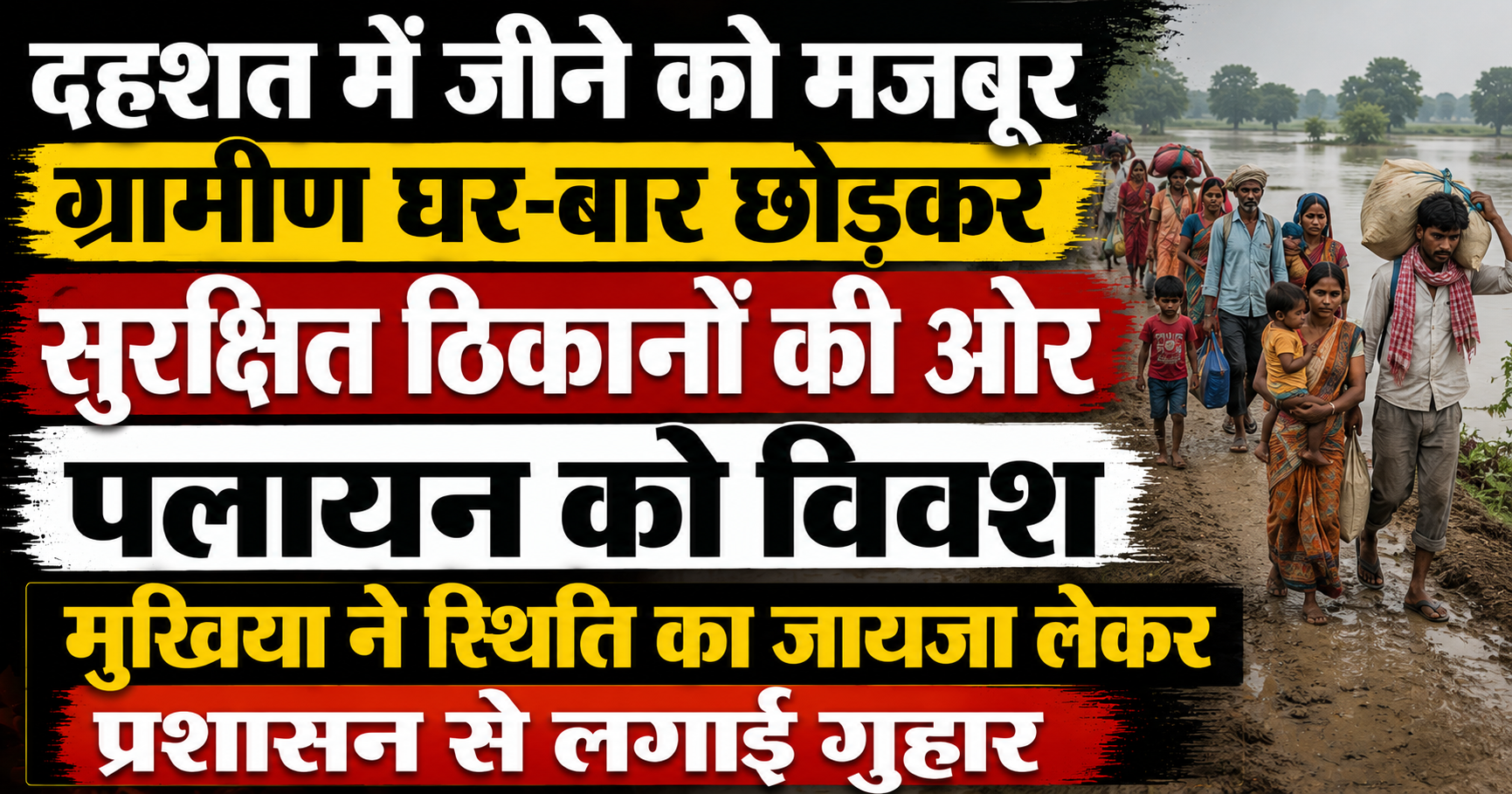


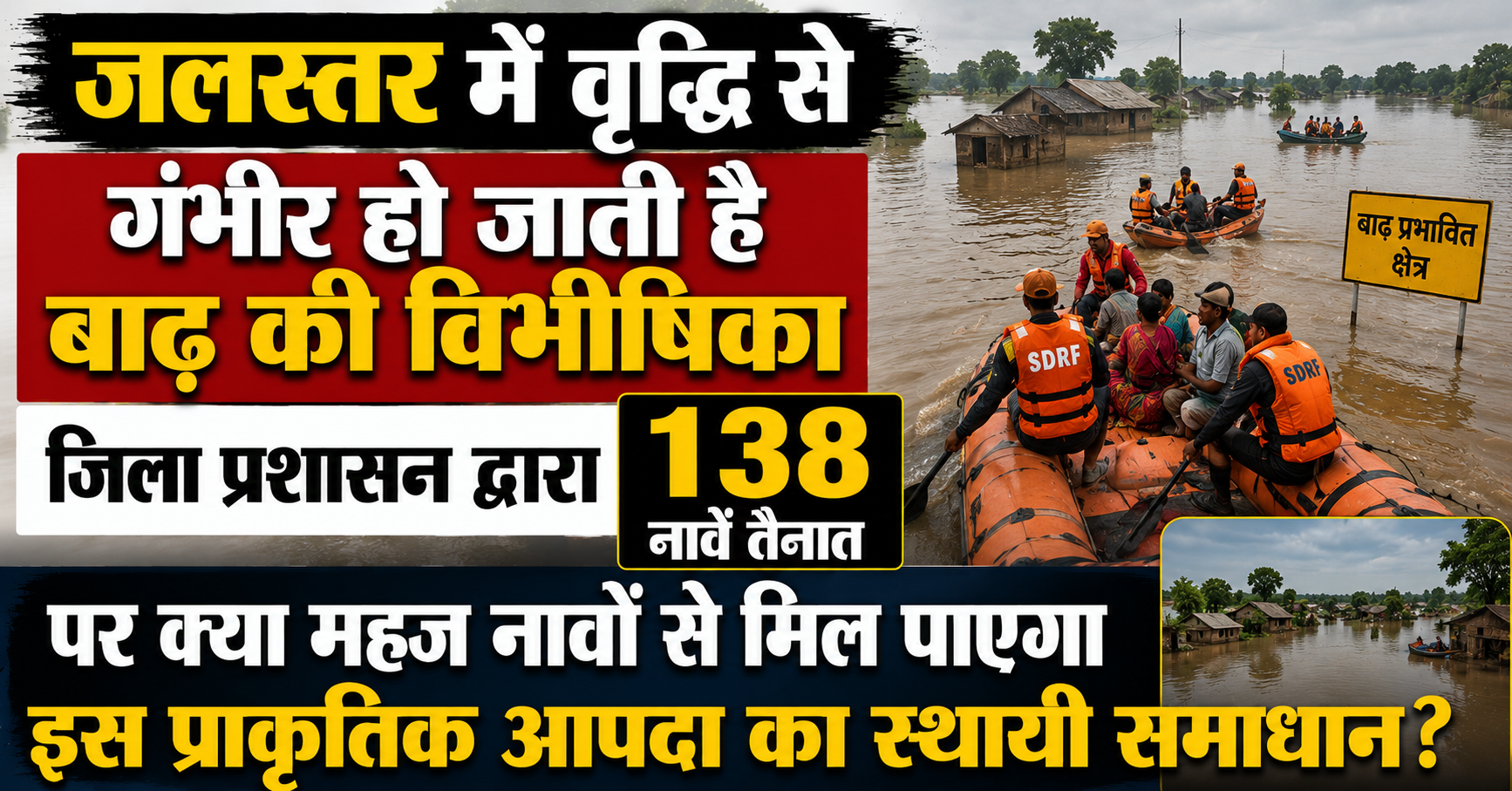
Flood Situation Becomes Critical Upon Rise in Water Level; District Disaster Management Department Arranges 138 Boats, But Is This Not a Permanent Solution?
Rivers have held a special place in Bihar's geography and lifestyle, but when these very rivers swell during the monsoon season, hardly anyone can gauge better than the people living in the Kosi and basin areas of the Ganges how these life-giving currents turn into a curse. The flood situation in Bihar does not depend on a single factor; rather, it rests primarily on the water level of the Ganges River and the uncertain grace of the monsoon. Whenever unprecedented rises occur in the water levels of the Kosi and the Ganges, the flood situation in low-lying areas assumes a terrifying and critical form.
Administrative preparations are made by the district administration every year to tackle this scourge of floods in the regions of Purnia, Kosi, and Seemanchal. Currently, 138 boats have been arranged for the affected areas by the District Disaster Management Department so that people can be evacuated in emergency situations. But the big question is whether this administrative arrangement is any permanent solution to this destructive problem? Let us analyze in detail the mood of the monsoon, the equation of the Ganges-Kosi water level, the district administration's preparations, and the necessity of a permanent diagnosis for floods.
Environmental and Geographical Equation: Why Kosi's Floods Rest on the Ganges and Monsoon
The Kosi River has been termed the 'Sorrow of Bihar', and behind this lies a complex geographical and hydrological mechanism.
Monsoon's Favor and Torrential Rains: When the monsoon becomes active in Nepal's hilly catchment areas and the plains of Bihar, the water level of the Kosi River begins to surge rapidly due to sudden heavy rainfall.
Backwater Effect of the Ganges: The Kosi River eventually merges into the Ganges. If the water level of the Ganges River is also in spate during that time, the water of the Kosi cannot exit rapidly ahead. Due to the pressure of the Ganges, the Kosi's water backflows and spreads into surrounding villages, fields, and settlements. This is the reason why experts believe that Kosi's floods depend directly on the intensity of the monsoon and the fluctuations in the Ganges' water level.
Rise in Water Level: When Normal Daily Life Transforms Into a Struggle
As soon as a rise above the danger mark is recorded in the water level of the Kosi River, the breaths of people in coastal areas get stuck.
Severing Connection of Hundreds of Villages: As the water level rises, water spreads onto roads, bridges and culverts get submerged, and the connection of dozens of villages with the district headquarters is completely cut off. People have to struggle immensely even for daily necessities.
Destruction of Crops and Livelihood: With floodwater filling the fields, farmers' standing crops are destroyed. A crisis of fodder arises for cattle, and a grim problem of survival crops up before poor families.
Administrative Preparations: Deployment of 138 Boats by District Disaster Management Department
To deal with this disaster arriving every year, the district administration and disaster management department claim to exercise vigilance from their end.
Arrangement of Boats: Under this time's emergency preparations, a total of 138 boats have been arranged by the District Disaster Management Department. These boats are being deployed at the ghats of sensitive and flood-prone panchayats so that people can be transported to safe locations when the water level rises.
Other Claims of Relief and Rescue: Furthermore, the process of deploying divers, distributing polythene sheets, and identifying relief camps is also completed by the administration to deal with any untoward situation.
Are Boats and Relief Materials Really a Permanent Solution?
This is the biggest and most ponderable question: can this disaster arriving every year be faced solely with the support of boats and plastic sheets?
Limitation of Temporary Arrangements: The 138 boats and relief materials provided by the district administration can certainly offer temporary relief at the time when a flood has arrived, but this is no permanent solution.
Absence of Long-Term Schemes: Untimely repair of embankments, the shallowing of riverbeds due to siltation, and the lack of proper drainage systems are core problems upon which, until concrete work is done, the same scene will continue to repeat every year
The flood situation of the Kosi River, dependent on the uncertain grace of the Ganges and monsoon, proves that human arrangements often fall short before nature. The arrangement of 138 boats made by the District Disaster Management Department may certainly prove helpful in an emergency, but it is no permanent alternative to this formidable problem. If the government and administration are to save the people of this region from this curse of floods every year, rather than remaining limited to relief operations, they must work seriously on river silt management, the construction of strong embankments, and long-term scientific planning. Only then can a permanent solution to this problem emerge.