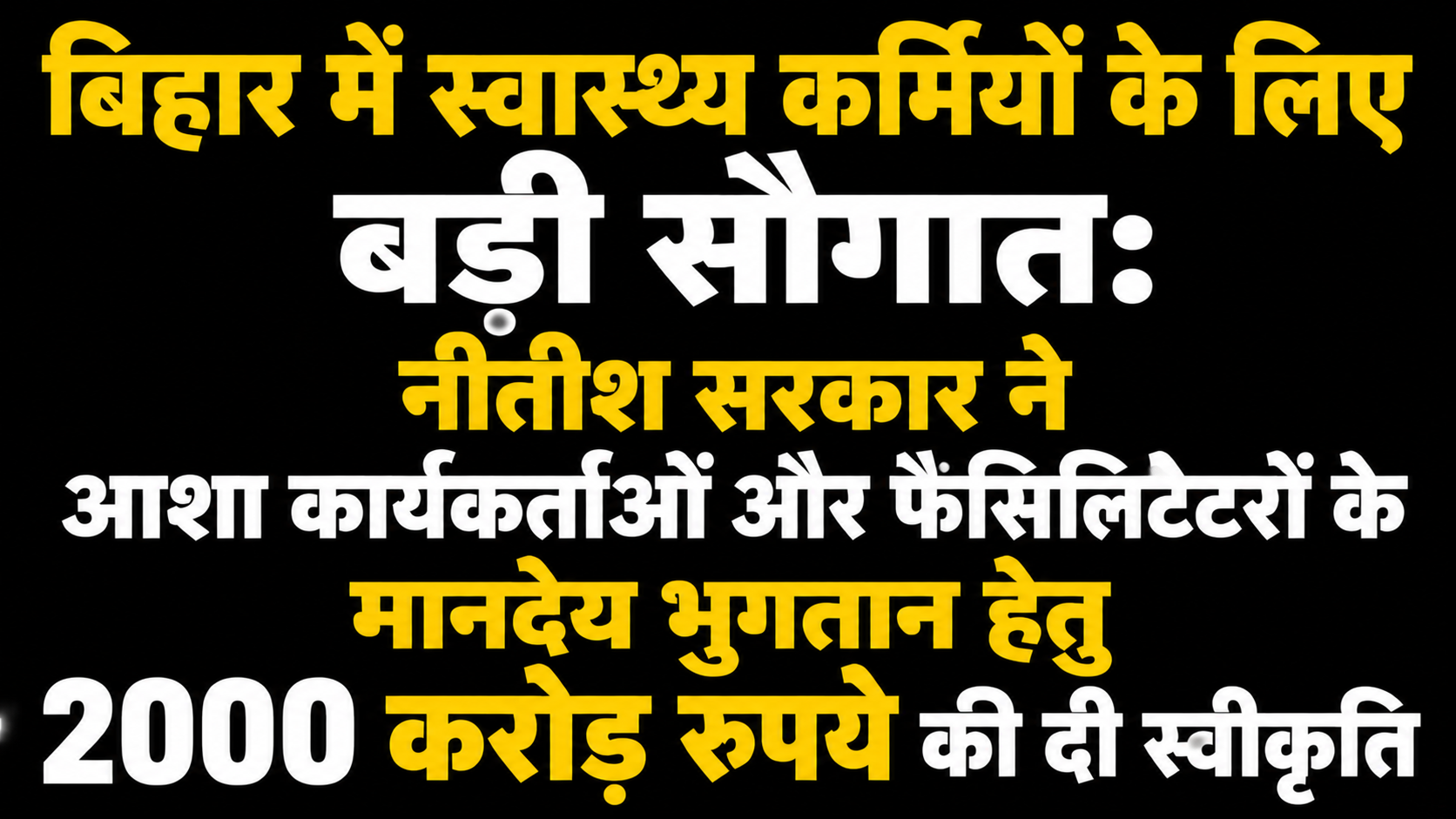
Major Boost for Healthcare Workers in Bihar Nitish Government Approves Rs 2,000 Crore for ASHA Workers and Facilitators Honorarium Monthly Remuneration Tripled from Rs 1,000 to Rs 3,000, Effective July 1, 2025
Patna (Bihar): In a massive relief for ASHA workers and ASHA facilitators, who form the backbone of rural healthcare delivery in Bihar, the state government has sanctioned a financial provision of Rs 2,000 crore to clear their honorariums and contractual service payments. Following the issuance of official directives by the Additional Secretary of the Health Department, a wave of celebration has swept through thousands of female healthcare providers across the state. In line with an earlier announcement made by Chief Minister Nitish Kumar, the monthly honorarium for ASHA workers has been increased from Rs 1,000 to Rs 3,000 per month, taking effect retrospectively from July 1, 2025. This financial approval clears the streamlined path for disbursing revised payments to thousands of ASHA workers across Muzaffarpur and the rest of Bihar.
A Historic Decision: Threefold Increase in Honorarium
This proactive step by the Bihar government provides substantial economic stabilization to grassroots workers who have long advocated for enhanced remuneration.
Upgraded from One Thousand to Three Thousand Rupees: Previously, the monthly honorarium for ASHA workers was fixed at Rs 1,000 per month back in 2019, which proved inadequate against rising living costs. Recognizing their indispensable contribution, the administration tripled it to Rs 3,000 per month.
Budget Outlay of Two Billion Rupees: To facilitate seamless disbursement and manage budgetary allocations following a requisition by the State Health Society, the government endorsed this heavy expenditure under contractual services. Focusing specifically on Muzaffarpur district, approximately 3,400 ASHA workers and 150 ASHA facilitators stand to directly benefit from this revised system.
The Vital Role of ASHA and Mamata Workers in Rural Healthcare
The dedication of these frontline workers has consistently been recognized as pivotal in improving maternal and child healthcare indicators across remote rural belts of Bihar.
Vaccination and Institutional Deliveries: ASHA workers spearhead local efforts including tracking pregnant women, facilitating institutional deliveries, driving routine child immunizations, and operationalizing various national health missions at the village level.
Incentive Hikes for Mamata Workers: In a parallel move supporting allied community workers, the state previously enhanced the incentive for Mamata healthcare workers stationed at government medical facilities from Rs 300 to Rs 600 per delivery. These overarching administrative measures aim to elevate workforce morale and reinforce local medical infrastructure.
The Bihar government's allocation of Rs 2,000 crore to back the tripled honorarium for ASHA workers reflects a dedicated focus on fortifying rural healthcare systems. These women will now experience enhanced financial security, marking an encouraging evolution in state welfare policies.