

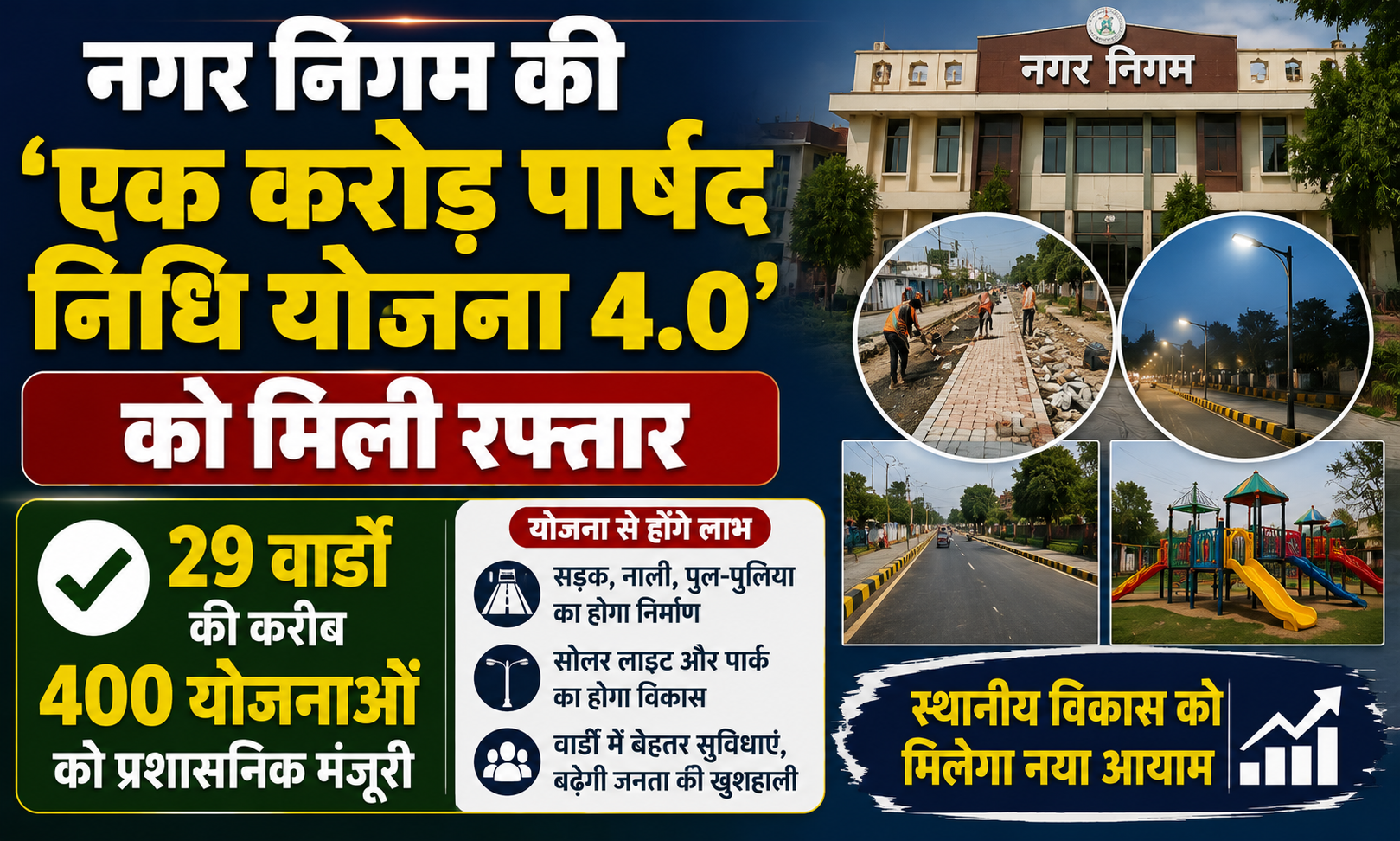
Municipal Corporation’s ‘One Crore Councillor Fund Scheme 4.0’ Gains Momentum, Around 400 Projects in 29 Wards Receive Administrative Approval
Development work under the Municipal Corporation’s ‘One Crore Councillor Fund Scheme 4.0’ is expected to accelerate after around 400 projects proposed in 29 wards received administrative approval. The approved projects include road and drain construction, renovation of existing roads and drainage systems, community buildings, water supply and other works related to basic civic amenities.
The scheme aims to strengthen basic infrastructure at the ward level and address problems that residents have been raising locally for a long time. With administrative approval now granted, the implementation process for these projects can move forward. A large number of residents living in different neighbourhoods and localities are expected to benefit from the works.
Around 400 Projects in 29 Wards
Under ‘One Crore Councillor Fund Scheme 4.0’, approximately 400 projects in 29 wards have received administrative approval. The projects have been selected based on the local requirements of individual wards.
Different wards face different infrastructure problems. While some areas require new roads, others need repair and renovation of existing roads. Similarly, some localities require improved drainage systems, while others need better water supply or public facilities.
The approved projects are expected to address these ward-level requirements on a priority basis.
Focus on Road Construction and Renovation
Roads are among the most important basic civic facilities in urban areas. In several wards, damaged roads, potholes and a lack of timely maintenance have created difficulties for residents. The situation often becomes worse during the rainy season.
The scheme includes construction of new roads as well as renovation and repair of damaged roads. Once completed, these works are expected to improve local connectivity and make daily commuting easier.
Better roads will also help residents reach schools, markets, hospitals and other public facilities more conveniently.
However, maintaining construction quality will be important. Roads should be constructed according to prescribed standards, and regular maintenance will be necessary to ensure that they remain usable for a long period.
Drain Construction to Help Address Waterlogging
Waterlogging is a long-standing problem in several urban areas. During heavy rainfall, inadequate drainage or clogged drains often result in water accumulating on roads and in residential areas.
Under the scheme, new drains will be constructed and existing drainage systems will be renovated where necessary. Improved drainage is expected to help in the quicker disposal of rainwater and reduce waterlogging in affected localities.
However, construction alone will not be sufficient. Regular cleaning and maintenance of drains will also be necessary. Without proper maintenance, newly constructed drains could eventually become clogged and the problem could return.
Community Buildings to Improve Local Facilities
Community buildings are also included among the approved projects. Such facilities can serve as important public spaces for residents.
They can be used for community meetings, social programmes, awareness campaigns and other local activities. Existing community buildings may be repaired or renovated where required, while new facilities can be constructed in areas where such infrastructure is currently unavailable.
The development of these facilities could provide residents with additional spaces for community activities.
Water Supply Works Also Included
As urban populations continue to grow, the demand for reliable water supply is also increasing. Projects related to water supply have been included under the scheme to provide relief to areas facing water-related problems.
Depending on local requirements, water supply works may include pipeline-related improvements, repairs and other necessary civic infrastructure.
The success of these projects will depend on timely completion and adherence to technical standards.
Direct Focus on Ward-Level Problems
One of the key features of the scheme is its focus on problems at the ward level. While major municipal projects generally cover large areas or the city as a whole, councillor-funded projects can address smaller, localized problems that directly affect residents.
A small neighbourhood road, a drainage problem in a lane, renovation of a community building or a water supply issue may appear minor from a citywide perspective, but such problems can have a major impact on the daily lives of local residents.
The approved projects are expected to provide solutions to many of these local issues.
Next Phase After Administrative Approval
Administrative approval is an important stage in the implementation process. The next steps will involve completing the required technical and tender-related procedures before the actual construction work begins.
The time required for implementation may vary depending on the nature of individual projects and the applicable departmental procedures.
For the Municipal Corporation, the biggest challenge will now be ensuring that all approved projects are implemented within a reasonable timeframe. With around 400 projects involved, monitoring their progress will also be important.
Quality and Transparency Need Close Monitoring
Quality and transparency will be crucial during the implementation of these projects. In road and drainage construction, particular attention will need to be paid to the quality of construction materials, compliance with technical standards and durability of the work.
Local residents can also play an important role by monitoring development work in their respective areas. If construction quality is found to be poor or work does not match the approved plan, the matter can be brought to the attention of the concerned authorities.
Better coordination between councillors and municipal officials can also help ensure timely completion of projects.
Making project progress publicly available could further improve transparency and accountability.
Residents Expected to Benefit in the Long Run
The approved projects are expected to have a direct impact on the daily lives of residents. Better roads can improve connectivity, improved drainage can help reduce waterlogging, better water supply can address shortages, and community buildings can provide useful public spaces.
However, approval alone does not determine the success of a development scheme. The real success will depend on whether the projects are completed on time, meet quality standards and actually provide the intended benefits to residents.
The administrative approval of around 400 projects across 29 wards under the Municipal Corporation’s ‘One Crore Councillor Fund Scheme 4.0’ is therefore an important step toward improving ward-level infrastructure.
Residents will now be watching when construction work begins and how quickly the approved projects are completed.
If the projects are implemented properly, with strong quality control and regular maintenance after completion, they could significantly improve basic civic amenities across the 29 wards. The initiative could also provide fresh momentum to the Municipal Corporation’s efforts to strengthen urban infrastructure and address everyday problems faced by residents.