

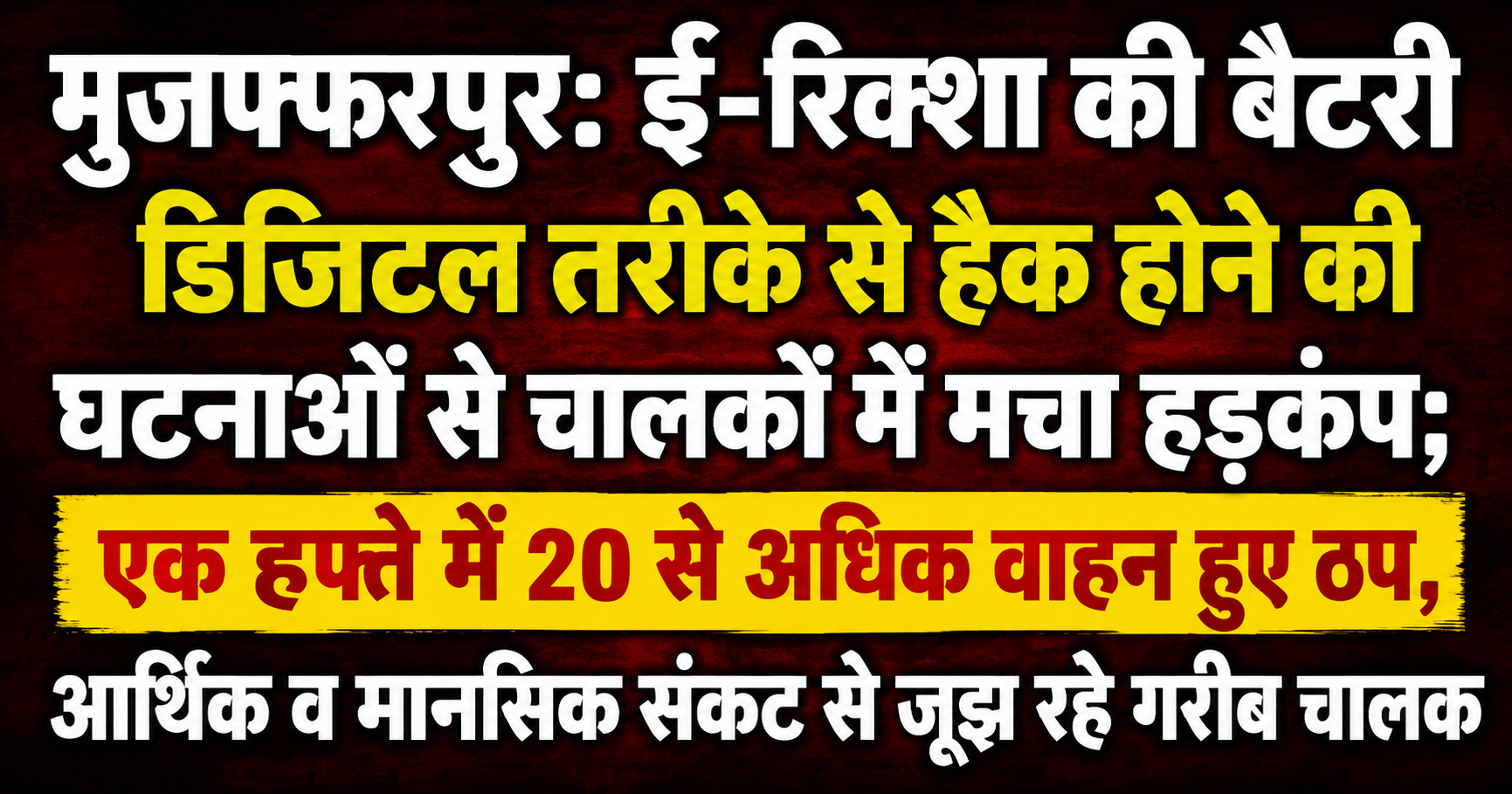
Muzaffarpur: Panic Among Drivers as Over 20 E-Rickshaw Batteries Hacked Digitally; Vehicles Stalled Within a Week, Impoverished Drivers Grapple with Financial and Mental Distress
Muzaffarpur (Bihar): An extremely shocking and grave news story related to cybercrime and the misuse of technology has emerged from the Muzaffarpur district of Bihar. Over the past week, incidents of more than 20 e-rickshaw batteries being digitally hacked have come to light in the district. E-rickshaws zipping along busy streets are suddenly breaking down midway without any technical malfunction, subjecting drivers to heavy financial loss and mental harassment. Initial investigations reveal that these incidents exploit specific mobile applications and Bluetooth connectivity, allowing hackers to remotely control or lock vehicle batteries from afar. Since this bizarre digital fraud and cyber attack occurred, an atmosphere of fear has gripped the e-rickshaw drivers of Muzaffarpur, while local police and cyber experts have also gone on high alert.
Let us understand a detailed, analytical, and point-by-point description of this emerging trend of cybercrime in Muzaffarpur—a major commercial hub of North Bihar—along with its technical flaws, the plight of drivers, and safety measures.
Background of the Incident: How Are E-Rickshaws Halting Mid-Road?
A strange problem has robbed drivers of their sleep over the past few days in busy areas of Muzaffarpur city such as Saraiyaganj, Bariya, Akhadahaghat, and Chhata Bazar.
Sudden Breakdown Issues: E-rickshaws carrying passengers on the city's main thoroughfares suddenly shut down completely. The vehicle's current cuts out entirely, leaving drivers assuming that the battery has discharged or a mechanical fault has occurred.
Helplessness of Mechanics: When drivers take their vehicles to local motor mechanics, examinations reveal that the vehicle and its wiring are entirely fine.
Unveiling the Digital Lock: Deep technical inspections exposed the startling truth that the Battery Management System (BMS) installed inside the battery had been digitally disabled or locked by an external party.
The Game of 'BT-BMS' Apps and Bluetooth Hacking
The misuse of Chinese technology and mobile applications has surfaced behind these entire incidents, causing deep concern among security agencies.
Lithium-Ion Batteries and Bluetooth Connections: Most modern e-rickshaws sold in the market today use lithium-ion batteries, which feature Bluetooth connectivity to monitor battery health, voltage, and charging status.
Misuse of Chinese Apps: Exploiting specific mobile applications like 'BT-BMS' available on the internet, mischievous elements or gangs connect to the Bluetooth signals of these batteries.
Remote Control and Extortion or Mischief: Through the app, hackers disable the battery's power output remotely. Experts believe this could stem from mischief by antisocial elements or a deep fraudulent conspiracy.
Double Whammy for Drivers: Financial Hardship and Mental Stress
For e-rickshaw drivers, this represents the terrifying face of technology that has posed a direct threat to their livelihoods.
Impact on Daily Earnings: Drivers who operate their vehicles all day to pay off daily rentals or loan installments see their earnings wiped out when their vehicles sit stalled midway for hours.
Additional Financial Burden: Drivers are forced to pay money to fraudsters or unwanted individuals under the guise of running to mechanics and repeatedly unlocking digital locks, breaking their financial back.
Atmosphere of Fear and Insecurity: Uneducated or semi-literate e-rickshaw drivers fail to comprehend the workings of this high-tech cyber fraud, causing their mental stress to mount steadily.
Warnings and Preventive Measures by Police, Administration, and Cyber Experts
Following the escalation of the incidents, the district administration and cyber cell took cognizance and issued a safety advisory for drivers.
Advice to Change Default Passwords: Cyber experts have strictly warned drivers to immediately change the default passwords of their battery Bluetooth systems.
Blocking Bluetooth Access: Drivers are advised to secure or completely block battery Bluetooth access with the help of an authorized, skilled mechanic to prevent unknown parties from connecting to it.
Vigilance Against Suspicious Apps: Drivers have been told to avoid using any unknown or suspicious third-party applications on their mobile phones. The central government and the Ministry of Information Technology are also taking strict steps to clamp down on such dubious apps.
The incidents of e-rickshaw batteries being digitally hacked in Muzaffarpur prove that cybercrime is no longer confined to computers or bank accounts, but has now reached public transit vehicles on ordinary streets. The emergence of over 20 cases within a week serves as a major warning for the administration and security agencies. If this organized digital racket is not busted in time, the lives of poor and hardworking e-rickshaw drivers will become unbearable. It is imperative that the police arrest this gang at the earliest and issue strict directives to vehicle manufacturers to strengthen technical security.