Postmen to Survey Mobile Network in Bihar’s Villages, Telecom and Postal Departments Sign Agreement
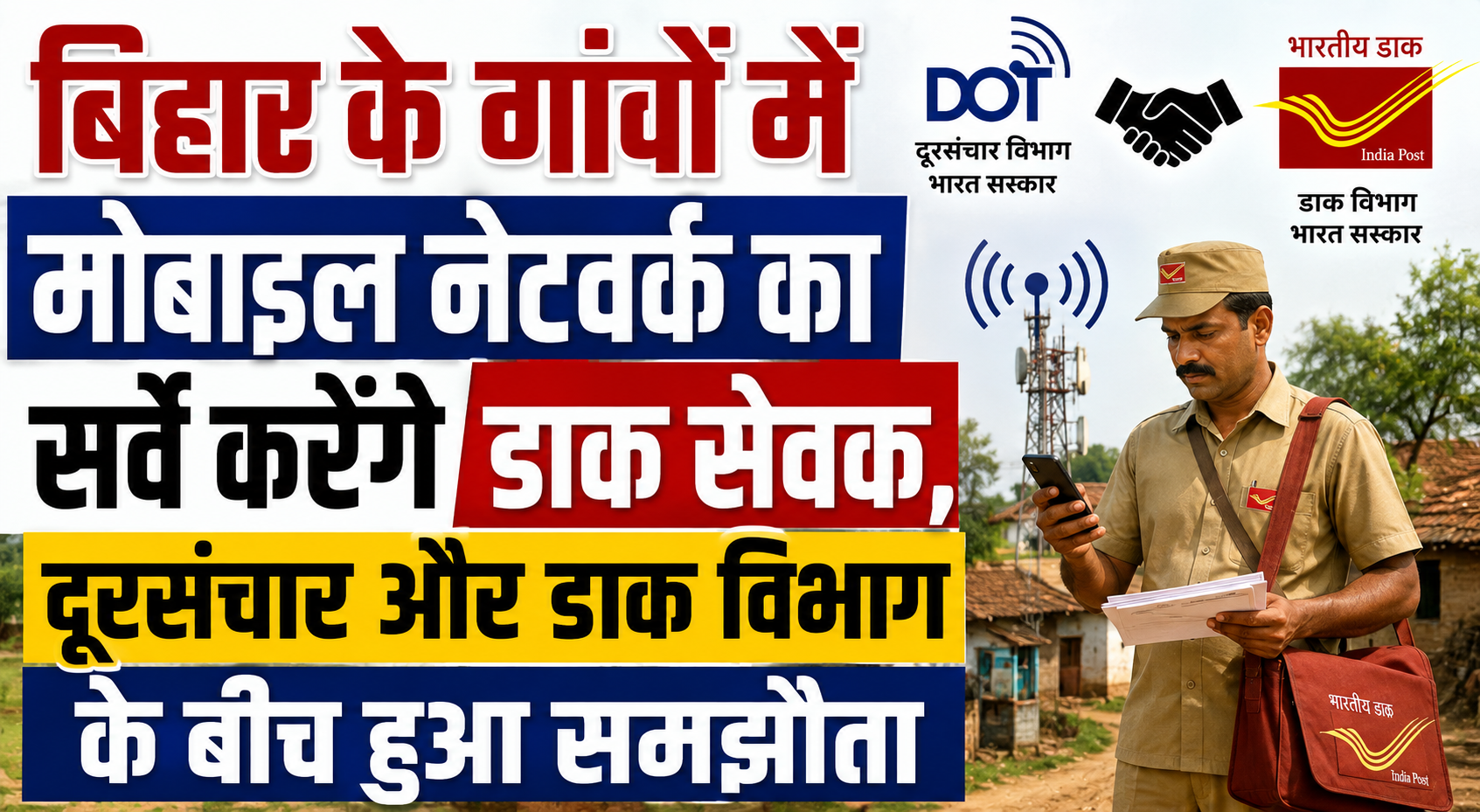
Patna: In an important initiative to improve mobile connectivity in rural Bihar, postal workers will now conduct surveys of mobile network availability and quality across villages. The survey will help identify rural areas where mobile connectivity is weakest and where network improvement is most urgently required. For this initiative, the Department of Telecommunications and the Department of Posts have entered into an agreement.
The move is expected to strengthen efforts to provide better mobile connectivity to remote villages across Bihar. Since a large portion of the state’s population lives in rural areas, reliable mobile networks are increasingly important for education, healthcare, banking, digital payments, government services and employment opportunities.
Postal Workers Will Collect Information from Villages
The postal network has a wide presence across Bihar, including remote rural areas. Postal workers regularly visit villages and interact with local residents, making them well placed to gather information about mobile connectivity.
During the survey, postal workers will collect information on whether mobile networks are available in particular villages, how strong the signals are and which areas face the greatest difficulties while using mobile services.
The survey could also help identify areas where new mobile infrastructure or improvements to existing networks are required.
Information collected at the local level will help the concerned departments understand the actual situation on the ground and plan network improvement initiatives accordingly.
Areas with Weak Connectivity to Be Identified
Mobile network problems vary from one rural area to another. In some villages, networks may be completely unavailable, while in others weak signals can make calling and internet access difficult.
In some locations, mobile signals may be available outdoors but weak inside homes. In other areas, residents may have to move to specific locations to make calls or access the internet.
The survey is expected to help document these different connectivity problems. This could make it easier to identify villages where mobile towers or other network infrastructure may be required.
If repeated problems are reported from a particular area, authorities could prioritize that location for network improvement.
Better Connectivity Essential for Digital Services
Mobile networks are no longer used only for making phone calls. With the rapid growth of smartphones and internet services, mobile connectivity has become an important part of everyday rural life.
Students in villages increasingly depend on mobile internet for online classes, competitive examination preparation and educational resources. Poor connectivity can make it difficult for them to access online lessons and study materials.
Farmers also use mobile internet to obtain weather updates, agricultural advice, information about government schemes and market-related information. Better connectivity could allow more rural residents to benefit from these services.
Could Improve Access to Healthcare
Mobile connectivity is also becoming increasingly important in the healthcare sector. Rural residents often depend on mobile phones to contact doctors, obtain health-related information and communicate with family members or healthcare workers during emergencies.
In remote villages with poor network coverage, contacting emergency services or medical professionals can be difficult. Improved connectivity could make it easier for residents to access healthcare and emergency assistance.
Internet connectivity is also becoming increasingly important for rural health centers and other institutions as government health services move toward digital systems.
Benefits for Banking and Digital Payments
Digital banking and mobile-based payments are becoming increasingly common in Bihar’s rural areas. Small shopkeepers and ordinary consumers are using digital payment services, but poor network connectivity can disrupt transactions.
The mobile network survey could identify areas where inadequate connectivity is preventing the expansion of digital services. Better networks could make banking, digital payments and other online financial services more accessible to rural residents.
Improved connectivity could also help the Postal Department operate its digital and financial services more effectively.
Easier Access to Government Schemes
Many central and state government schemes now provide information and application facilities online. Rural residents often need mobile internet to apply for schemes, upload documents and check the status of their applications.
Poor network connectivity can make these processes difficult. Identifying areas with weak networks through the survey could help improve access to digital government services.
The initiative could therefore contribute to greater digital inclusion by ensuring that people living in rural and remote areas are not left behind in the digital transformation.
Postal Network to Play an Important Role
The Postal Department has an extensive network across Bihar, including villages and remote locations. Postal workers regularly interact with rural communities and are familiar with local conditions.
Their participation in the mobile network survey could therefore prove useful. Since postal workers already travel to villages as part of their regular duties, collecting network-related information could be more convenient than sending separate survey teams to every location.
The initiative could also expand the role of the Postal Department beyond traditional postal and financial services into efforts aimed at improving digital connectivity.
Ground-Level Information for Telecom Department
Accurate ground-level information is essential for planning mobile network expansion and improvement. Technical data alone may not always provide a complete picture of the problems faced by residents.
Information collected by postal workers could help the Department of Telecommunications understand the specific types of network problems experienced by people in rural areas.
Combining this local information with technical network data could help authorities plan future improvements more effectively and prioritize locations where connectivity problems are most serious.
Potential Benefits for Rural Economy
Better mobile connectivity could have an impact beyond communication. Stronger internet access can contribute to the growth of rural economies.
Small businesses could use online platforms to promote their products and services. Young people could access information about jobs, training programs and educational opportunities.
Farmers could make greater use of online agricultural information and market platforms. Self-help groups and rural entrepreneurs could also benefit from easier access to digital platforms.
In this way, improved mobile connectivity could help connect rural communities with the wider digital economy.
Focus Now on Survey Process
Following the agreement between the Department of Telecommunications and the Department of Posts, the survey process is expected to move forward.
The information collected through the survey will help identify rural areas with inadequate mobile connectivity. Based on the findings, appropriate measures could subsequently be considered to improve network coverage.
However, the actual implementation of network expansion will depend on technical requirements, geographical conditions and the availability of resources in different locations.
The decision to use postal workers to survey mobile network availability and quality across Bihar’s villages is an important step toward strengthening rural digital connectivity.
The survey could help identify areas where mobile networks are unavailable or inadequate and where improvements are most urgently needed. Better connectivity would make it easier for rural residents to access education, healthcare, banking, digital payments, government schemes, employment opportunities and other online services.
The collaboration between the Department of Telecommunications and the Department of Posts could therefore play an important role in connecting Bihar’s remote villages with stronger and more reliable digital networks.