River Water Spreads Across Diara Area, Danger Mark Near
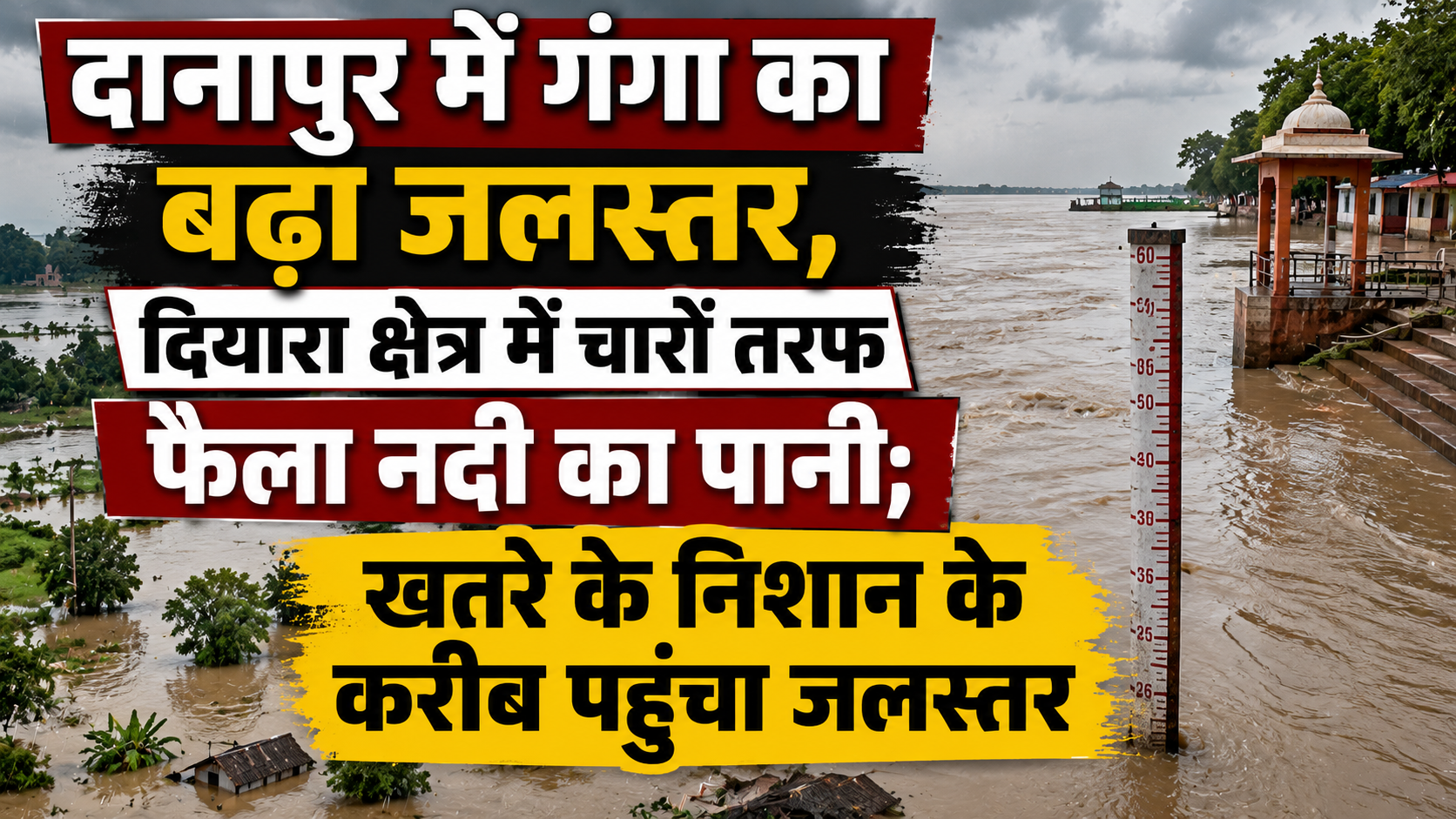
Patna: The rising water level of the Ganga in Danapur, Patna, has increased concerns among residents of the Diara region. Due to the continuous rise in the river's water level, water has spread across several parts of the Diara area. The situation has started creating difficulties for people living in low-lying areas. Meanwhile, the water level at Devniyanala in Danapur is reportedly nearing the danger mark. Residents living in nearby areas are closely monitoring the situation as the river continues to rise.
At Kangan Ghat in Danapur, the Ganga water has also reached the platform. The increasing water level has affected normal activities around the ghat. If the river continues to rise, people living in low-lying areas could face greater difficulties in the coming days.
Water Spreads Across the Diara Area
The impact of the rising Ganga is most visible in the Diara region. Several areas near the river have been affected as water spreads across agricultural fields and open land. Roads and pathways commonly used by residents during normal days could also become difficult to access if the water level continues to increase.
The geographical nature of the Diara region means that even a moderate rise in the Ganga can quickly affect low-lying areas. After entering agricultural fields and vacant land, river water can gradually move toward local roads and residential areas.
For residents, one of the biggest concerns is transportation and access to essential services. If the water continues to spread, people may face difficulties reaching markets, schools, healthcare centers and other important locations. Families living in the Diara region also have concerns about protecting their livestock and essential belongings.
Water Level Near the Danger Mark
The water level of the Ganga at Devniyanala in Danapur is reportedly approaching the danger mark, increasing concern among local residents and authorities. If the river continues to rise, its impact could become more widespread in low-lying areas.
Monitoring the river's water level is one of the most important measures for managing a possible flood situation. When water levels rise, authorities generally keep a close watch on vulnerable areas. In Danapur too, residents are now closely observing whether the water level rises further or begins to stabilize.
If the water level stabilizes, residents may get some relief. However, if the rise continues, more parts of the Diara region could come under water.
Water Reaches the Platform at Kangan Ghat
At Kangan Ghat, the Ganga water has reached the platform. The rising water level has affected activities at the ghat, where people normally visit for various purposes.
As water levels rise at river ghats, safety becomes particularly important. Strong currents can make it dangerous to approach the river. Children and elderly people should especially be kept away from the riverbank.
The increasing water level can also make the surface around the ghats slippery. People should avoid entering areas covered by rising water and follow any safety advisories issued by the authorities.
Agriculture Could Also Be Affected
The rising Ganga water could directly affect agriculture in the Diara region. A large number of farmers cultivate land located near the river. If river water enters agricultural fields, standing crops could suffer damage.
This situation is particularly challenging for farmers because they have already invested money and effort in cultivation. If water remains in the fields for a long period, the possibility of crop damage increases.
Farmers should closely monitor the river level and follow advice from the administration and agriculture officials. If necessary, steps should be taken in time to protect crops and livestock.
Growing Concern Among Residents
The spread of river water has naturally increased anxiety among residents of the Diara region. People are closely watching the water level and the areas where the river water is spreading. Residents of locations that have already been affected are remaining particularly alert.
Their concerns are not limited to their homes. Families may also face difficulties related to livestock feed, drinking water, food supplies and transportation. If the water spreads further, some residents may need to move toward safer locations.
Timely information is therefore extremely important. The administration and local officials will have an important role in informing residents about any potential danger and ensuring that assistance reaches affected areas.
Special Precautions Needed in Low-Lying Areas
People living in low-lying areas near the Ganga need to take extra precautions as the river level rises. Smaller streams and drains can also be affected by increasing water levels. In some cases, areas located away from the main river can also experience waterlogging.
Residents should avoid traveling through flooded roads, particularly on motorcycles or on foot. It is not always possible to judge the depth of floodwater accurately. Entering fast-moving water can be extremely dangerous.
Children should also be kept away from the river and flooded areas. Parents in rural communities should pay particular attention to children's movements during such conditions.
Administrative Monitoring Is Crucial
Continuous monitoring by the administration becomes especially important when river levels rise. Regular monitoring of water levels, timely information to residents and preparations for relief and rescue operations are essential in potentially flood-affected areas.
People living in Danapur and surrounding Diara areas should pay attention to information and warnings issued by local authorities. If residents are advised to evacuate an area or move to a safer location, they should take such instructions seriously.
Authorities should also identify vulnerable locations and ensure that essential resources are available. If required, arrangements involving boats, relief supplies and medical assistance may need to be activated.
Continuous Monitoring of the Ganga
The situation over the coming days will be particularly important. If the Ganga water level continues to rise, the spread of water across the Diara region could increase further. On the other hand, a decline in the water level would provide relief to residents.
At present, regular monitoring and timely communication with local residents are essential. Families living near the river should keep important belongings in safer locations and remain prepared for any change in the situation.
Health Challenges Could Also Increase
Prolonged waterlogging can create health-related problems. Stagnant water can increase mosquito breeding, while contaminated water can increase the risk of waterborne diseases. Therefore, affected areas need special attention to clean drinking water and sanitation.
Residents should avoid direct contact with stagnant or contaminated water. They should use clean water for drinking and seek medical assistance if they develop symptoms of illness.
Attention Remains Focused on the Coming Days
The rising Ganga water level in Danapur has become a major concern for residents of the Diara region. The spread of river water across the area and its arrival at the platform at Kangan Ghat indicate that the local situation is changing.
The biggest concern is that if the water level crosses the danger mark or continues to rise, the impact on low-lying areas could become more serious. In such a situation, both administrative preparedness and public awareness will be important.
The rising water level of the Ganga in Danapur is an important warning sign for the Diara region. The spread of water across the area and its arrival at the platform at Kangan Ghat indicate increasing water levels. With the water level at Devniyanala reportedly nearing the danger mark, the situation needs close monitoring in the coming days. Residents should stay away from the river and flooded areas and follow instructions issued by local authorities. The future course of the situation will depend largely on whether the Ganga water level continues to rise or begins to decline.