

Preparations for Baharjat Festival Gain Momentum in Panchgachhia, Traditional Bhikshatan Ritual Underway; Sasya Maharaj Worship Reflects Social Unity
Saharsa: The traditional folk culture and customs of the Kosi region continue to remain an important part of rural life in Bihar. Despite changing lifestyles and modernization, several traditional festivals and religious events are still celebrated with collective community participation. In Panchgachhia village of Saharsa district, preparations for the Baharjat Festival are currently underway in full swing. After the completion of paddy transplantation, activities related to the traditional festival have intensified across the village.
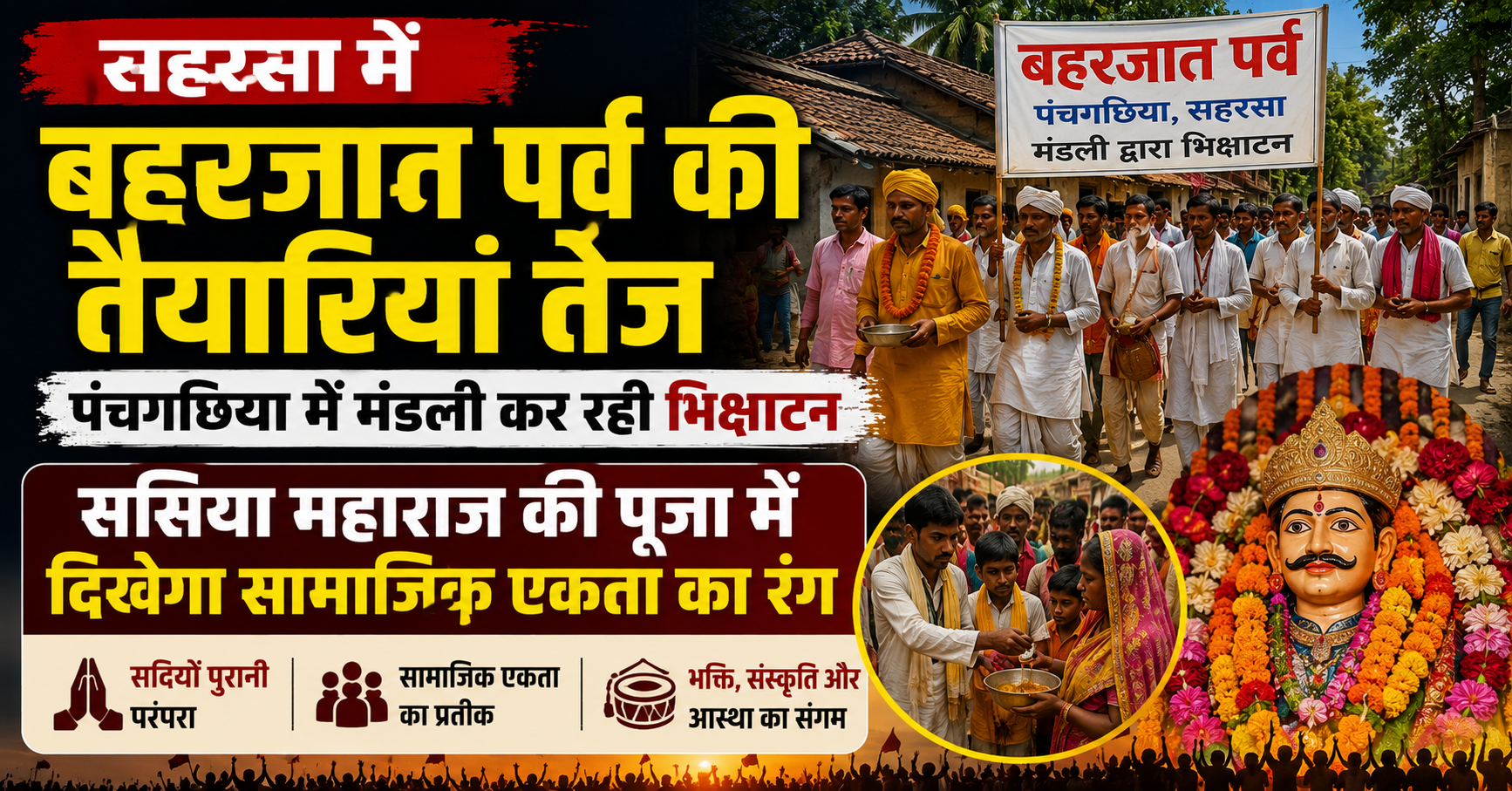
The Baharjat Festival is locally associated with the worship of Sasya Maharaj. Preparations for the religious and cultural event have begun, with one of its most distinctive traditions being the practice of a ceremonial group moving from one part of the village to another and seeking contributions from residents.
Members of the group visit households and request support for the festival. People from different communities contribute according to their ability. This tradition makes the festival a collective event in which residents of the entire village participate.
In Panchgachhia, Baharjat is considered more than just a religious celebration. It is also regarded as a symbol of community cooperation and social harmony. Villagers collectively take responsibility for preparations, religious activities and other arrangements associated with the event.
Preparations Begin After Paddy Transplantation
Agriculture has a deep connection with the rural economy and culture of the Kosi region. Paddy transplantation is one of the major agricultural activities for farmers in the area.
According to local tradition, preparations for the Baharjat Festival begin after the completion of paddy transplantation.
Once an important phase of agricultural work is over, farmers and villagers devote time to religious and community activities. The same tradition is being followed in Panchgachhia this year.
After completing their work in the fields, villagers are increasingly focusing on preparations for the festival. Discussions about the religious ceremonies, arrangements and required materials have become more frequent.
Traditional Group Going From House to House
As preparations for the Baharjat Festival intensify, the traditional group has started moving around the village.
Members visit different households and seek contributions from residents.
According to local tradition, the contributions collected through this practice are used for arrangements connected with the religious ceremony and festival.
The process also gives every family an opportunity to participate directly in the event.
When the group reaches a household, family members contribute according to their capacity. Some may provide financial assistance, while others may contribute grain or other materials.
This tradition ensures that almost every family in the village remains connected with the festival.
Ancient Tradition of Worshipping Sasya Maharaj
The worship of Sasya Maharaj is considered an important part of the Baharjat Festival.
The practice has reportedly been followed in the area for generations and remains an important part of the village's cultural and religious identity.
Older members of the community have passed the tradition down to younger generations, who continue to participate in the preparations and ceremonies.
Such religious traditions and folk beliefs play an important role in preserving the cultural identity of rural communities.
During the worship of Sasya Maharaj, a religious atmosphere develops across the village, with residents collectively participating in preparations.
Participation of Different Communities
One of the most important features of the Baharjat Festival is its community-based character.
According to local residents, people from different communities contribute to the worship of Sasya Maharaj and the arrangements for the festival.
Different responsibilities are shared among villagers, making the celebration a collective effort.
The participation of people from different social groups in a common religious event strengthens cooperation and a sense of harmony within the village.
Panchgachhia's Baharjat Festival is therefore seen as an example of social unity and community participation.
Bhikshatan Is More Than Financial Support
The traditional practice of collecting contributions from households is an important part of the festival.
However, it is not simply a way of collecting money or material resources.
The practice connects each family with the festival. When the group visits different households, residents are reminded of the upcoming event and encouraged to participate.
People contribute according to their faith and ability. This helps meet the requirements of the collective celebration while also strengthening social connections.
Role in Preserving Rural Culture
Bihar's rural areas are home to numerous folk festivals whose complete histories may not always be documented in written records but whose traditions have been passed down through generations.
Baharjat is one such festival associated with local culture and folk beliefs.
Such celebrations preserve collective memory and cultural identity in rural communities.
At a time when modernization and changing lifestyles are gradually reducing the practice of some traditional customs, the continuation of such festivals remains culturally significant.
Participation of the Younger Generation
The younger generation also plays an important role in preserving the festival's traditions.
Young villagers participate in various activities associated with the festival and help with preparations.
They learn about traditional customs and religious practices from elders and help carry them forward.
This transfer of knowledge from one generation to another ensures that the cultural and religious traditions remain alive.
The participation of young people also helps traditional events retain their identity despite changing social conditions.
Connection Between Agriculture and Folk Festivals
Agriculture and folk traditions are closely connected in the Kosi region.
The agricultural calendar has historically influenced the daily lives and social activities of rural communities.
After the completion of paddy transplantation, villagers often turn their attention toward religious and cultural activities.
Baharjat is also associated with this agricultural cycle. As a result, the festival is not only an occasion for worship but also a period of collective celebration after an important phase of agricultural work.
Increased Activity in the Village
Preparations for the festival have increased activity in Panchgachhia.
The traditional group moving from household to household has made residents more aware of the upcoming celebration.
The collection of contributions has also led to increased discussions among villagers about the festival.
Residents are working on arrangements for the worship site, religious materials and other requirements.
Strengthening Social Bonds Through Collective Participation
Community festivals and religious events can play an important role in strengthening social relationships.
When families and different communities contribute to a common event, communication and cooperation between them increase.
The preparations for Baharjat in Panchgachhia reflect this collective spirit.
The practice of visiting households and seeking contributions connects the entire village with the festival and helps transform it into a community-wide celebration.
Need to Preserve Folk Traditions
Local folk festivals are an important part of a region's cultural identity.
Preserving these traditions is significant not only from a religious perspective but also from a cultural standpoint.
Such festivals may include local songs, customs, rituals, worship practices and forms of community participation.
Educating younger generations about these traditions and their importance can help prevent them from disappearing over time.
Importance of the Festival in Rural Life
Festivals give rural communities an opportunity to step away from their daily routines and come together.
Farmers who spend much of their time working in agricultural fields can participate in collective religious and cultural activities after important stages of farm work are completed.
Baharjat provides such an opportunity for the residents of Panchgachhia.
Through worship, traditional contribution collection, community participation and religious activities, villagers strengthen their social connections.
Role of Local Administration and Community
During large religious gatherings, maintaining basic arrangements is also important.
If the number of devotees increases significantly, attention may be required toward cleanliness, drinking water, lighting, traffic movement and crowd management.
Local organizers and villagers play an important role in managing these arrangements. Administrative assistance can also be sought when required.
Preparations for the Baharjat Festival in Panchgachhia are still underway, and activities are expected to increase further as the main event approaches.
A Cultural Legacy for Future Generations
Traditions such as Baharjat are not limited to the present generation. They are also connected with the history and social traditions of the village.
The experiences and knowledge of older residents are important in preserving the festival.
If younger villagers continue to participate actively, the tradition can remain alive for future generations.
Preparations for the Baharjat Festival have gained momentum in Panchgachhia village of Saharsa district. After the completion of paddy transplantation, activities associated with the festival have intensified, and the traditional group has started visiting households to seek contributions.
The festival includes the long-standing tradition of worshipping Sasya Maharaj. One of its most distinctive features is the participation and cooperation of people from different communities.
The practice of visiting households and collecting contributions is not merely a way to gather resources for the event. It is also a social tradition that connects the entire village with the festival.
Closely associated with the agricultural cycle, the festival reflects the rural culture and traditions of Saharsa and the wider Kosi region.
The continuation of such traditions is important for preserving local cultural heritage. As preparations continue in Panchgachhia, the village is witnessing an atmosphere of religious enthusiasm as well as community unity.
The festival is expected to become increasingly vibrant in the coming days as worship ceremonies and other traditional activities get underway.