


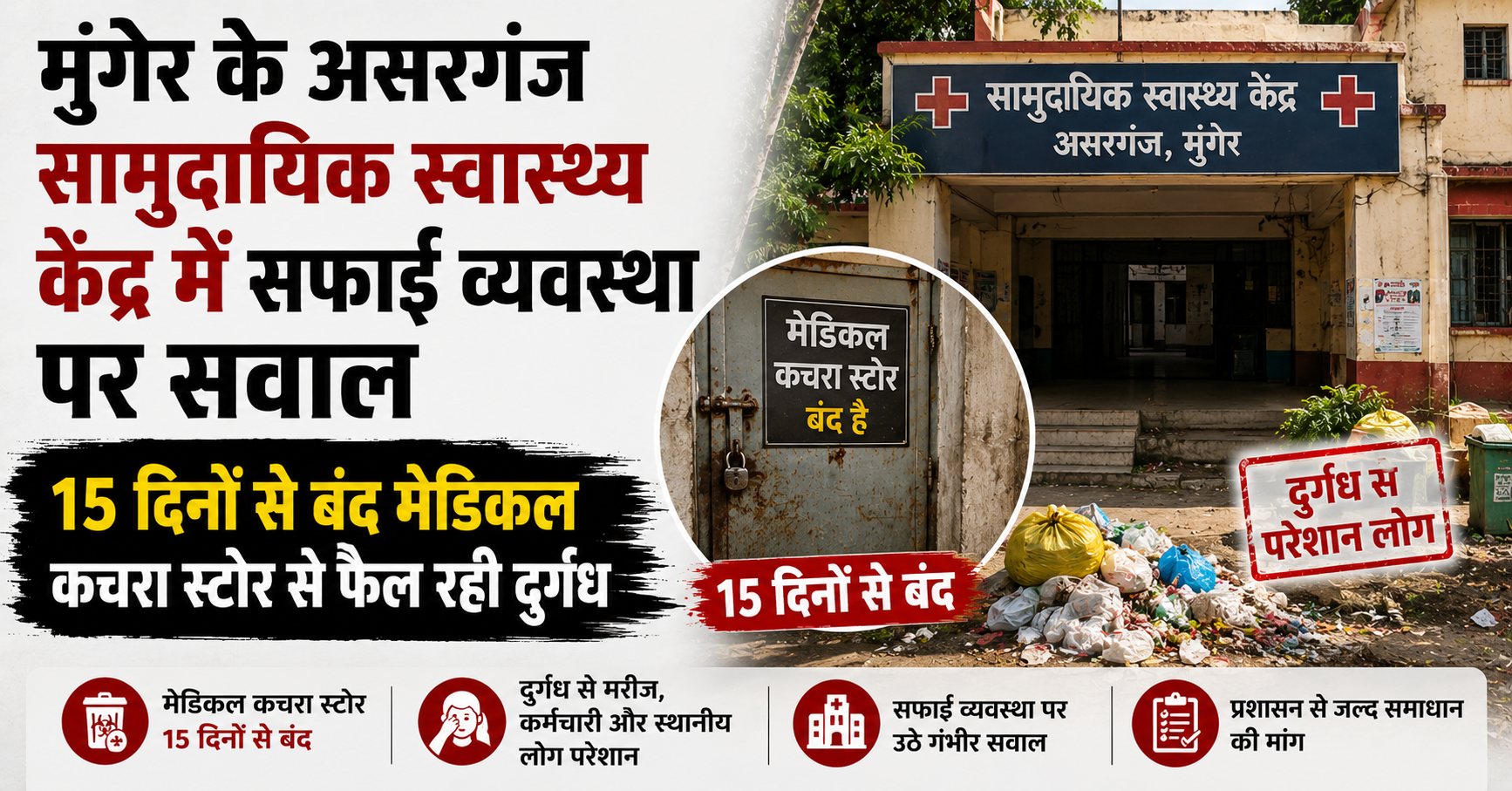
Questions Raised Over Cleanliness at Asarganj Community Health Centre, Medical Waste Storage Closed for 15 Days
Munger: Serious concerns have been raised regarding the cleanliness and waste management system at the Asarganj Community Health Centre (CHC) in Munger district. Reports suggest that the medical waste storage facility within the hospital premises has remained closed for nearly 15 days, resulting in foul odors spreading across the area. Patients, their attendants, hospital staff and local residents are reportedly facing considerable inconvenience due to the unpleasant conditions.
Proper management of medical waste is considered a crucial part of hospital sanitation. Hospitals generate various forms of biomedical waste, including used dressings, gloves, syringes, bandages and other healthcare-related materials. Such waste must be collected, stored and disposed of according to established safety protocols.
The prolonged closure of the medical waste storage facility has led to questions about the hospital administration's handling of sanitation and waste disposal. Residents and patients have urged the authorities to take immediate steps to resolve the issue.
Medical Waste Storage Facility Reportedly Closed for 15 Days
According to local reports, the designated storage facility for biomedical waste at the Asarganj Community Health Centre has not been functioning properly for the past two weeks.
Hospitals generate medical waste every day through patient treatment, injections, dressing procedures, laboratory activities and other healthcare services. This waste must be separated from regular household waste and handled through a specialized disposal system.
If biomedical waste is not stored and disposed of properly, it can affect both the hospital environment and public health.
Foul Odor Causing Problems for Patients and Residents
One of the major concerns arising from the reported closure of the waste storage facility is the foul smell spreading around the hospital premises.
Patients visiting the health centre for treatment are reportedly finding it difficult to remain in the area due to the unpleasant odor. Many patients are already dealing with health issues, and such conditions can add to their discomfort.
Family members accompanying patients and hospital employees are also said to be facing similar difficulties.
Local residents have expressed concern that healthcare facilities should provide not only medical treatment but also a clean and hygienic environment.
Proper Disposal of Medical Waste Is Essential
Biomedical waste requires special handling and should never be mixed with ordinary garbage.
Improper management of medical waste can increase the risk of infection and environmental contamination. For this reason, healthcare institutions are required to follow strict biomedical waste management guidelines.
Hospital authorities are responsible for ensuring that waste is collected safely, stored properly and removed regularly to prevent accumulation.
Failure to maintain these standards can create health and sanitation concerns.
Questions Raised About Hospital Cleanliness
The reported closure of the medical waste storage facility has led to questions about the overall cleanliness management at the Community Health Centre.
The hospital receives a significant number of patients every day. Therefore, maintaining hygiene and effective waste disposal systems is essential.
If the storage facility has remained closed due to technical, administrative or operational reasons, hospital authorities are expected to take prompt corrective measures.
Demand for Immediate Action
Patients and local residents have urged the hospital administration to address the issue without delay.
Many believe that the presence of foul odors associated with medical waste is unacceptable in a healthcare institution.
Authorities have been asked to ensure that waste is stored safely and disposed of according to established procedures. If the designated storage facility cannot be used, an alternative arrangement should be implemented immediately.
Patient Comfort May Be Affected
The condition of a hospital environment can have a significant impact on patient comfort and well-being.
People seeking medical treatment expect a clean, safe and hygienic atmosphere. Persistent foul odors can make waiting areas and hospital premises uncomfortable, particularly for elderly patients and those suffering from serious illnesses.
Cleanliness in healthcare facilities is not merely an aesthetic concern—it is directly related to infection control and patient safety.
Need for Regular Monitoring
Proper monitoring of biomedical waste management systems is essential.
Hospital officials should regularly inspect waste collection points, storage facilities and disposal arrangements to ensure compliance with established guidelines.
Sanitation workers should also receive proper training in handling medical waste and be provided with protective equipment such as gloves, masks and other safety gear.
Routine inspections can help identify problems before they become serious.
Concerns Among Local Residents
People living near the health centre have also voiced concerns regarding the foul smell reportedly emanating from the hospital premises.
Residents fear that prolonged accumulation of medical waste could create additional environmental and public health issues.
There are also concerns that stray animals could access improperly managed waste, potentially spreading it beyond the hospital premises.
Such risks highlight the importance of timely waste collection and disposal.
Important Role of Sanitation Staff
Sanitation workers play a crucial role in maintaining hospital hygiene.
They must be trained to distinguish between biomedical waste and ordinary waste and follow prescribed procedures for handling each category.
The use of protective equipment is essential when dealing with medical waste to reduce the risk of exposure to harmful materials.
If the designated waste storage facility remains unavailable, staff should receive clear instructions regarding alternative arrangements.
Matter Linked to Infection Control
Infection control is one of the most important responsibilities of any healthcare institution.
Materials used during patient treatment and other biomedical waste can pose health risks if not handled properly.
Improper disposal can increase the possibility of exposure among patients, healthcare workers and visitors.
This is why biomedical waste management forms an integral part of hospital sanitation systems worldwide.
Long-Term Solution Needed
Merely reopening the medical waste storage facility may not be sufficient.
Authorities should also ensure that similar problems do not recur in the future.
This may require a review of waste collection procedures, storage arrangements, disposal schedules and overall sanitation management practices.
Any structural, technical or administrative issues affecting the facility should be identified and resolved.
Hospital Administration Expected to Clarify Situation
Following complaints from patients and residents, the hospital administration is expected to provide clarification regarding the issue.
If the storage facility has indeed remained closed for approximately 15 days, authorities may need to explain the reasons and outline the steps being taken to address the problem.
If other factors are contributing to the foul odor, those should also be investigated and communicated transparently.
Clear communication can help maintain public confidence in the institution.
Oversight by Senior Health Officials May Be Necessary
If the issue is not resolved at the local level, senior officials from the Health Department may need to review the situation.
Community Health Centres serve as vital healthcare facilities for rural and semi-urban populations. Therefore, maintaining proper sanitation standards is essential.
Senior officials could conduct inspections, assess the waste management system and issue necessary directives to improve conditions.
Clean Environment Essential for Healthcare
People visit hospitals expecting professional medical care in a clean and hygienic environment.
The presence of foul odors, sanitation concerns or improper waste management can negatively affect patient experience and confidence in healthcare services.
Therefore, cleanliness should be treated as a fundamental component of healthcare delivery rather than a secondary concern.
The reported closure of the medical waste storage facility at the Asarganj Community Health Centre in Munger for nearly 15 days has raised serious concerns about sanitation and waste management practices.
Complaints of foul odors have reportedly affected patients, attendants, hospital staff and nearby residents.
Proper storage and disposal of biomedical waste are essential for maintaining hygiene, preventing infection and ensuring a safe healthcare environment. Hospital authorities are expected to investigate the issue and implement corrective measures as quickly as possible.
If the storage facility remains unusable due to technical or administrative reasons, alternative arrangements should be made immediately. Regular waste collection and disposal must also be ensured.
Health Department officials may review the situation if necessary to determine the actual conditions and ensure compliance with biomedical waste management standards.
Effective administrative oversight, routine sanitation measures and scientific disposal of medical waste will be critical to maintaining a safe and hygienic environment at the Asarganj Community Health Centre and preventing similar issues in the future.
I prefer this response