

Rainfall Likely to Remain Below Normal in August; El Niño May Disrupt Monsoon Pattern, Experts Warn
Patna: Even as August begins, Bihar is unlikely to witness widespread rainfall, with meteorologists warning that the state may continue to experience a rainfall deficit due to the influence of El Niño. Weather experts believe that the possibility of El Niño strengthening into a Super El Niño could further disturb the monsoon cycle, affecting rainfall distribution across the state during the remaining monsoon season.
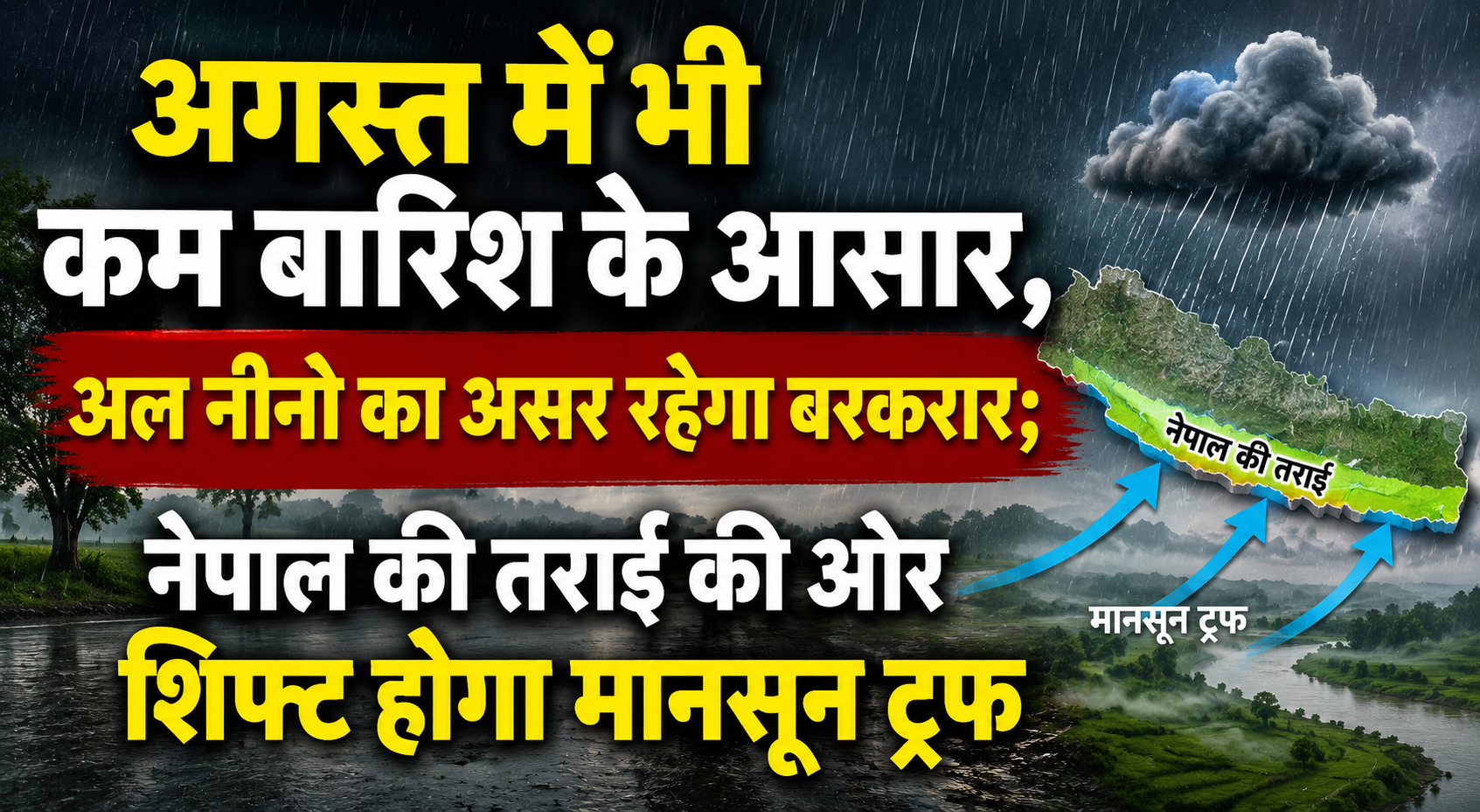
According to weather analysts, the monsoon trough is expected to remain closer to the Terai region of Nepal during the latter part of the season. As a result, several districts in Bihar may receive only scattered or light showers instead of the widespread rainfall typically expected during August.
Below-Normal Rainfall Expected in August
August is usually considered one of the wettest months of the southwest monsoon in Bihar. However, this year, meteorological conditions indicate that rainfall is likely to remain below normal in many parts of the state.
Experts say that although isolated spells of rain are expected, prolonged and widespread monsoon activity appears unlikely unless there is a significant shift in the weather system.
El Niño Continues to Influence Weather
Meteorologists attribute the weak monsoon activity largely to El Niño, a climate phenomenon associated with unusually warm sea surface temperatures in the equatorial Pacific Ocean.
El Niño affects atmospheric circulation patterns across the globe and often leads to weaker monsoon conditions over the Indian subcontinent. Scientists are also monitoring the possibility of the current El Niño intensifying into a Super El Niño, which could further suppress rainfall in eastern and northern India.
Monsoon Trough Likely to Shift Towards Nepal
Weather experts explain that the monsoon trough, which plays a crucial role in bringing rainfall to northern India, is expected to remain closer to the Nepal Terai region during the later phase of the monsoon.
When the trough shifts northward toward Nepal, Bihar often experiences reduced rainfall, while heavy showers occur over the Himalayan foothills and adjoining regions.
This weather pattern is expected to continue for the time being, limiting widespread rain across many districts of Bihar.
Uneven Distribution of Rainfall
Although some districts may receive intermittent rainfall due to local weather systems, experts believe the overall distribution of rainfall is likely to remain uneven.
Northern districts close to Nepal may receive occasional moderate showers, while central and southern Bihar could continue to experience relatively dry conditions and longer rain-free intervals.
Impact on Agriculture
The possibility of below-normal rainfall has become a matter of concern for farmers across Bihar. Agriculture in the state depends heavily on monsoon rains, particularly during the paddy transplantation season.
Reduced rainfall could affect sowing, irrigation requirements, and crop growth if the dry spell continues for an extended period. Farmers may increasingly depend on canals, tube wells, and other irrigation facilities to protect their crops.
Agricultural experts have advised farmers to adopt efficient water management practices and make maximum use of available irrigation resources.
Rising Humidity Despite Limited Rain
Despite reduced rainfall, humidity levels are expected to remain high across Bihar. This combination of warm temperatures and high moisture levels may create uncomfortable weather conditions for residents.
People are likely to experience hot and humid afternoons even in areas where rainfall remains limited.
Water Resources Under Pressure
A prolonged rainfall deficit may also affect reservoirs, ponds, rivers, and groundwater recharge in several parts of the state.
Authorities are closely monitoring water availability to ensure adequate irrigation and drinking water supply if below-normal rainfall continues during the remaining monsoon period.
Health Advisory During Humid Weather
Medical experts have advised people to remain hydrated and avoid prolonged exposure to heat and humidity.
Children, elderly individuals, and those with existing health conditions should take extra precautions, as humid weather can increase the risk of dehydration, fatigue, and heat-related illnesses.
Administration Monitoring the Situation
The state government and disaster management authorities are keeping a close watch on weather developments.
Departments concerned with agriculture, irrigation, water resources, and disaster management have been instructed to monitor rainfall patterns and remain prepared for any changes in weather conditions.
Officials are also reviewing contingency plans to address possible agricultural challenges arising from insufficient rainfall.
Experts Advise Efficient Water Management
Climate experts emphasize that changing weather patterns linked to global climate variability highlight the importance of efficient water conservation.
They recommend rainwater harvesting, improved irrigation techniques, groundwater recharge initiatives, and sustainable agricultural practices to minimize the impact of irregular monsoon conditions.
Possibility of Localized Rainfall
Although widespread rainfall appears unlikely in the immediate future, localized thunderstorms and scattered showers may continue to occur due to local atmospheric instability.
These isolated rain events may temporarily provide relief from heat in some districts but are unlikely to significantly improve the state's overall rainfall deficit.
Bihar is expected to experience below-normal rainfall during August, with El Niño continuing to influence the southwest monsoon. The expected northward shift of the monsoon trough toward Nepal's Terai region may further reduce widespread rainfall across the state. While isolated showers remain possible, meteorologists believe that overall monsoon activity is likely to stay weak unless weather systems change significantly. Farmers, residents, and government agencies are being advised to remain prepared, conserve water, and closely monitor official weather updates throughout the remainder of the monsoon season.