

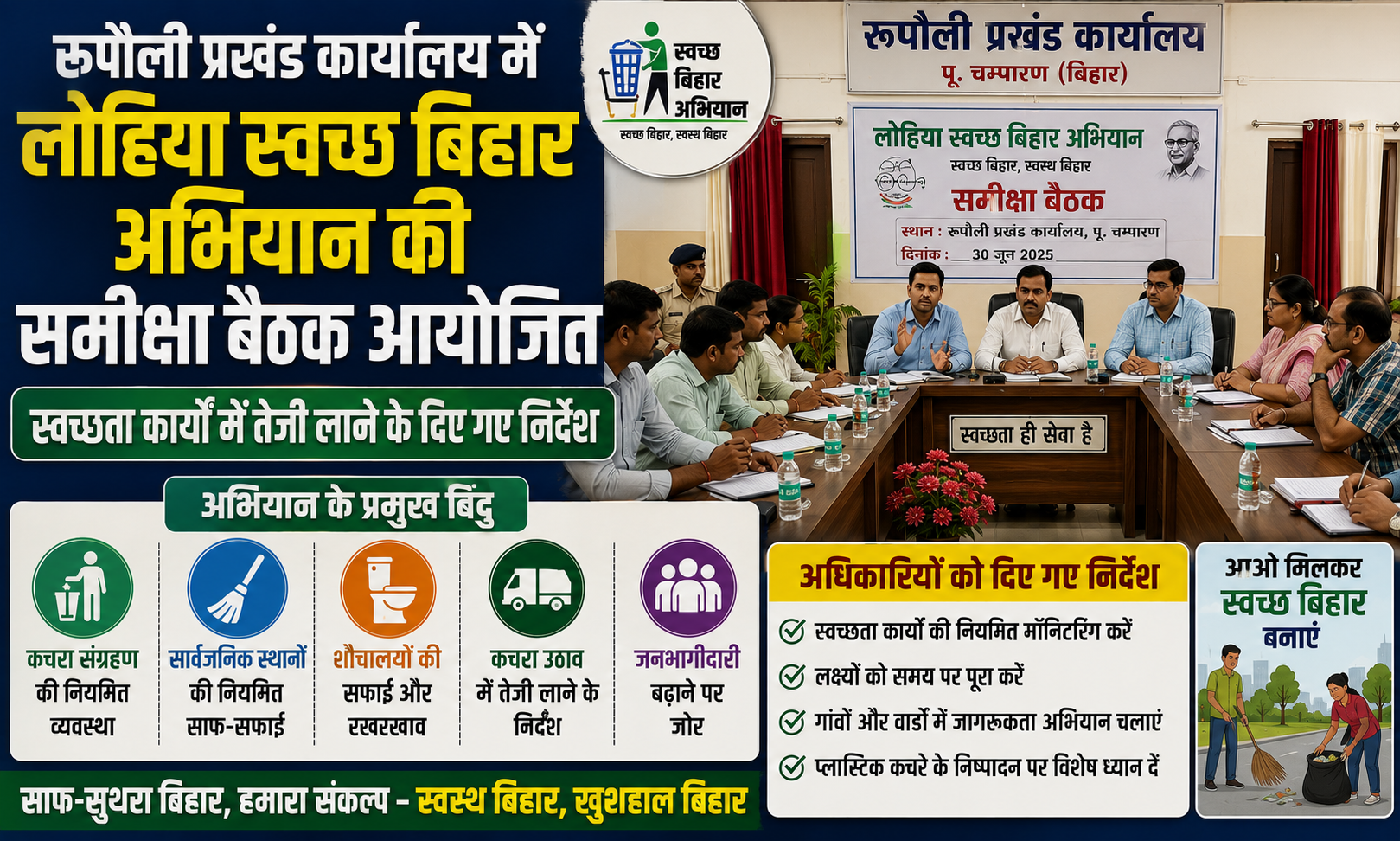
Review Meeting of Lohia Swachh Bihar Abhiyan Organized at Rupauli Block Office; Directives Issued to Accelerate Sanitation Works
An important review meeting under the Lohia Swachh Bihar Abhiyan was organized in the office chamber located at the Rupauli block headquarters in Purnia district, Bihar. The primary objective of this meeting was to gauge the ground-level status of sanitation, Solid and Liquid Waste Management, and the implementation of government-run cleanliness schemes at the rural level. Administrative officials at the block level, sanitation coordinators, and concerned personnel participated in the meeting.
Which Key Points Were Discussed in the Meeting?
Held with the resolve to make rural pockets clean, beautiful, and healthy, the meeting reviewed ongoing sanitation drives across various wards and panchayats. The main points of discussion included:
Door-to-Door Garbage Collection: Progress reports on garbage lifting by sanitation workers (Swachhata Mitras) visiting homes in rural areas were reviewed. Panchayats where this arrangement was found sluggish were directed to speed it up.
Solid and Liquid Waste Management (SLWM): Updates were discussed regarding soak pits and shed construction being built for proper drainage of wastewater and scientific disposal of dry and wet waste in villages.
Community and Individual Toilets: Under ODF Plus, identification of left-out families to provide them the benefits of toilet schemes and information on the utility status of pre-constructed toilets were gathered.
Awareness Campaigns: Emphasis was laid on promoting events like miking, wall paintings, and street plays (nukkad natak) to generate awareness about sanitation among villagers.
Strict Directives and Guidelines Issued by Officials
Officials chairing the review meeting stated in clear terms that the Lohia Swachh Bihar Abhiyan is among the government's priority schemes. No form of negligence or laxity will be tolerated in this regard.
Target-Based Work: All concerned personnel were directed to fulfill set sanitation targets in their respective areas within a defined timeframe.
Establishing Accountability: Warnings were also issued to initiate disciplinary action against personnel showing disinterest or adopting an indifferent attitude.
Collective Participation: Officials stated that unless rural citizens and public representatives enthusiastically participate in this campaign, a fully clean society cannot be envisioned. Therefore, fostering public cooperation is essential.
Expectations for Rupauli's Development and Sanitation
Following this review meeting, sanitation works in the Rupauli block area are fully expected to gain a fresh momentum. Locals believe that if the administration's guidelines are strictly followed, Rupauli's villages will also set an example of clean, beautiful arrangements mirroring urban areas. This administrative proactivity is creating a positive environment surrounding sanitation in the region.