

Skill Development Programme Planned Across 3,588 Institutions, Focus on Employment
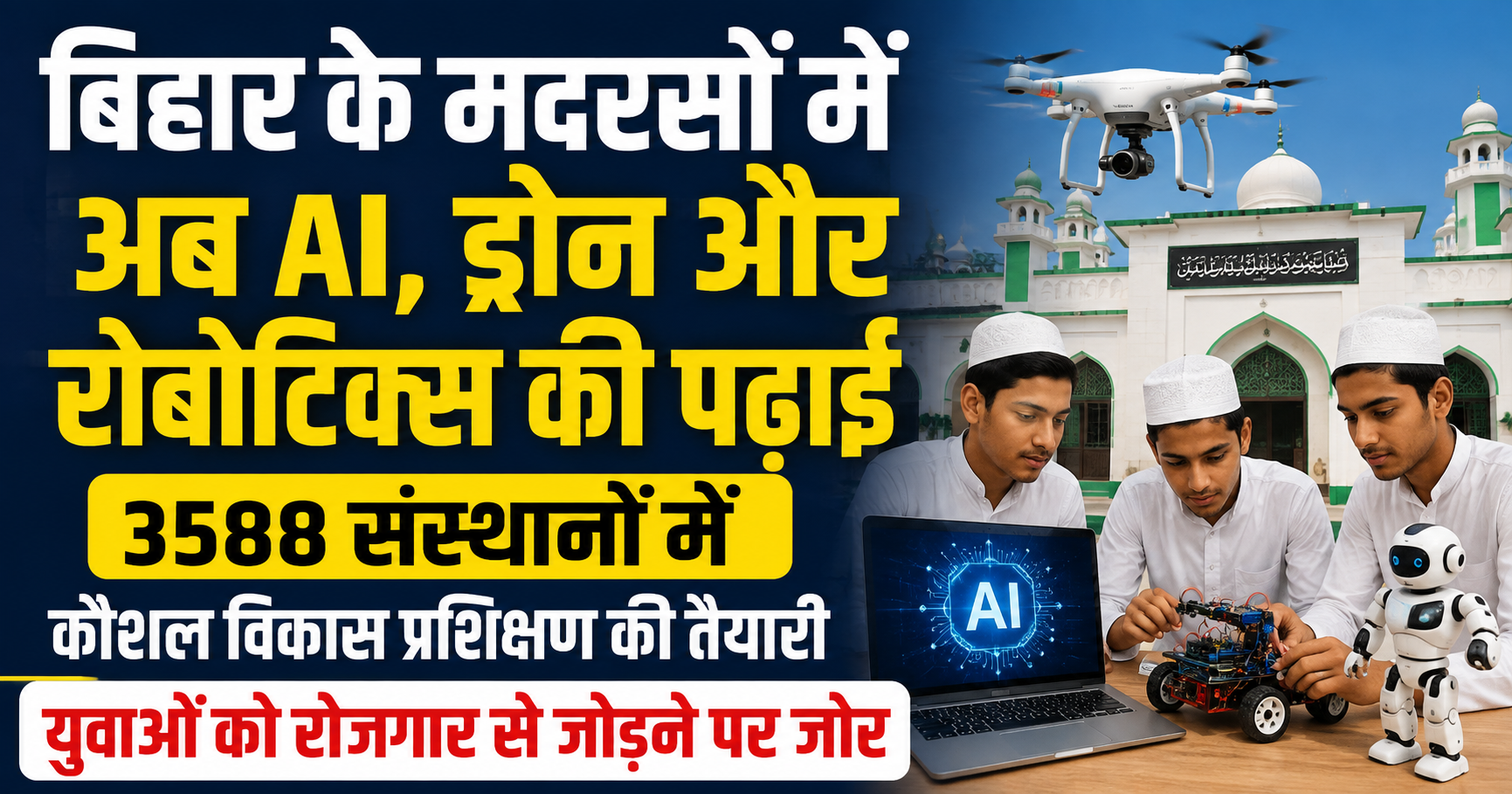
Patna: Bihar is preparing to connect madrasa education with modern skills and employment-oriented training. Under the proposed initiative, students from the minority community will receive opportunities to develop skills in Artificial Intelligence (AI), drone technology, coding, robotics, electric vehicles, mobile repairing, computer education and electrical wiring.
According to the information provided, the skill development programme is being planned across 3,588 madrasas in Bihar. Of these, 1,942 are reported to be aided madrasas, while 1,646 fall under the unaided category. The objective is not only to provide technical training but also to connect students with employment and self-employment opportunities.
The programme is reportedly being planned with the cooperation of the National Small Industries Corporation Limited (NSIC), a Government of India enterprise. However, the exact figures and details of the proposed agreement should be verified through an official notification from the Bihar Minority Welfare Department before publication as confirmed facts.
Modern Skills to Become Part of Madrasa Education
The employment market is changing rapidly. Traditional academic qualifications alone are increasingly being supplemented by technical and practical skills.
Industries are witnessing growing demand for professionals trained in AI, automation, robotics, electronics, programming and electric mobility.
In this context, introducing modern technical skills in madrasas could help students become better prepared for emerging employment opportunities.
Students could receive training according to their interests as well as the employment opportunities available in their local areas. This could create pathways toward jobs, apprenticeships and self-employment after completion of their education.
Skill Development Planned Across 3,588 Madrasas
According to the details provided, the proposed skill development programme is intended to reach all 3,588 madrasas in Bihar.
The network reportedly includes 1,942 aided and 1,646 unaided madrasas.
If modern skill training is implemented effectively across such a large network, a significant number of students could gain access to technical education.
However, simply introducing a curriculum will not be enough. Adequate trainers, computers, internet facilities, laboratories, electronic equipment and other training resources will be required for effective implementation.
Training From AI to Drone Technology
Artificial Intelligence is expected to be one of the important areas of training.
AI is rapidly being used in education, healthcare, banking, agriculture, industry and digital services. Students could be introduced to basic AI concepts, digital tools, data and programming.
Drone technology is another emerging field with potential employment opportunities. Drones are increasingly being used for agricultural surveys, land surveys, mapping, disaster management and other technical applications.
Basic drone training could include drone operation, safety procedures, technical components and relevant regulations.
Coding and Robotics to Strengthen Technical Skills
Coding and robotics can help students develop logical thinking and problem-solving abilities.
At the introductory level, students could learn programming concepts, basic computer logic and practical projects.
Robotics training could introduce students to sensors, motors, microcontrollers and automation technologies.
Practical exposure to these subjects could provide students with a stronger foundation for higher technical education and future employment.
Electric Vehicle Sector Offers New Opportunities
The electric vehicle sector is also expanding rapidly.
With increasing use of electric two-wheelers and four-wheelers, demand is growing for technicians who understand electric vehicle systems, batteries, motors and charging infrastructure.
Including electric vehicles in the proposed programme could help students enter this emerging field.
Training could cover the basic structure of electric vehicles, battery systems, motors, charging technology and safety procedures.
With practical experience, trained students could potentially find work in vehicle servicing, technical support and related businesses.
Mobile Repairing and Computer Education
Not every student will necessarily be interested in advanced technology fields. Therefore, practical trades such as mobile repairing and computer education could also be important components of the programme.
Mobile phones are now widely used across society, creating continued demand for repair and technical support services.
Computer education can provide students with the foundation required to participate in the digital economy. Training could include typing, office software, internet use, digital services and basic programming.
Electrical Wiring Could Create Self-Employment Opportunities
Electrical wiring is another practical trade that can provide local employment and self-employment opportunities.
Trained individuals can work on electrical installations in homes, shops and small businesses.
With experience and appropriate certification, students could also establish their own small service businesses.
This means the proposed programme could potentially focus not only on salaried employment but also on entrepreneurship and self-employment.
Employment Fairs to Connect Students With Jobs
One of the important elements of the proposed initiative is reportedly its focus on employment.
According to the information provided, employment fairs will be organised at the district level to connect trained students with companies and potential employers.
Such fairs could provide students with direct access to employers after completing their training.
If training institutions and companies coordinate in advance, courses can be designed according to actual industry requirements, potentially improving employment outcomes.
NSIC Expected to Support the Programme
The programme is reportedly planned with support from the National Small Industries Corporation Limited (NSIC).
NSIC is a Government of India enterprise that operates technical service centres and provides skill development training in high-tech as well as traditional areas.
NSIC has also been involved in technical training initiatives related to emerging fields, including drone technology.
If NSIC's technical expertise and network are used for training students in Bihar's madrasas, the programme could benefit from industry-oriented training methods.
Bihar Already Expanding Modern Skill Development
Bihar has recently seen several initiatives aimed at strengthening modern skill development.
In July 2026, the Bihar Government and the Ministry of Skill Development and Entrepreneurship exchanged an MoU for the Skill India International Centre in Patna. The centre is intended to prepare Bihar's youth for employment opportunities abroad.
The initiative includes areas such as language training, international employment counselling, certification support and safe migration-related services.
These developments indicate a broader effort to connect skill development in Bihar with emerging employment opportunities.
AI Training Initiatives for Minority Youth
At the national level, initiatives have also been undertaken to provide modern technical training to minority youth.
In April 2026, the Ministry of Minority Affairs entered into an MoU with IIT Patna under the PM VIKAS programme. The initiative included training for 600 minority youth in emerging employment areas such as AI Technocrat and Business Analytics Executive.
Against this background, introducing AI, coding and other technical subjects in madrasas could be viewed as part of a broader strategy to expand modern skill development among minority youth.
Quality of Training Will Be the Biggest Challenge
Implementing a skill development programme on such a large scale will not be easy.
One of the biggest challenges will be maintaining training quality.
Simply enrolling students and issuing certificates without providing meaningful practical training would defeat the purpose of the programme.
Qualified trainers, modern equipment, regular practical classes, industry experts and proper assessment will therefore be essential.
The infrastructure available at each madrasa will also need to be assessed. Where necessary, computer laboratories and technical equipment may have to be provided.
Certification and Placement Are Important
Training becomes more useful when it is linked to recognised certification and employment opportunities.
Students should receive guidance on applying for jobs, attending interviews and starting small businesses after completing their courses.
Partnerships with companies for apprenticeships and placements could create a clearer pathway from training to employment.
Equal Opportunities for Female Students
Female students should also receive equal access to the proposed skill development programme.
Training in computers, coding, AI, digital services and other technical fields could create opportunities for women in employment, freelancing and digital entrepreneurship.
Safe and accessible training environments would be important to ensure effective participation by female students.
Building a Bridge Between Education and Employment
The most significant aspect of the proposed programme is its attempt to connect madrasa education with the requirements of the modern employment market.
Adding computer education, AI, robotics, drone technology and electric vehicle training could prepare students for the changing economy.
This does not necessarily mean replacing traditional madrasa education. Instead, skill development could be introduced as an additional, employment-oriented component.
More Trades Could Be Added in the Future
Technology and employment requirements are constantly changing.
In the coming years, areas such as cybersecurity, data analytics, solar technology and digital marketing could also see growing demand.
The skill development programme will therefore need to be updated periodically.
Courses should be revised according to changing industry requirements so that students acquire skills that remain relevant in the job market.
The proposed initiative to provide training in AI, drone technology, coding, robotics and electric vehicles in Bihar's madrasas could create a new pathway between education and employment.
According to the information provided, the programme is being planned across 3,588 madrasas, including 1,942 aided and 1,646 unaided institutions.
The proposed training areas include AI, drones, coding, robotics, electric vehicles, mobile repairing, computer education and electrical wiring. The plan also reportedly includes district-level employment fairs aimed at connecting trained students with companies and job opportunities.
However, the specific figures concerning the 3,588 madrasas and details of the proposed MoU should be officially verified before they are published as final facts.
If the programme provides quality training, qualified instructors, modern laboratories, recognised certification, apprenticeships and genuine placement opportunities, it could create significant employment and self-employment opportunities for madrasa students.
The initiative could also help minority youth gain skills aligned with the requirements of the modern economy while continuing their existing educational journey.