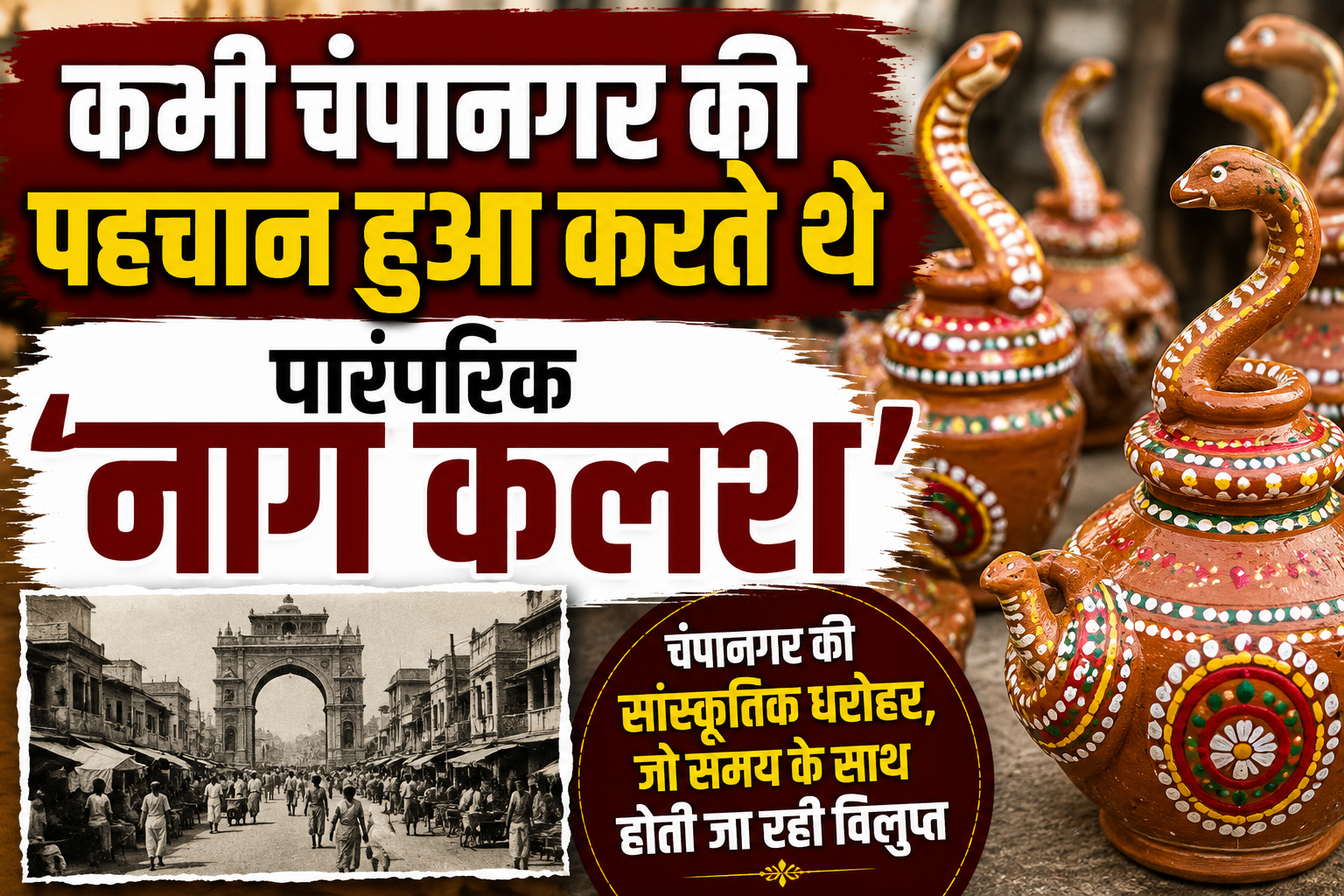
Traditional 'Nag Kalash' Once Made in Champanagar, Now the Craft Survives in Just One Place An Ancient Art Dying Under the Wave of Modernity and Neglect
Bhagalpur (Special Correspondent): The Champanagar region of Bhagalpur—world-renowned in the pages of history for its rich cultural heritage, Sufi shrines, and silk craftsmanship—was once known not just as a 'Silk City', but also for a distinct religious and traditional craft. The 'Nag Kalash' (snake urns) crafted here were once emblematic of household faith and festivals like Nag Panchami. There was a time when hundreds of artisans in the lanes and potter colonies of Champanagar spun their wheels day and night to create artistic Nag Kalash, dispatching them from here to various parts of the country. However, as the wheel of time turned, the race of modernity, the growing trend of plastic and fiber goods, and a lack of governmental patronage pushed this ancient folk craft to the brink of extinction. Today, the reality is that across Champanagar and its surrounding areas, this traditional business of making Nag Kalash has dwindled down to just a single location, where a lone family somehow keeps this heritage alive.
What Is a Nag Kalash and What Is Its Religious and Cultural Significance?
Nag Panchami and Mansa Puja hold a special place in Sanatan culture and particularly within the folk traditions of the Ang region (Bhagalpur and its vicinity).
Craft Dedicated to the Serpent Deity: A Nag Kalash is a special, decorated earthen urn featuring artistic reliefs of serpent deities molded onto its surface. On the occasion of Nag Panchami, rural and urban families install these urns and offer milk and puffed rice in worship of the serpent god to protect their households from serpent afflictions and untimely death.
Nuances of Traditional Art: Crafting these urns demands special skills distinct from ordinary pottery. Etching snake hoods, coiled bodies, and other mythological figures by hand onto wet clay is an intricate and patient task known only to master artisans.
The Golden Era: When the Sound of the Potter's Wheel Echoed in Every Champanagar Home
According to elderly artisans and local history experts, this cottage industry in Champanagar was at its peak three to four decades ago:
A Major Source of Livelihood: Months before the month of Sawan, dozens of families here engaged in molding and baking Nag Kalash. The demand for these urns spun on Champanagar wheels extended not just across Bhagalpur district, but into neighboring districts and several areas of Jharkhand.
Economic Sustenance: The livelihoods of families tied to this ancestral art depended entirely on this trade. Generation after generation, youth learned this skill and carried forward the legacy of their forebears.
How Did This Trade Decline? (Main Causes of Change)
Massive shifts in society and markets over time dealt severe blows to this unique folk art:
Advent of Plastic and Readymade Idols: Nowadays, readymade snake idols and urns made of Plaster of Paris (PoP) and plastic are readily available in markets at low prices. In the blind rush of modernity, people have begun adopting these artificial substitutes over traditional earthen urns.
Expensive Clay and Fuel: For potters working the wheel in the Silk City, sourcing fertile clay and buying wood or coal to bake the urns has become exceedingly expensive. With rising production costs and unremunerative prices, the younger generation turned away from this work.
Governmental Neglect: Administrative assistance and incentives meant to revive traditional cottage industries failed to reach this craft, leaving it to wither away.
The Final Link: This Ancestral Business Now Survives in Just One Spot
The workshops producing Nag Kalash that were once visible in every corner of Champanagar have vanished today. Currently, only one such family remains in Champanagar, keeping the final torch of this tradition burning despite adverse conditions and financial hardship:
The Generation's Last Hope: The elderly artisan of this family shares that they preserve this mark of their ancestors not for money, but out of devotion to their culture and traditions.
Limited Production and Toil: Now, they can only prepare a handful of urns during the Sawan and Nag Panchami season. Even after day-and-night labor, when profits fail to materialize, the family's youth are forced to turn toward other petty jobs or daily wage labor.
A Plea for Rescue: Can This Heritage Be Saved?
Cultural scholars and local enlightened citizens believe that if the government, district administration, and art-culture department do not pay attention in time, this sole surviving shop making Nag Kalash in Champanagar will be buried in the pages of history forever within the next few years.
Need for Encouragement of Artisans: If these traditional craftsmen receive financial support, interest-free loans, easy availability of clay, and opportunities to set up stalls in fairs and exhibitions, this dying art can be given a fresh lease of life.
Training the Younger Generation: Workshops should be organized to introduce school and college students to this folk art so that our cultural roots remain robust.
This dwindling trade of Nag Kalash in Champanagar is not merely the story of an extinct earthen vessel; it is a tale of the erosion of our rich folk culture that once constituted our identity. Amidst the glitz of modernity, we must not forget that our true heritage resides in the hands of such traditional skilled artisans. It remains to be seen whether this last surviving shop in Bhagalpur will manage to carry this heritage forward or if, due to administrative apathy, this tradition will remain nothing more than history.