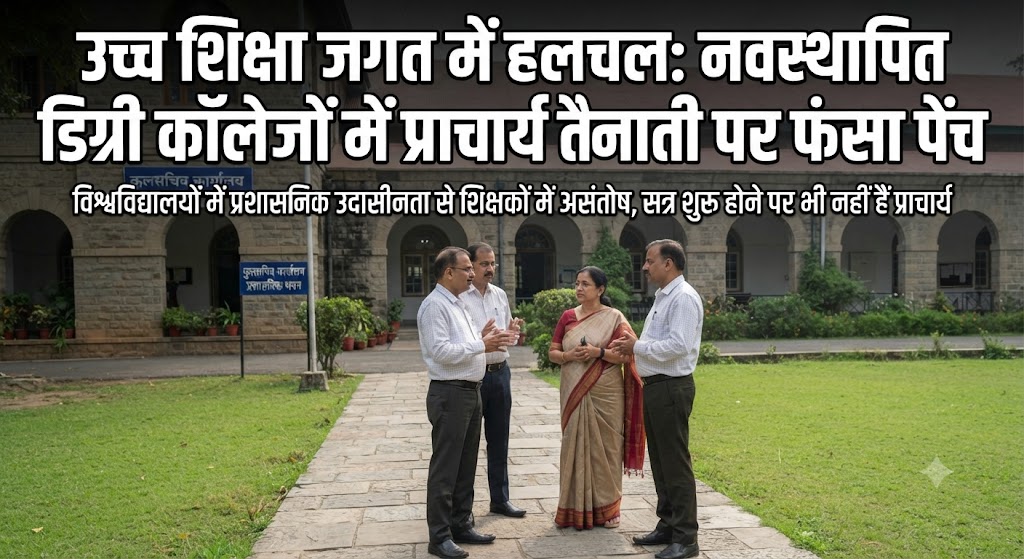
Turmoil in Higher Education Deadlock Over Principal Postings in Newly Established Degree Colleges; Multiple Principals Plead to Halt Placements Citing Illness and Personal Hardships
Bhagalpur: Amid ongoing administrative endeavors by the Tilka Manjhi Bhagalpur University (TMBU) and across universities statewide to streamline administrative and academic frameworks in newly established block-level degree colleges, a fresh roadblock has materialized. Following the recent posting orders for principals across various newly minted degree colleges in the state, multiple appointees have submitted formal representations to university authorities expressing their inability to assume office. Citing severe personal ailments, chronic illnesses, and proximity to retirement, these principals have laid bare their physical and familial constraints, touching off intense deliberations at the university level.
What Is the Core Issue and Why the Resistance?
State governments and universities have systematically inaugurated fresh block-level degree colleges to broaden the horizons of higher education:
Objections to Posting Directives: When fresh posting rosters for principals across newly established degree colleges affiliated with TMBU and peer universities were published, numerous senior faculty members and principals registered immediate grievances.
Illness and Imminent Retirement: Multiple applicants specified in their written appeals that they are battling serious medical conditions or facing imminent retirement dates, rendering relocations to distant rural colleges physically untenable.
Deficits in Basic Infrastructure: Rumors within academic circles suggest that the glaring absence of proper buildings, laboratories, and libraries in several nascent colleges serves as an underlying deterrent driving these hesitations.
Exploring 'Principal-in-Charge' Arrangements as an Alternative
Faced with an influx of applications declining regular placements, universities and higher echelons of management are actively contemplating alternative administrative solutions:
Directives from Higher Platforms: High-level administrative reviews indicate that where designated principals have failed to report or requested formal re-evaluations on valid grounds, alternate operational models must be implemented.
Preparations for Charge-Holders: Under this contemplated framework, senior professors or associate professors from established constituent colleges may be appointed as 'Principal-in-Charge' to oversee these newly minted institutions, ensuring instructional activities do not stall.
Impact on Academic Sessions and Student Futures
This deadlock surrounding principal placements has begun compounding anxieties for students enrolled in these fledgling colleges:
Administrative Vacuum: The failure of regular principals to take charge leaves colleges unable to process administrative decisions, student scholarships, admissions, and timely examination verifications.
Stagnation in Development: The pace of fund utilization and infrastructural expansion across these campuses has similarly stuttered amidst this administrative ambiguity.
The impasse surrounding principal placements in newly established degree colleges has once again underscored structural challenges within the managerial apparatus of higher education. While numerous principals have sought stays on their deployments citing illness and domestic hardships, university administrators are pivoting toward 'Principal-in-Charge' arrangements to weather the crisis. The ultimate resolution adopted by the university regarding these representations will dictate the trajectory of instruction in these nascent institutions in the days ahead.