

When Will Metro Trains Start Running in Bihar's Four Cities? Work Yet to Begin Despite Cabinet Approval
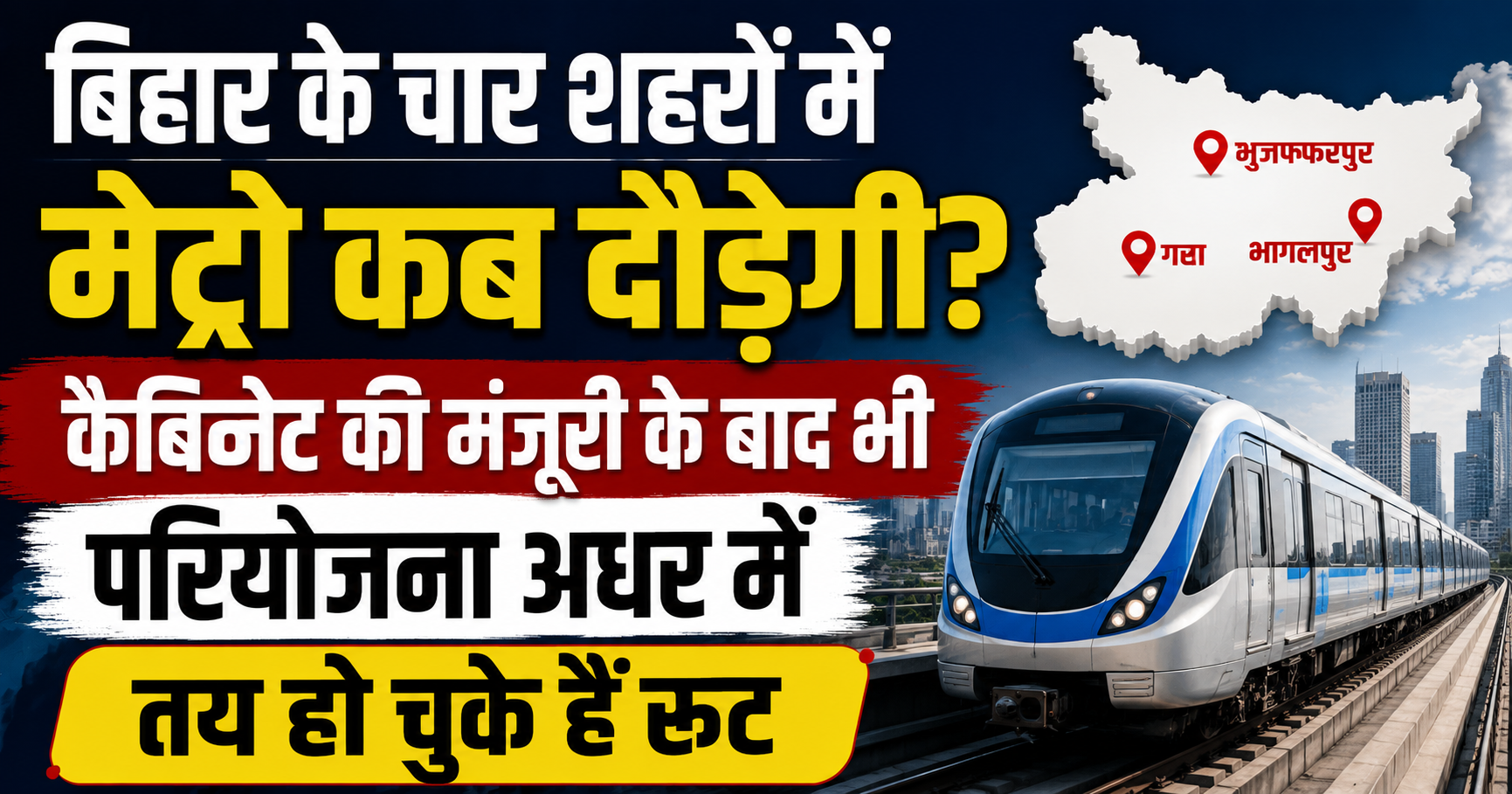
Patna: Bihar's ambitious plan to introduce metro rail services in four major cities remains stuck at the planning stage despite receiving approval from the state cabinet. Although the proposed metro routes for these cities have already been identified, construction work has not yet begun, raising questions about when residents will finally see metro trains operating.
The state government considers the metro project a key step toward modernizing urban transportation and supporting the state's long-term development. However, experts believe that close coordination between the state and central governments, financial approvals, and completion of various stages of the Detailed Project Report (DPR) will be essential before construction can begin.
Which Cities Are Included in the Metro Plan?
While the Patna Metro Rail Project is already under construction, the Bihar government has also proposed metro or metro-lite systems for Muzaffarpur, Gaya, Bhagalpur, and Darbhanga.
These cities have been selected because of their growing populations, increasing traffic congestion, commercial importance, educational institutions, and long-term urban development needs.
Why Has Work Not Started Despite Cabinet Approval?
Following the state cabinet's approval, it was widely expected that the project would move quickly into the implementation phase. However, progress has been delayed due to pending procedures such as land acquisition, preparation and approval of Detailed Project Reports (DPRs), financial planning, technical clearances, and investment arrangements.
Urban infrastructure experts point out that metro rail projects require extensive technical, economic, and environmental studies before construction can begin.
Metro Routes Already Identified
According to the preliminary plan, proposed metro corridors have already been identified for all four cities. The planned routes are designed to connect railway stations, bus terminals, major markets, educational institutions, hospitals, and densely populated residential areas.
Despite the route planning being completed, delays in selecting implementing agencies, issuing tenders, and completing administrative formalities have prevented the project from moving forward.
Metro Expected to Ease Traffic Congestion
Vehicle numbers have increased significantly in Bihar's major cities over the past few years, resulting in heavier traffic congestion, longer travel times, and rising air pollution.
The proposed metro system is expected to strengthen public transportation, reduce dependence on private vehicles, improve traffic management, and provide faster, more reliable urban mobility.
Economic Benefits of the Project
Experts believe that metro rail projects serve not only as transportation infrastructure but also as major drivers of economic development. Construction and operation of metro systems are expected to generate thousands of direct and indirect employment opportunities.
The project could also boost the real estate sector, retail businesses, tourism, hospitality, and other commercial activities, particularly around proposed metro stations.
Environmental Advantages
Metro rail is considered an environmentally sustainable mode of transportation. Increased use of public transit is expected to reduce private vehicle usage, lower carbon emissions, and improve urban air quality.
Urban planners believe that modern mass transit systems are becoming increasingly essential as cities continue to expand and urbanize.
Public Expectations Continue to Rise
Residents of Muzaffarpur, Gaya, Bhagalpur, and Darbhanga are hopeful that the government will soon take concrete steps to implement the project. Students, office workers, and business owners believe that metro services would make daily commuting faster, safer, and more convenient.
Local business associations have also urged the government to accelerate the project, emphasizing its potential to stimulate regional economic growth.
Financial and Technical Challenges
Metro rail projects require substantial financial investment. As a result, coordination between the central and state governments on funding, loans, and possible private-sector participation is considered crucial.
In addition, processes such as land acquisition, traffic studies, environmental clearances, and technical evaluations often require considerable time before construction can begin.
Experts Recommend a Phased Approach
Urban development experts suggest that Bihar could consider implementing the project in phases. Depending on passenger demand and city size, cost-effective alternatives such as Metro Lite or Metro Neo could also be explored.
They emphasize that transportation systems should be designed according to each city's population, projected ridership, and economic capacity to ensure long-term sustainability.
Government's Next Steps
The Bihar government has stated that it is continuing work on Detailed Project Reports, technical assessments, and financial planning for the proposed metro systems. Once these processes are completed and the required approvals are obtained, the project is expected to move toward implementation.
However, no official timeline has yet been announced for the start of construction or the commencement of metro operations in any of the four proposed cities.
The proposed metro projects for Muzaffarpur, Gaya, Bhagalpur, and Darbhanga are regarded as major initiatives for strengthening Bihar's urban infrastructure and public transportation network. Although the state cabinet has approved the proposals and preliminary metro routes have already been identified, construction has yet to begin. Residents continue to wait for the next phase of the project, hoping that the remaining approvals and planning processes will be completed soon. If implemented successfully, these metro systems could significantly transform urban mobility and contribute to the economic and social development of Bihar's rapidly growing cities.