

Doctors Go on Strike at PMCH After Alleged Clash With Patient’s Relatives, Patients Face Uncertainty
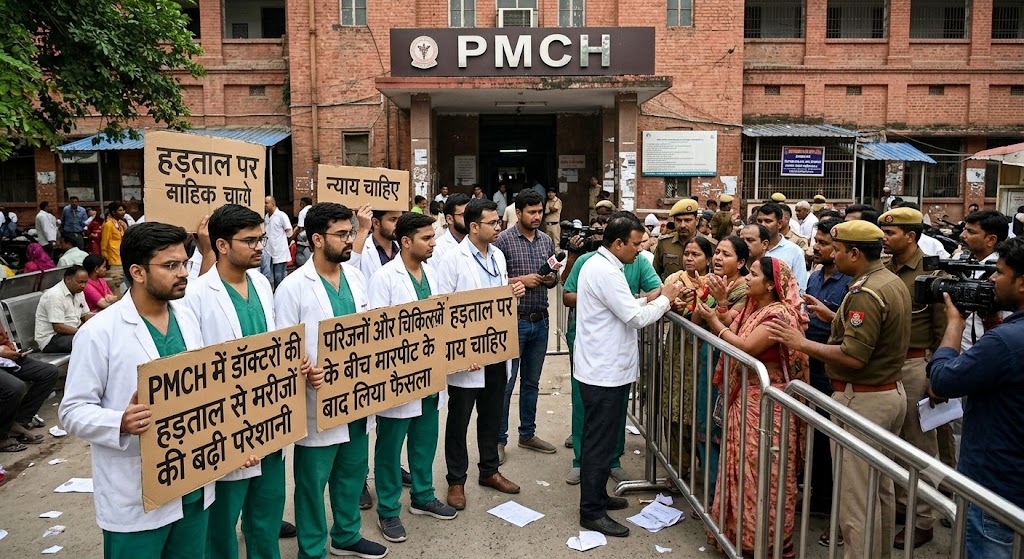
The health services at Patna Medical College and Hospital (PMCH) have come under concern after reports that doctors have once again gone on strike. According to the information available, doctors reportedly decided to stop work following an alleged physical altercation between a patient’s relatives and medical staff at the hospital. The incident reportedly created tension on the hospital premises and caused anxiety among patients and their families.
PMCH is one of Bihar’s largest and most important government hospitals. Patients from Patna as well as several districts across the state come here for treatment, including serious and complicated cases. Any disruption in medical services can therefore have a significant impact on patients, particularly those who depend on the hospital for emergency and specialized care.
However, the exact duration of the strike, the departments affected and the complete circumstances surrounding the alleged altercation still need to be officially clarified. The hospital administration faces the difficult task of ensuring the safety of doctors while also protecting the interests of patients and their families.
Tension Increased After Alleged Altercation
According to reports, a dispute allegedly broke out between a patient’s relatives and doctors over an issue at the hospital. The disagreement reportedly escalated into a physical altercation. Following the incident, doctors expressed their displeasure and decided to stay away from work.
Any dispute between doctors and patients’ relatives at a hospital is considered a serious matter. Large numbers of patients visit PMCH every day, many of them in critical condition. In such circumstances, any confrontation can disrupt the normal functioning of the hospital.
Following the incident, concern also grew among patients and their relatives who were present on the premises. Their primary worry was whether the reported strike would affect their treatment and access to essential medical services.
Patients Concerned About Treatment
The news of the doctors’ strike has increased uncertainty among patients who have reached PMCH for treatment. A large number of people depend on government hospitals for affordable medical care. Many patients require regular consultations, diagnostic tests, medicines, surgery or specialized treatment.
If the strike continues for an extended period, non-emergency services such as outpatient departments, routine consultations, diagnostic procedures and some ward-related services could potentially be affected. Patients arriving from distant districts could face additional difficulties because they may not know whether they will receive treatment after reaching the hospital.
For many families, finding an alternative hospital at short notice can also be difficult. Financial constraints and the availability of specialized treatment are major factors, particularly for families that rely primarily on government healthcare facilities.
Emergency Services Remain a Major Concern
One of the most important issues during any hospital strike is the status of emergency services. Critically ill patients require immediate medical attention, and delays can sometimes make their condition worse.
If emergency services are affected by the strike, the administration would face the additional responsibility of arranging alternative medical support for critical patients. Life-saving and essential services should ideally continue even during a dispute.
The hospital administration may need to coordinate with senior doctors, alternative medical teams and other healthcare personnel to ensure that emergency patients do not suffer because of the disruption.
Doctors’ Safety Becomes a Key Issue
The alleged incident has once again brought the issue of doctors’ safety in hospitals into focus. Medical associations and healthcare workers have repeatedly emphasized the need for stronger security arrangements in hospitals.
Doctors often work under highly stressful circumstances. A patient’s condition may deteriorate despite treatment, or relatives may become anxious because of delays, test results or other medical complications. Such situations can sometimes lead to disagreements between medical staff and families.
However, when a disagreement turns into violence, doctors and other healthcare workers may feel unsafe. Hospitals therefore need effective security arrangements to prevent such incidents and protect medical personnel.
Security guards, CCTV surveillance, controlled entry points and a rapid-response mechanism can help prevent disputes from escalating.
Patients’ Relatives Also Face Stress
At the same time, the concerns of patients’ relatives cannot be ignored. Families dealing with serious illness often experience considerable emotional stress. They may be worried about the patient’s condition, treatment, expenses, test reports and future recovery.
Hospital authorities need to create effective communication channels between medical staff and patients’ families. Complaints should be addressed through dialogue before disagreements escalate into confrontations.
A clear grievance-redressal system can help relatives raise concerns without directly confronting doctors. Help desks and designated hospital officials can play an important role in resolving such complaints.
Administration Faces a Dual Challenge
The PMCH administration faces a dual challenge: ensuring the safety of doctors and healthcare workers while simultaneously maintaining medical services for patients.
A fair investigation into the alleged incident is also important. It should establish what led to the dispute and what happened during the reported altercation. Appropriate action can then be taken based on the findings.
The administration should also attempt to bring representatives of doctors and patients’ relatives to the negotiating table. Dialogue could help resolve the dispute and restore normal medical services as quickly as possible.
Hospital Services Could Be Affected
PMCH handles a large number of patients every day. Any disruption in its services could affect not only the hospital but also other government and private hospitals in Patna.
If patients are unable to receive treatment at PMCH, many may be forced to seek care elsewhere. This could put additional pressure on other healthcare facilities.
Patients traveling from distant parts of Bihar for specialized treatment may face even greater difficulties. They could be forced to return home or arrange treatment at another hospital, creating additional financial and logistical problems.
Need for a Permanent Solution
The issue cannot be resolved simply by ending the immediate strike. A long-term mechanism is needed to prevent similar incidents from occurring again.
Patients and their relatives should receive clear information about treatment procedures, doctor availability, medical reports and expected waiting times. A strong grievance-redressal system with dedicated help desks and responsible officials could reduce the possibility of direct confrontations.
Doctors and healthcare workers could also receive training in communication and conflict management for handling stressful situations. At the same time, patients’ relatives should be informed about hospital rules and procedures.
Patients’ Treatment Must Remain the Top Priority
The most important concern during any dispute inside a hospital is the welfare of patients. Every person who visits PMCH expects timely and quality medical care. Therefore, disputes between doctors and patients’ relatives should not ultimately harm patients who require treatment.
If doctors have genuine concerns about their safety, the administration must address those concerns promptly. At the same time, complaints raised by patients’ relatives should also be heard and resolved through an appropriate mechanism.
The reported altercation at PMCH has once again highlighted the need to balance healthcare services with the safety of medical professionals. Doctors need a secure working environment, while patients must continue to receive essential medical treatment.
For now, reports of doctors going on strike have increased anxiety among patients and their families at PMCH. The complete facts surrounding the incident, the duration of the strike and its actual impact on different hospital services still need to be officially clarified. The administration is expected to engage with doctors and patients’ representatives to resolve the dispute and restore normal healthcare services as soon as possible.