Government Targeted Over Paper Leaks, Unemployment and Education
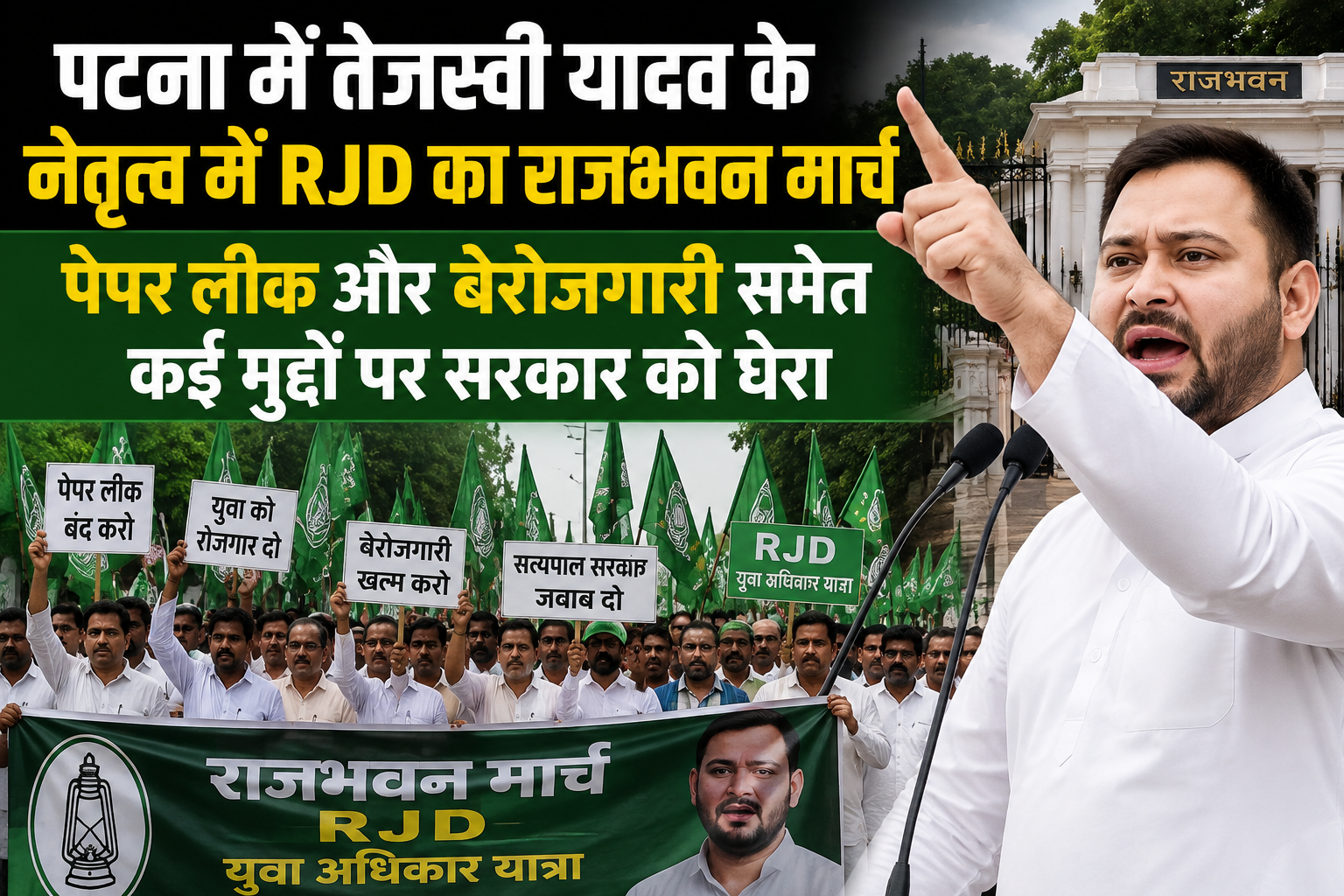
Patna: Bihar's capital Patna witnessed a major political protest by the Rashtriya Janata Dal (RJD) on Wednesday, August 19, 2026. The party organized a Raj Bhavan march over various issues concerning students and young people. The march was led by Tejashwi Yadav, Leader of the Opposition in the Bihar Legislative Assembly. RJD national spokesperson and Rajya Sabha MP Manoj Jha, along with a large number of party leaders, office-bearers and workers, also participated.
Through the march, the RJD raised issues including paper leaks, unemployment, the education system and alleged police action during a student protest in Siwan. Party leaders alleged that students and young people have repeatedly raised their concerns, but the government has failed to pay adequate attention to their demands.
Security arrangements were tightened across Patna in view of the march. Police personnel were deployed at several locations, while preparations were made to manage traffic and control the large gathering.
Tejashwi Yadav Led the March
Tejashwi Yadav was the central figure in the RJD's Raj Bhavan march. He was seen walking alongside party workers and supporters as the procession moved through the streets.
Participants carried party flags and posters highlighting various issues and raised slogans against the government.
Tejashwi emphasized issues affecting students and young people, saying that employment and education are directly connected to the future of Bihar's youth and that the government must answer questions concerning these matters.
The RJD attempted to send a message that the party is prepared to take issues concerning the public and young people to the streets rather than limiting them to electoral campaigns.
Manoj Jha Also Participated
RJD national spokesperson and Rajya Sabha MP Manoj Jha also joined the protest. His participation gave the march support from the party's senior national leadership.
Manoj Jha and other RJD leaders accused the government of ignoring issues concerning students and young people. The party argued that alleged paper leaks can seriously affect candidates who spend months or years preparing for competitive examinations.
The RJD demanded greater transparency in examination systems and strict action against anyone found responsible for paper leaks.
Manoj Jha's participation also indicated that the party may seek to highlight these issues beyond Bihar and take them to the national political platform.
Paper Leaks Become a Major Issue
The issue of paper leaks was one of the main themes of the march.
Millions of young people prepare for competitive examinations, often spending years studying for government jobs and other career opportunities. Alleged leaks or irregularities can therefore have a significant impact on candidates.
RJD leaders argued that examination systems must be made more transparent and secure. They also demanded strict action against those responsible for compromising examination processes.
Tejashwi Yadav has increasingly focused on employment and youth-related issues, making the paper-leak issue an important part of the party's outreach to students.
Attack on the Government Over Unemployment
Unemployment was another major issue raised during the Raj Bhavan march.
The RJD alleged that a large number of young people in Bihar are forced to leave the state in search of employment opportunities.
Party leaders called for the creation of more employment opportunities in Bihar and demanded that government vacancies be filled in a timely manner.
Unemployment has remained a major political issue in Bihar for many years. Political parties frequently raise the subject both during elections and through public protests.
The RJD's decision to include unemployment in the march is therefore being viewed as part of its broader political strategy.
Education System Also Questioned
The protesters also raised concerns about Bihar's education system.
RJD leaders said the state needs to focus more on quality education, transparent examinations and better facilities for students.
The party linked these issues directly to the future of students and demanded answers from the government.
Under Tejashwi Yadav's leadership, the RJD has been attempting to make student and youth concerns a major part of political debate. The Raj Bhavan march reflected the same strategy.
Siwan Incident Also Highlighted
Another major issue raised during the march was the alleged police action during a student protest in Siwan.
The opposition has described the incident as serious and demanded an investigation and accountability.
The RJD alleged that several questions have emerged regarding police action during the student protest. The party demanded an impartial investigation and said that anyone found to have violated rules should face appropriate action.
However, the complete facts surrounding the incident and the allegations should ultimately be established on the basis of an official investigation and available evidence.
Security Tightened Across Patna
Security arrangements were strengthened in Patna ahead of the Raj Bhavan march.
Police personnel were deployed along the expected route, while barricades were installed at sensitive locations to manage the crowd.
Traffic police also prepared arrangements to maintain the movement of vehicles.
The large number of RJD workers taking to the streets increased traffic pressure on some major roads in the capital.
Workers Raise Anti-Government Slogans
RJD workers participating in the march raised slogans against the government.
Many participants carried posters and banners related to paper leaks, unemployment and students' rights.
Workers said that the problems facing young people should not remain limited to political statements and that the government should take concrete steps to address them.
Party leaders also appealed to participants to maintain peace and present their demands through democratic means.
Attempt to Put Political Pressure on Government
The Raj Bhavan march is being viewed as an attempt by the RJD to increase political pressure on the government.
The party brought together issues such as students' concerns, unemployment, education and examination irregularities to create a broader political campaign.
The protest is politically significant because Bihar has a large young population. Employment, competitive examinations and education are directly relevant to this section of voters.
If the RJD continues campaigning on these issues, it could provide the party with an opportunity to strengthen its support among young people.
Tejashwi's Role as Opposition Leader
For Tejashwi Yadav, the march also provided an opportunity to demonstrate his role as Leader of the Opposition on the streets.
By participating alongside party workers, he directly protested against the government's policies and decisions.
As opposition leader, his role includes questioning government policies and bringing public issues to the forefront both inside and outside the legislative assembly.
The Raj Bhavan march was part of that broader political role.
Movement Could Continue
Statements from RJD leaders suggest that the party may continue putting pressure on the government over student and youth-related issues.
If the RJD continues campaigning on paper leaks, unemployment and education, the movement could develop into a broader political campaign.
However, the success of a political movement is not determined solely by the size of a demonstration. The government's response, the party's ability to maintain momentum and public support for the issues will also be important.
Challenge for the Government
Following the Raj Bhavan march, the government faces increased political pressure to respond to the opposition's allegations and demands.
The government may need to present its policies and achievements on issues affecting students and young people, particularly concerning examinations, employment and education.
Any new action or announcement regarding alleged paper leaks, job opportunities or education could have political implications.
Similarly, an official investigation or detailed report concerning the Siwan incident could influence the political debate.
The RJD's Raj Bhavan march in Patna on August 19, 2026, led by Tejashwi Yadav, emerged as a significant opposition protest in Bihar.
RJD national spokesperson Manoj Jha and a large number of party leaders and workers participated in the demonstration.
The party highlighted paper leaks, unemployment, the education system and alleged police action during the student protest in Siwan.
Through the march, the RJD attempted to put political pressure on the government and strengthen its connection with young voters.
The coming days will show how the government responds to the allegations and demands and whether the RJD expands the protest into a sustained campaign.
For now, the Raj Bhavan march has once again placed issues related to students, youth, employment and examination transparency at the center of Bihar's political debate.