

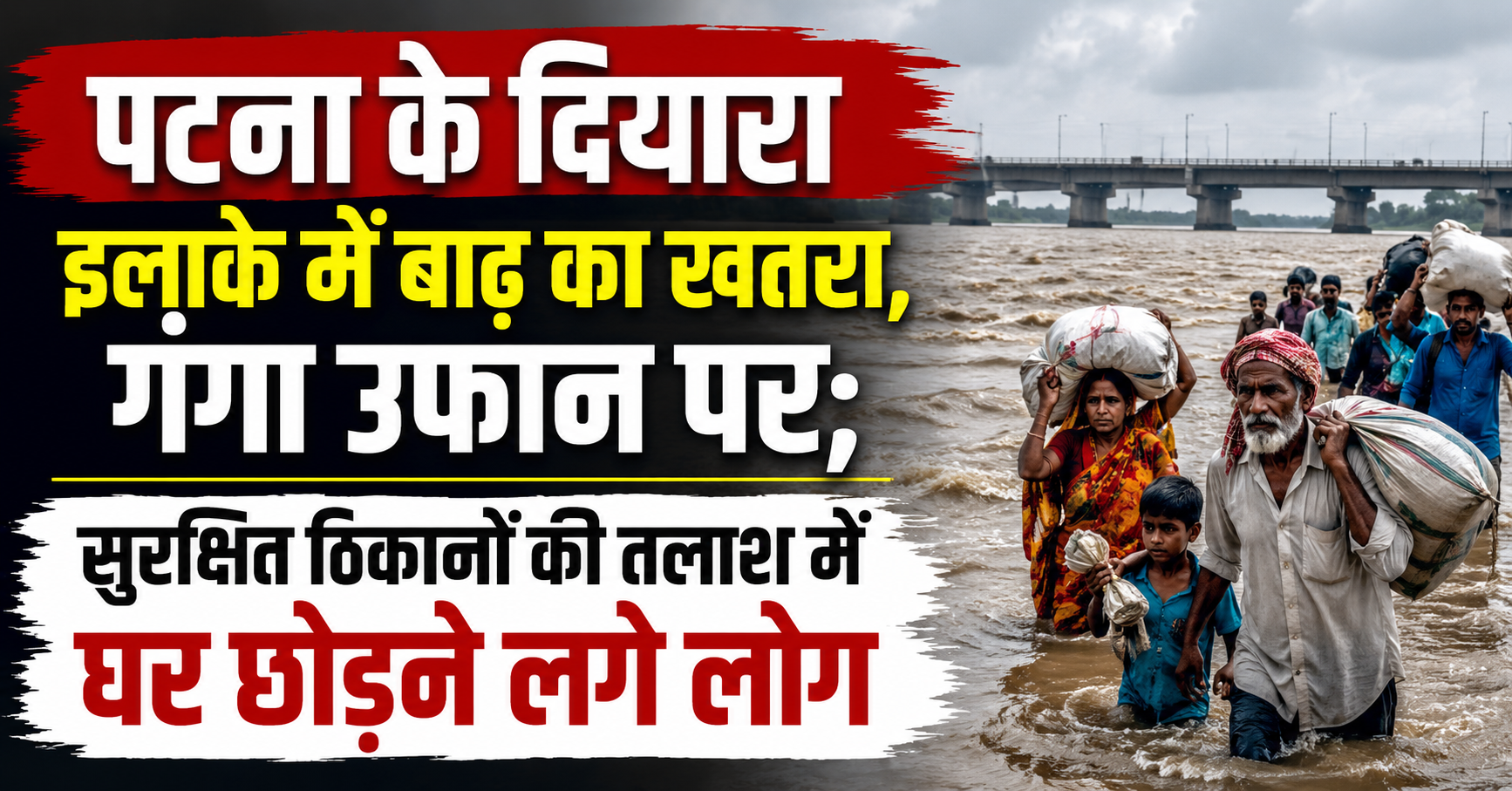
Flood Threat Looms Over Patna’s Diara Areas as Ganga Swells; Residents Begin Moving to Safer Locations
The threat of flooding has increased in the diara areas of Patna as the water level of the Ganga continues to rise. With the river flowing at a high level, concern is growing among residents living in low-lying areas. Anticipating a possible flood situation, several families have started leaving their homes and looking for safer places. Residents fear that if the water level continues to rise, floodwaters could reach residential areas in the coming days.
The lives of people living in the diara region are closely linked to the water level of the Ganga and the prevailing weather conditions. Every year during the monsoon, rising river levels create the possibility of flooding, forcing residents to remain alert. This year too, the rising Ganga has created anxiety among local communities. Families living in vulnerable areas are beginning to move essential belongings to safer locations so that they are not caught unprepared if the situation suddenly worsens.
Rising Ganga Increases Concern
The diara areas of Patna cover a large stretch along the Ganga. When the river level rises, low-lying areas are generally among the first to face the impact. Water can enter agricultural fields and rural roads, affecting transportation and daily life. As the water continues to rise, residents also become concerned about the possibility of water entering their homes.
People living in the affected areas say that if the river rises further, several houses and agricultural fields could be impacted. This concern has prompted some families to prepare for evacuation. Residents are closely monitoring the river and making arrangements to move to safer locations if necessary.
Families Prepare to Leave Their Homes
The threat of flooding is particularly serious for families living close to the river and in low-lying areas. For such families, moving to a safe location before floodwaters arrive can be crucial. Residents are attempting to move clothes, food grains, important documents, household belongings and other essential items to safer places.
One of the biggest concerns for families is the safety of children, elderly people and women. During floods, transportation can become difficult, making it challenging to evacuate vulnerable members of a household. As a result, residents are becoming increasingly cautious as the Ganga continues to swell.
Livestock is another major concern for people living in the diara areas. Many rural families depend on cattle and other animals for their livelihood. During floods, arranging fodder and finding safe shelter for livestock can become difficult. Families therefore have to plan not only for their own safety but also for the protection of their animals.
Agricultural Fields Also Face Risk
The impact of rising Ganga water is not limited to residential areas. A large number of people in the diara region depend on agriculture. The land around the river is widely used for farming, and several types of crops are cultivated there. If floodwaters enter agricultural fields, farmers could face significant crop losses.
For farmers, flooding can cause both immediate and long-term problems. Standing crops may be damaged or destroyed, affecting the income of families that depend on agriculture. Prolonged waterlogging can also make it difficult to resume farming activities. This is why farmers become particularly concerned whenever the river level begins to rise.
Transportation Problems May Increase
Transportation is already a challenge in several parts of the diara region. If floodwaters rise further, rural roads could be affected. Waterlogged roads can make it difficult for residents to reach markets, schools, hospitals and other essential services.
The biggest concern for residents is the possibility of an emergency. If someone suddenly falls ill or a family needs to evacuate immediately, reliable transportation becomes extremely important. In such circumstances, the role of local authorities and emergency response teams becomes crucial.
Attention on Administrative Preparedness
With the possibility of flooding increasing, residents are also keeping a close watch on the administration’s preparedness. In the event of flooding, relief camps, boats, food supplies, drinking water, medicines and fodder for livestock become essential. Ensuring these facilities in advance can help reduce the difficulties faced by affected families.
Authorities need to continuously monitor the situation in vulnerable areas. Information about changes in the river’s water level should reach residents as quickly as possible. Timely warnings can give families enough time to move to safer locations.
Local residents have urged the administration to ensure necessary arrangements in advance. Special attention should be given to children, elderly people, women and those requiring medical assistance. Safe shelters and essential facilities should be made available before the situation becomes critical.
Residents Advised to Remain Alert
With the Ganga continuing to swell, residents should avoid unnecessary risks near the river and flooded areas. Entering fast-flowing water can be extremely dangerous. People living in vulnerable areas should follow official warnings and instructions issued by local authorities.
Families living in low-lying areas should keep important documents, medicines, mobile phones, chargers, drinking water and other essential supplies ready. They should also have a plan for safely moving children and elderly family members if evacuation becomes necessary.
Anxiety Grows in the Diara Region
The rising Ganga has increased anxiety among residents of Patna’s diara areas. With the threat of flooding looming, some families have already started leaving their homes in search of safer places. However, the severity of the situation will depend on how the river’s water level and weather conditions develop in the coming days.
For residents of the diara region, safety remains the top priority. People are making preparations at their own level and looking for safer locations in case the situation deteriorates. Continuous monitoring of the river and timely evacuation of vulnerable residents will be essential.
The rising water level of the Ganga has once again highlighted the risks faced by communities living along the river during the monsoon. For families living in low-lying and riverbank areas, this is a time for increased vigilance. If the water level rises further, the situation could become more challenging. Administrative preparedness, community cooperation and public awareness will therefore play an important role in minimizing the impact of any potential flooding in Patna’s diara areas.