


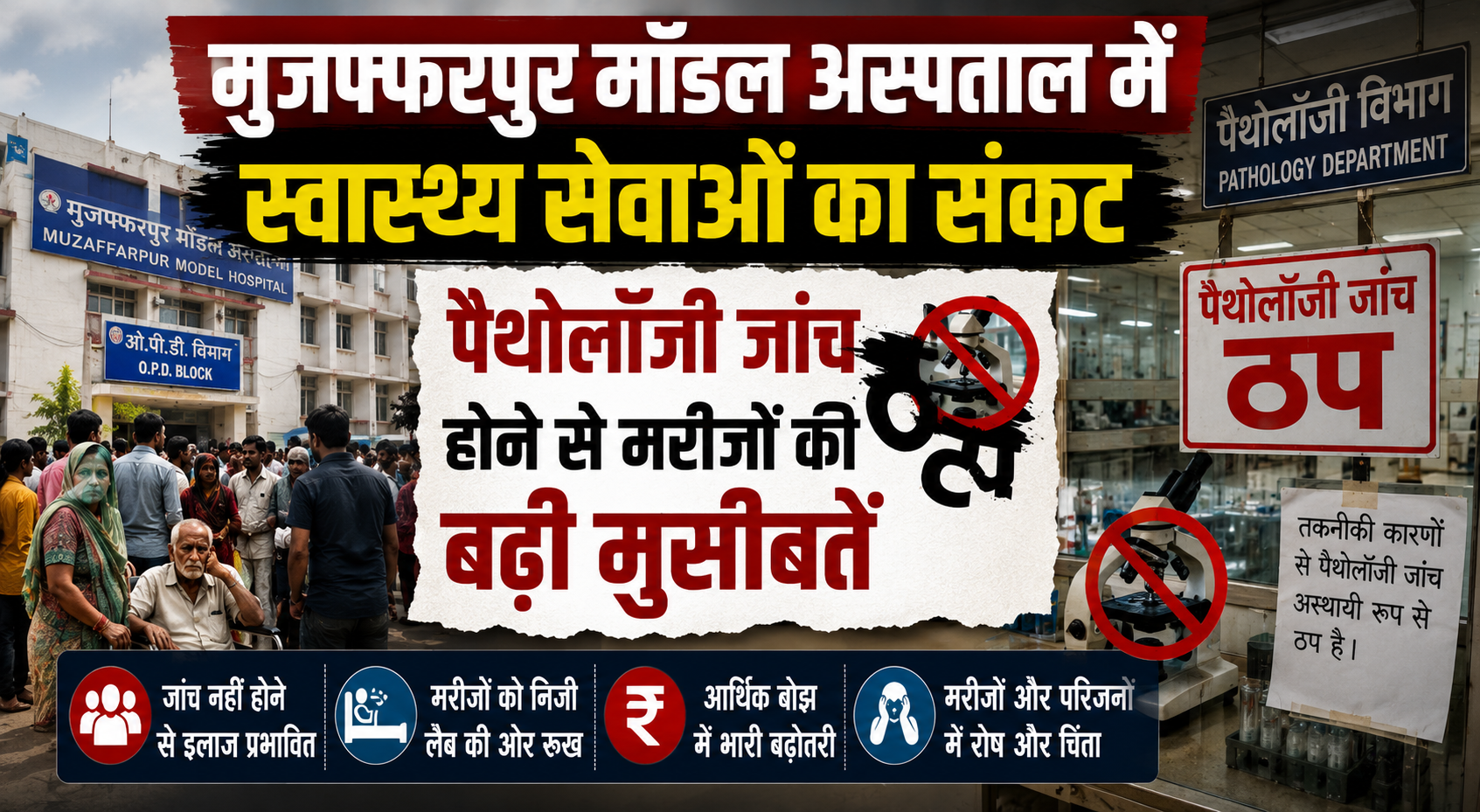
Healthcare Crisis at Muzaffarpur Model Hospital: Disruption of Pathology Services Adds to Patients' Woes
A distressing and concerning situation has emerged in the healthcare services at Muzaffarpur's Model Hospital. Critical pathology tests, including Hepatitis B, Urine, and Blood Grouping, have been completely halted at the hospital's testing center for the past several days. The brunt of this mismanagement is being borne by patients and poor families who come to the government hospital with the hope of receiving free or affordable healthcare.
Details of the Crisis: A Daily Struggle for 150 Patients
Hundreds of patients visit the Model Hospital every day for treatment. According to reports, in a single day, approximately 150 pregnant women and other critically ill patients had to return empty-handed because their tests could not be conducted. Tests like Hepatitis B, urine analysis, and blood grouping are vital for any patient's treatment, especially during pregnancy and delivery. Without these reports, doctors are unable to prescribe medicines or proceed with necessary surgeries or deliveries.
Financial Burden on Patients: Forced to Turn to Private Pathology
Due to the lack of facilities at the government hospital, patients are left with no choice but to turn to private pathology centers. These private centers are performing the same tests at rates significantly higher than standard costs.
Poverty vs. Treatment: Most patients visiting the hospital belong to low-income groups. The exorbitant rates at private centers have broken their financial back.
Wasted Time and Health: Patients are losing valuable time seeking tests elsewhere, which is negatively impacting their physical condition. In many cases, pregnant women are being forced to walk or take autos to outside shops, even when in a weak physical state.
Administrative Failure and Lack of Resources
The main reason attributed to the suspension of tests at the hospital's pathology center is the shortage of reagents and essential chemicals. The failure of the hospital administration to resolve this issue promptly raises several questions:
Lack of Foresight: Did the hospital administration not anticipate the exhaustion of these essential chemicals?
Delay in Procurement: How can the slow pace of government procurement take precedence over patients' health?
Crisis of Accountability: Despite a large number of patients being affected, why was no alternative arrangement (such as coordination with other government centers) made by any official?
Outrage Among Patients and Families
The hospital premises witnessed significant unrest and patient outrage throughout the day. Family members of pregnant women raised slogans against the hospital management, questioning the point of it being a "Model Hospital" if basic tests cannot be conducted. Patients allege that they are being deliberately pushed toward private centers to benefit middlemen.
Questions on Healthcare Services
The purpose of the Model Hospital was to provide better and modern healthcare facilities in the district. However, the suspension of a basic service like pathology exposes the hollowness of the claims made about this "model."
Challenges in Childbirth: Blood grouping is mandatory for pregnant women. Conducting a delivery without knowing the blood group is highly risky. The suspension of this test could put the lives of both mother and child in danger.
Dominance of Private Mafia: Private pathology centers located just outside the hospital are taking advantage of the failure of the government machinery.
The Path Forward: What the Administration Should Do
Given the situation, the following steps must be taken immediately:
Immediate Supply of Chemicals: The hospital management should immediately procure reagents, either at the local level or through the District Health Society, to revive the testing center.
Rely on Alternative Centers: Until the situation at the hospital is rectified, arrangements must be made to ensure free testing by referring patients to the nearby Sadar Hospital or other government labs.
High-Level Inquiry: Accountability must be fixed for the officials responsible for this negligence, questioning why no arrangements were made before the stock ran out.
Crackdown on Private Centers: The Health Department must ensure that private labs do not charge arbitrary rates during this crisis.
The Model Hospital in Muzaffarpur is currently passing through an administrative crisis. Healthcare is not just about buildings or doctors; it is also about timely diagnostic tests and treatment. If this problem is not solved in time, this negligence could lead to a major health disaster. The common public now only expects that testing machines and essential medicines remain available without interruption so that they do not have to hand over their hard-earned money to the predatory hands of private centers.