

RJD Holds Raj Bhavan March in Patna After 11 Years; Tejashwi Yadav Takes to the Streets, Offers Arrest
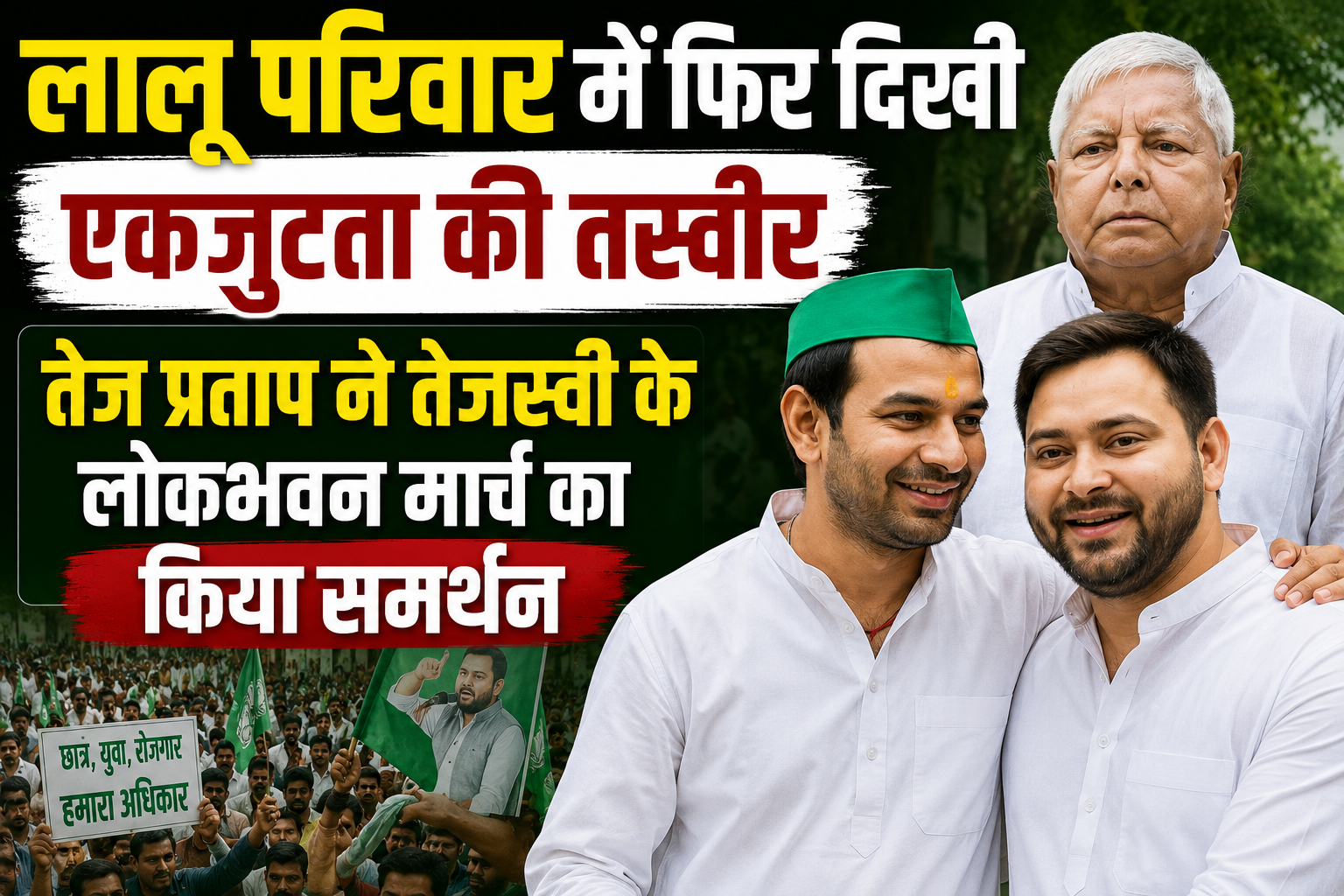
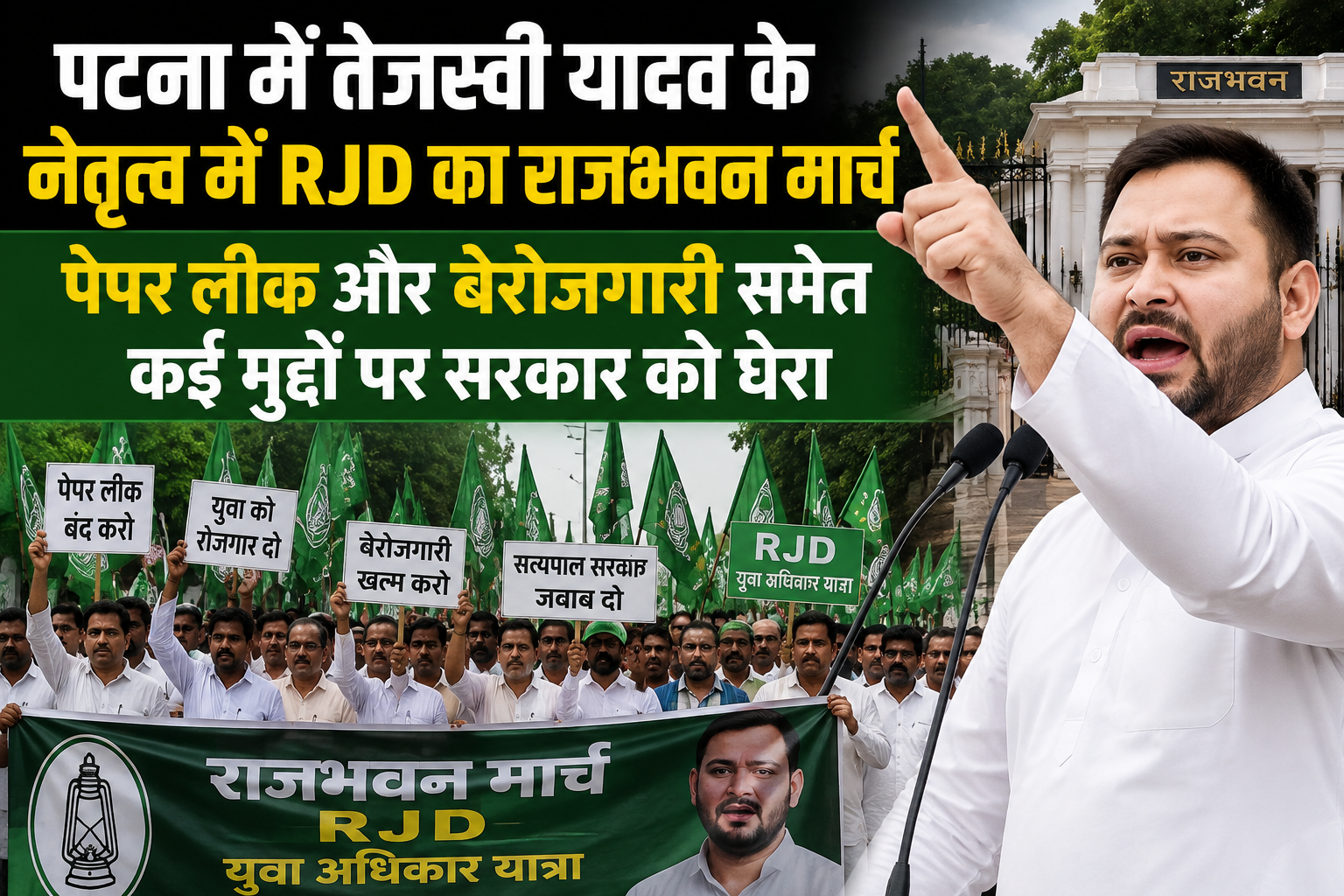
The Rashtriya Janata Dal (RJD) organized a Raj Bhavan (Lok Bhavan) March in Patna on Wednesday after a gap of nearly 11 years. A large number of party leaders, workers, and supporters participated in the demonstration, which was led by Leader of the Opposition Tejashwi Yadav. Walking alongside party workers, Tejashwi marched toward Lok Bhavan and registered his protest against the government's policies. The event generated significant political attention, with tense moments reported between protesters and police at several locations.
For the RJD, the march was politically significant in many ways. By organizing a Raj Bhavan March after more than a decade, the party sought to demonstrate its organizational strength and political relevance. Party leaders described the protest as part of their ongoing struggle against government policies and in support of public issues. Tejashwi Yadav's decision to walk with supporters and later offer his arrest became the central political message of the event.
Raj Bhavan March After 11 Years
The RJD had last organized a Raj Bhavan March in Patna approximately 11 years ago. The decision to revive this form of protest after such a long period is being viewed as a sign of the party's renewed aggressive political strategy.
Party workers and leaders had prepared extensively for the event. Supporters from various districts and blocks across Bihar arrived in Patna to participate. The large turnout led to heightened political activity in several parts of the state capital.
Carrying party flags and banners, participants marched while raising slogans against the government. RJD leaders stated that the protest was aimed at highlighting issues affecting the public and demanding accountability from the government.
Tejashwi Yadav Leads the Protest
Tejashwi Yadav's presence gave the march considerable political importance. He walked with party workers, leading the protest from the front and directly participating in the demonstration. Supporters accompanied him throughout the march, raising slogans and expressing solidarity.
Political observers viewed Tejashwi's decision to march on foot as an attempt by the RJD to convey that it is willing to take public issues beyond legislative forums and onto the streets.
During the march, Tejashwi encouraged party workers and reiterated that the opposition's role is to raise the voice of the people. His participation energized supporters and reinforced the party's message of political struggle.
Tejashwi Offers Arrest
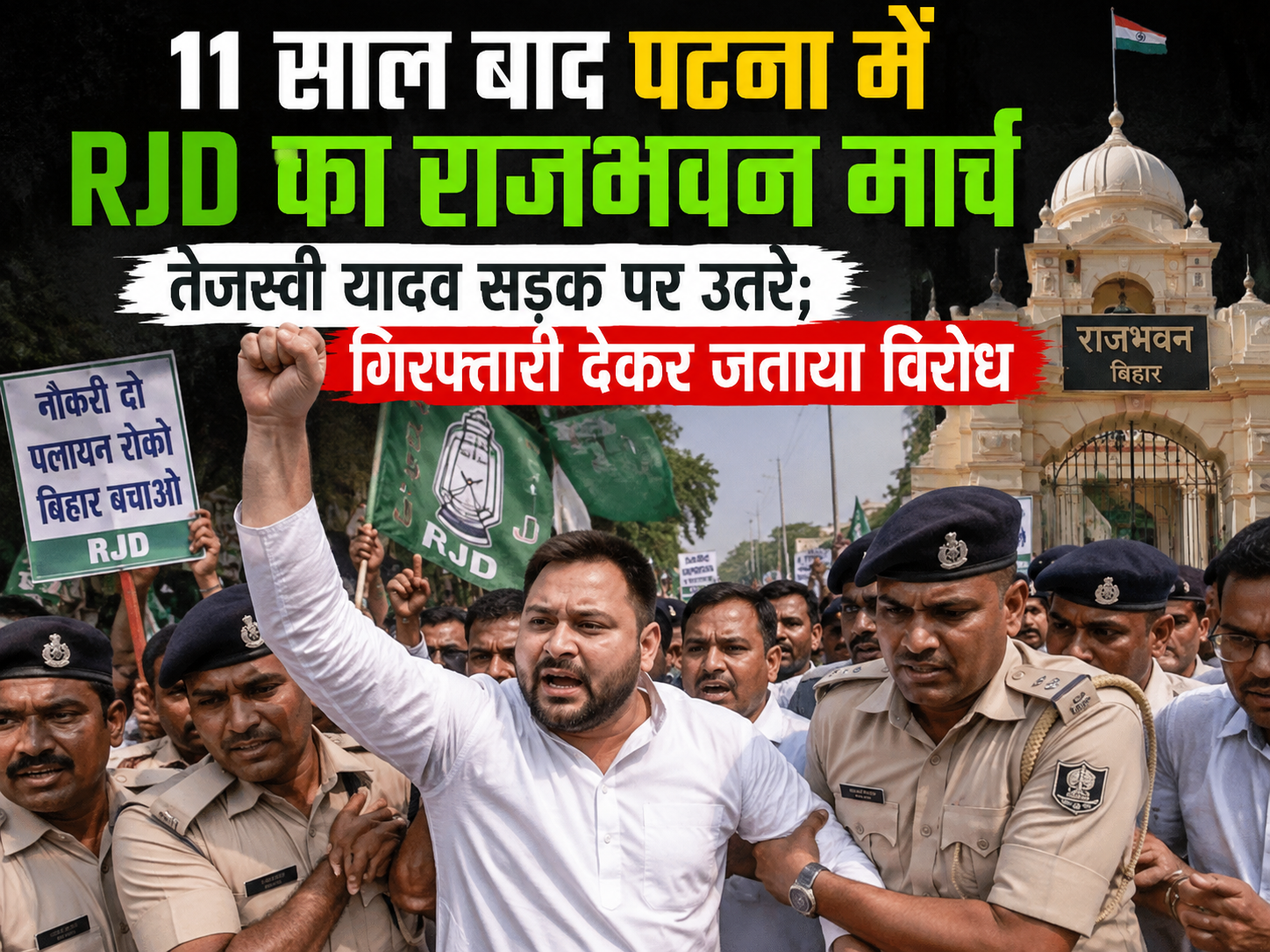
As the march progressed, police attempted to prevent protesters from moving further toward their destination. This led to a standoff between demonstrators and law enforcement officials. During this confrontation, Tejashwi Yadav offered his arrest.
His arrest further energized party workers, who continued raising slogans against the government. RJD leaders described the arrest as part of a democratic protest and an expression of the party's commitment to public issues.
Politically, the arrest was seen as an important symbolic gesture. The RJD has consistently projected Tejashwi Yadav as its principal mass leader, and his willingness to be detained alongside party workers reinforced that image.
Tejashwi Seen in Major Street Protest After Five Years
One notable aspect of the march was that Tejashwi Yadav was seen participating in a major street protest of this scale after nearly five years. His return to direct street-level political mobilization is being viewed as an important development in the party's strategy.
Political movements of this nature are often used to energize party workers and strengthen grassroots connections. By leading the march personally, Tejashwi sought to reinforce the party's engagement with supporters across Bihar.
The large number of workers marching alongside him helped give the event significant political visibility. Party leaders described the march as the beginning of a broader campaign focused on public issues.
Extensive Security Arrangements in Patna
The administration and Patna Police made extensive security arrangements in anticipation of the march. Additional police personnel were deployed along the route to maintain law and order and regulate traffic.
Given the large gathering, traffic movement in several parts of the city was affected. Authorities worked to keep protesters within designated areas while ensuring that the demonstration remained peaceful.
Managing large crowds while maintaining normal city operations is always a challenge during major political events, and the administration remained on alert throughout the march.
RJD Attempts to Showcase Political Strength
Through the Raj Bhavan March, the RJD sought to demonstrate its political strength in Bihar's capital. The large participation of party workers was intended to convey that the organization remains active and influential at the grassroots level.
Political marches are not merely protests; they also serve as opportunities for parties to display organizational capacity, leadership influence, and public support. The RJD's march reflected all of these objectives.
Tejashwi Yadav's leadership of the event was a key element of the party's strategy, helping create direct engagement between party leadership and grassroots workers.
Political Tensions May Intensify
The march is expected to add momentum to the ongoing political confrontation between the opposition and the government in Bihar. Opposition parties have repeatedly criticized government policies, and the RJD's protest is being viewed as an effort to take that political struggle to the streets.
The ruling alliance is also expected to respond to the opposition's allegations, potentially leading to an escalation of political rhetoric and debate in the coming days.
For the RJD, the march is not being seen as a one-day event but as part of a broader political campaign. The party may intensify its street-level activism in the future, with Tejashwi Yadav playing a more visible role in public protests.
Enthusiasm Among Party Workers
RJD workers displayed considerable enthusiasm throughout the march. Carrying party flags and chanting slogans, supporters remained actively engaged in the demonstration.
Many participants said that seeing party leaders join them on the streets inspired confidence and strengthened their commitment to the movement. For long-time RJD workers, the return of the Raj Bhavan March after 11 years was a significant political moment.
The party also used the event to activate its organizational network, with leaders and workers from district and block levels participating in large numbers.
Impact on Future Politics
The Raj Bhavan March in Patna could influence the direction of Bihar politics in the coming months. If the RJD continues to organize similar protests, it may increase political pressure on the government. At the same time, the government's response will shape the nature of the political contest ahead.
Tejashwi Yadav's participation in the march and his decision to offer arrest highlighted his active leadership style. For the party, the event served as a means of mobilizing supporters and strengthening its role as the principal opposition force in the state.
Overall, the Raj Bhavan March organized by the RJD after 11 years emerged as a major political event in Bihar. Tejashwi Yadav led party workers on foot, offered his arrest, and reinforced the party's message of political struggle. His visible participation in a large street protest after five years added further significance to the event.
The coming weeks will reveal how the RJD builds on this momentum and how the government responds. For now, the march has once again intensified political activity and sharpened the contest between the opposition and the ruling establishment in Bihar.