

Before Champaran Satyagraha, Father of the Nation Mahatma Gandhi First Came to Bhagalpur in 1917 to Attend a Student Conference The Glorious Saga of Bapu's Historic Arrival
Bhagalpur (Special Correspondent): Whenever history pages mention the freedom struggle led by the Father of the Nation, Mahatma Gandhi, and his travels in Bihar, the Champaran Satyagraha (1917) invariably comes to mind first. However, very few people are aware of the historic fact that just before setting foot on the historic soil of Champaran, Bapu first arrived in Bihar's Silk City, Bhagalpur, in the year 1917 to attend a student conference. This sacred soil of Bhagalpur bears witness to how Gandhi—on his path from being an ordinary barrister to becoming a 'Mahatma'—sowed ideological seeds among the youth, students, and intellectuals here. To this day, the people of Bhagalpur proudly remember Bapu's very first step and his four historic memoirs and associations. This journey is not only a golden chapter in Bhagalpur's history but also a milestone in modern Indian political and social history.
Why Did Bapu Come to Bhagalpur Before Champaran? (The Background)
In early 1917, when the country was stirring against British rule, the suffering of indigo-cultivating farmers drew Gandhi's attention. When Bapu was scheduled to visit Bihar at the urging of Rajkumar Shukla, he received an invitation right beforehand to participate as the chief guest at a prestigious student conference organized by Bhagalpur's youth and students.
A Message to Students: Bapu always believed that the nation's future rests in the hands of youth and students. Therefore, despite his busy schedule, he gladly accepted the invitation to visit Bhagalpur's students.
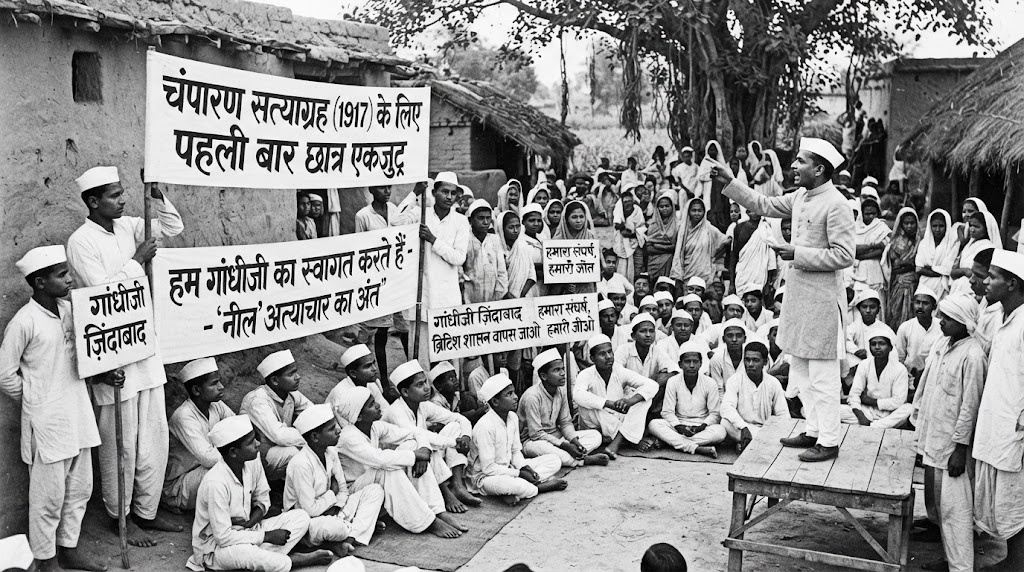
Historic Welcome at Bhagalpur Railway Station: During that era in 1917 when British terror was at its peak, thousands of students and ordinary citizens swarmed the Bhagalpur railway station just to catch a glimpse of Bapu. The gathering of such a massive crowd without any modern communication mediums demonstrated that Gandhi's persona already commanded the hearts of the people.
Four Major Historical Memoirs Associated with Bapu's Arrival in Bhagalpur
According to historians and local archival documents, there are four key episodes or events associated with Bapu's maiden tour of Bhagalpur that locals still cherish as 'Bapu's Four Historical Legacies':
First Memoir: Bugle of Ideological Revolution at the Student Conference
At the student conference held in Bhagalpur, Bapu urged students not to limit themselves merely to academics, but to ponder the political and social plight of the nation.
His call to the youth to adopt Swadeshi and embrace their mother tongue and culture sparked a new revolutionary zeal among Bhagalpur's youth. Several freedom fighters emerged from right here, later participating enthusiastically in the Non-Cooperation and Civil Disobedience movements.
Second Memoir: Secret Consultations with Local Intellectuals and Lawyers
Bhagalpur was a prominent judicial and educational hub of its time. Eminent lawyers and intellectuals of the area (such as Madan Mohan Jha and other freedom fighters) met with Bapu.
In this meeting, Bapu discussed strategies for legally and ideologically fighting the exploitative policies of the British. This gathering indirectly helped lay the groundwork for Champaran later on.
Third Memoir: Simplicity and Connection with the Common Man
During his stay in Bhagalpur, Bapu refused to stay in any royal guest house or luxurious dwelling. He stayed at the residence of an ordinary worker and partook of extremely simple meals.
The manner in which he interacted with ordinary rickshaw pullers, laborers, and the poor on his way from the station to the venue proved that he was a leader of the masses, not palaces.
Fourth Memoir: Strong Foundation of the Champaran Satyagraha
The mass support Bapu witnessed during this student conference and public meeting in Bhagalpur cemented his belief that the entire state of Bihar stood with him.
Drawing inspiration and energy from here, Bapu headed straight to Champaran, where he successfully led the historic 'Champaran Satyagraha' for the rights of indigo farmers. Historians believe that this Bhagalpur journey provided the strongest ideological backing to the backdrop of the Champaran movement.
Bapu Still Alive in Bhagalpur's Memories
Even though over a century has elapsed since those days of 1917, the fragrance of Mahatma Gandhi's moments can still be felt in Bhagalpur's atmosphere:
Historic Buildings and Sites: The locations in the city where Bapu held meetings or the educational institutions associated with him remain historic city landmarks today. Although many buildings have dilapidated over time, they remain immortal in the memories of locals.
Inspiration for the Younger Generation: When Bhagalpur's youth learn that Bapu addressed students in their city before heading to Champaran, a fresh surge of patriotism and dedication to duty is enlivened within them.
Mahatma Gandhi's visit to Bhagalpur in 1917 and his participation in the student conference was not merely a formality, but a golden page in the Indian freedom struggle that inspired the youth of Bihar to stand against the British. Those four significant memoirs linked to Bapu's life continue to remind us that monumental change is brought about through leadership, simplicity, and ideological fortitude. The Silk City of Bhagalpur will always take pride in the fact that the Father of the Nation stepped onto its soil to impart a fresh direction and energy to the country's freedom struggle.