

Bihar Launches New Initiative to Promote Electric Vehicles, Boost Employment and Charging Infrastructure
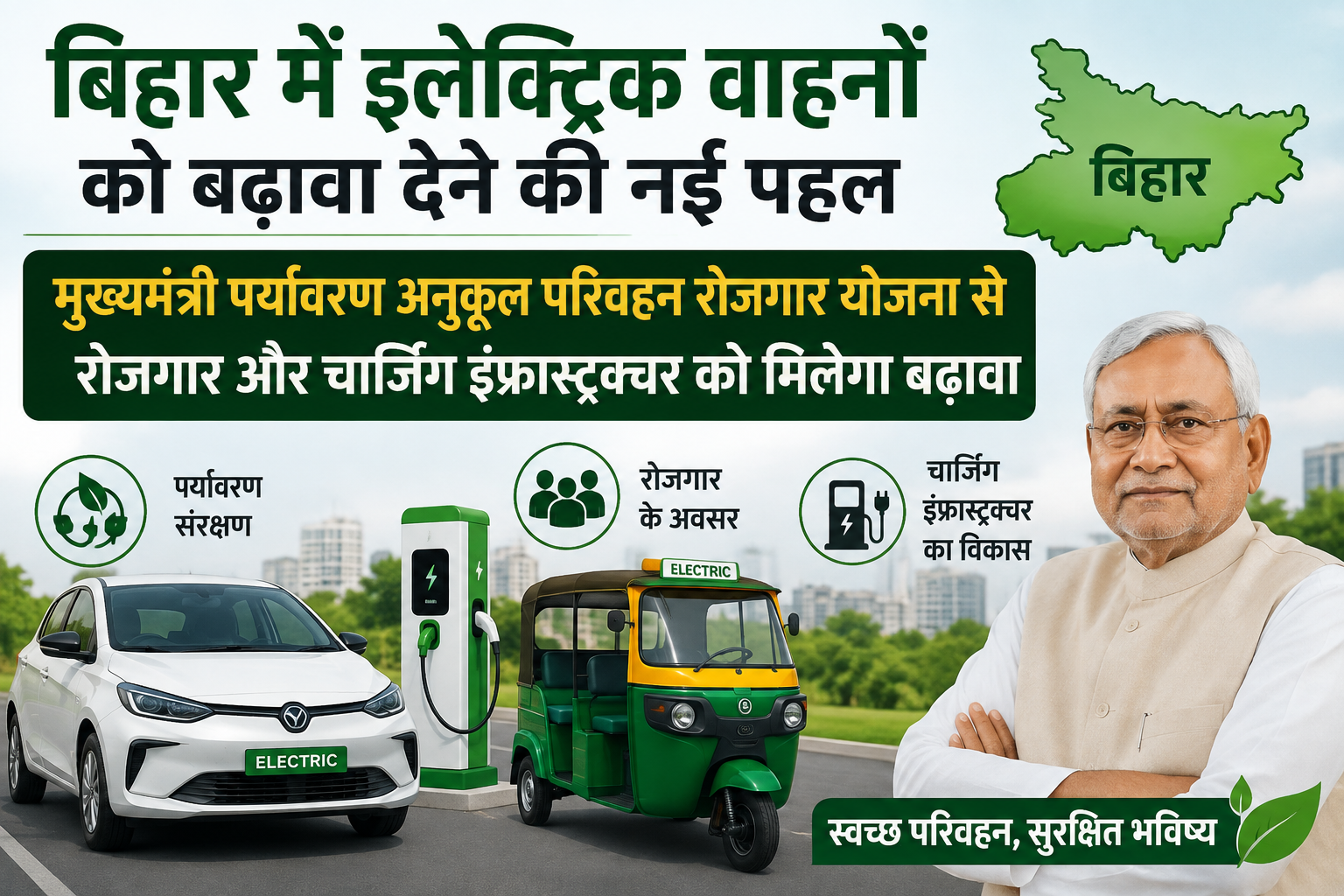
Patna: The Bihar government has launched the Chief Minister Bihar Environment-Friendly Transport Employment Scheme with the aim of promoting the purchase and use of electric vehicles, reducing pollution and creating new employment opportunities across the state.
Under the scheme, eligible beneficiaries will receive financial assistance for purchasing electric vehicles. The government will also focus on developing charging infrastructure to support the growing number of electric vehicles.
The initiative is intended to gradually move Bihar's transportation sector toward cleaner and more environmentally friendly mobility. Increasing the use of electric vehicles is expected to reduce dependence on conventional fuels and help control pollution caused by transportation.
Focus on Employment Generation
One of the key objectives of the scheme is to combine environmental protection with employment generation.
The growing electric-vehicle sector can create employment opportunities in vehicle sales, servicing, battery management, charging-station operations and technical services.
The scheme could also provide opportunities for self-employment. Eligible individuals who want to start a small transportation business may be able to purchase an electric vehicle with government assistance and use it as a source of livelihood.
This could particularly benefit people who want to enter the transportation sector but find the initial cost of purchasing a vehicle difficult to manage.
Financial Assistance for Eligible Beneficiaries
Eligible beneficiaries under the Chief Minister Bihar Environment-Friendly Transport Employment Scheme will receive government assistance for purchasing electric vehicles.
The purpose of the subsidy is to reduce the initial financial burden associated with purchasing an electric vehicle.
Although electric vehicles can involve a significant initial investment, their operating costs can differ from those of conventional petrol and diesel vehicles.
Government support could therefore make electric vehicles more accessible to eligible applicants.
Detailed guidelines regarding eligibility, subsidy amounts, application procedures and required documents will apply according to the official rules issued by the government.
Opportunities for Women
The scheme also has the potential to increase women's participation in the transport sector.
Electric three-wheelers, e-rickshaws and other suitable electric vehicles could provide women with opportunities for self-employment and financial independence.
If women beneficiaries receive financial assistance along with training, simplified application procedures and access to charging facilities, the social impact of the scheme could increase significantly.
In rural areas and smaller towns, electric vehicles could also provide women with opportunities to establish local transportation businesses.
Expansion of Charging Infrastructure
Financial assistance for vehicle purchases alone is not enough to expand electric mobility. Adequate charging stations and supporting electricity infrastructure are equally important.
The government therefore plans to focus on the development of charging infrastructure under the scheme.
The availability of charging stations in cities, towns and rural areas could reduce concerns among electric-vehicle users.
An expanded charging network would also make long-distance travel more convenient by reducing the risk of vehicles running out of battery without access to a charging facility.
Expected Transformation in the Transport Sector
A large number of petrol and diesel vehicles are currently used for public and private transportation in Bihar.
The expansion of electric mobility could gradually transform the state's transportation system.
Electric rickshaws and e-autos are already visible in several cities and towns. The new scheme could further increase their adoption.
Other categories of electric vehicles could also become more popular as the charging network and supporting infrastructure expand.
Potential to Reduce Pollution
Emissions from petrol and diesel vehicles are an important contributor to urban air pollution.
Electric vehicles do not produce direct tailpipe emissions like conventional internal-combustion vehicles. Increasing their use could therefore help reduce local pollution from road transportation.
With the number of vehicles increasing in major Bihar cities, promoting cleaner transportation could become increasingly important from an environmental perspective.
However, the overall environmental benefits of electric vehicles also depend on factors such as the source of electricity used for charging, battery manufacturing and the safe recycling or disposal of batteries.
Reducing Dependence on Conventional Fuels
Another objective of promoting electric vehicles is to reduce dependence on petrol and diesel.
Changes in fuel prices directly affect transportation costs. Electric vehicles can provide vehicle owners with an alternative energy source.
For people who use vehicles daily or for commercial purposes, electric alternatives may offer economic benefits. However, factors such as the purchase price, battery capacity, charging time and maintenance costs will also influence the overall economics.
New Self-Employment Opportunities for Youth
The employment objective of the scheme means that it is not limited to environmental protection.
A young person who purchases an electric auto or another eligible electric vehicle with government assistance could use it to start a transportation service.
In addition to direct self-employment, demand for trained workers could increase in areas such as charging infrastructure, battery servicing, vehicle repair and technical support.
The electric-vehicle sector could therefore gradually develop into a new local employment ecosystem.
Charging Stations Could Generate Jobs
Expansion of charging infrastructure could also create new business and employment opportunities.
Charging stations will require workers for installation, operation, maintenance and technical support.
Other small businesses could also develop around charging locations.
If charging stations are strategically established near major roads, markets, bus terminals and public spaces, they could make electric vehicles more practical for everyday users.
Potential Expansion into Rural Areas
Electric mobility should not remain limited to large cities.
E-rickshaws and small electric vehicles can be useful for local transportation in rural areas. They can help connect villages with markets, block headquarters, railway stations and other important locations.
If charging infrastructure is expanded into rural areas as part of the initiative, adoption of electric vehicles could increase further.
Awareness Will Be Important
For the scheme to reach its intended beneficiaries, a comprehensive awareness campaign will be necessary.
Many potential beneficiaries may not initially know about eligibility requirements, subsidies, application procedures or required documents.
Government departments may need to conduct awareness programs at the district, block and panchayat levels.
Along with online applications, assistance centres could help people who face difficulties with digital procedures.
Importance of Technical Training
As the number of electric vehicles increases, the demand for trained technicians will also grow.
Electric vehicles require different servicing skills compared with conventional petrol and diesel vehicles.
Technicians need knowledge of batteries, electric motors, control systems and charging equipment.
Therefore, combining the transport scheme with skill-development programs could prove beneficial.
Training young people in electric-vehicle technology could prepare them for employment at service centres, charging stations and related businesses.
Safety Standards Must Be Maintained
Safety will be another important aspect of expanding electric mobility.
Battery quality, charging equipment, electrical wiring and power connections must meet appropriate safety standards.
Charging-station operators and vehicle owners will need to follow prescribed safety procedures.
A reliable and safe charging network will be essential for increasing public confidence in electric vehicles.
Link With Long-Term Transport Policy
The Chief Minister Bihar Environment-Friendly Transport Employment Scheme can be viewed as part of the state's broader efforts toward clean energy and sustainable transportation.
If the government continues to invest in electric vehicles, charging infrastructure, skill development and employment opportunities, Bihar's transportation sector could gradually undergo a significant transformation.
As electric mobility expands, the state will also need to develop systems for battery recycling and the safe disposal or reuse of old battery packs.
Potential Benefits for Beneficiaries
Eligible beneficiaries could benefit from the scheme in several ways.
The first benefit would be financial assistance toward the purchase of an electric vehicle.
The second would be the opportunity to use the vehicle as a means of employment or self-employment.
The third would be improved access to charging infrastructure as the state's charging network expands.
Greater participation by women and young people could further strengthen the scheme's impact on employment and economic empowerment.
The Chief Minister Bihar Environment-Friendly Transport Employment Scheme is an effort by the Bihar government to promote electric vehicles while simultaneously addressing employment generation and environmental protection.
The scheme aims to provide financial assistance to eligible beneficiaries for purchasing electric vehicles and promote the development of charging infrastructure across the state.
Greater participation by women and young people could create new opportunities for self-employment. At the same time, the growth of electric mobility could reduce dependence on petrol and diesel and help control pollution from the transport sector.
However, the long-term success of the scheme will depend on how effectively financial assistance reaches eligible beneficiaries, how simple the application process remains and how quickly charging infrastructure is developed.
If the government succeeds in combining financial assistance with training, public awareness, technical support and a strong charging network, the initiative could become an important source of clean transportation, employment and self-employment opportunities for thousands of people across Bihar.