TMBU Administration Takes Special Initiative for Bihula Vishahari Puja, Anga Region’s Folk Tradition to Get a Platform
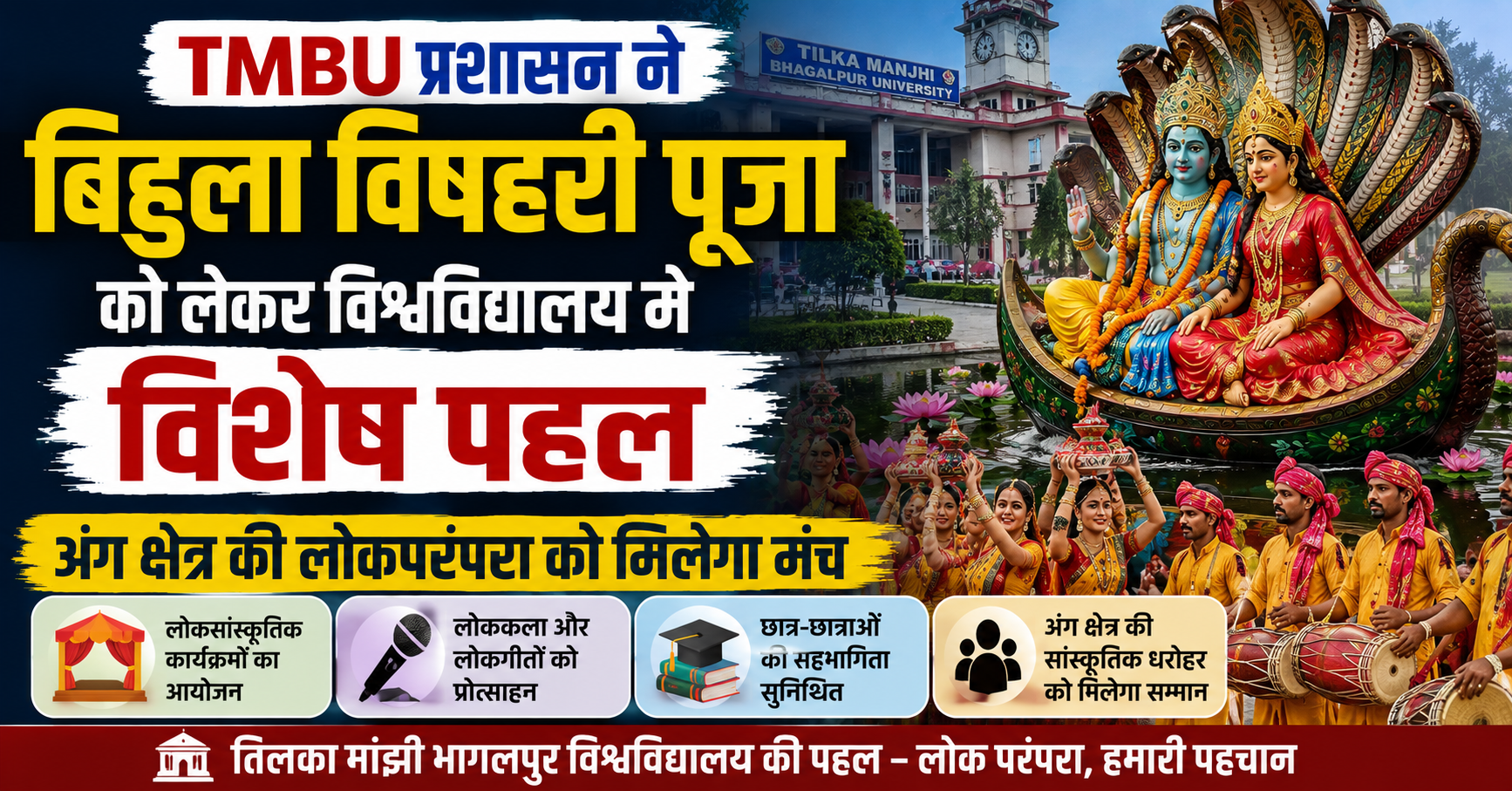
Bhagalpur: The Tilka Manjhi Bhagalpur University (TMBU) administration has taken a special initiative regarding Bihula Vishahari (Mansa) Puja, one of the prominent folk festivals of the Anga region. The initiative aims to promote the region’s rich folk culture and traditions and connect the younger generation with its religious, historical and cultural heritage.
Bihula Vishahari Puja is an important part of the folk traditions of Bhagalpur and the surrounding Anga region. Religious beliefs, folk stories, songs, rituals and cultural practices associated with the festival have been passed down through generations.
The decision to give importance to this folk festival at a major educational institution like TMBU is being viewed as an important step toward preserving the cultural identity of the region.
Bihula Vishahari Festival Is Linked to the Identity of the Anga Region
Bihula Vishahari Puja is an important expression of folk faith in the Anga region. In Bhagalpur and surrounding areas, large numbers of devotees worship Vishahari Mata during the festival.
According to local beliefs, Vishahari Mata is worshipped as a goddess associated with protection from snakes and snakebites. Devotees pray for the safety, prosperity and well-being of their families.
One of the distinctive features of the festival is its connection with folk art and culture. The story of Bihula and Vishahari, traditional folk songs and rituals reflect the cultural identity of the Anga region.
Giving this tradition importance within a university can provide students with an opportunity to understand their local cultural heritage more closely.
University Seeks to Promote Local Folk Culture
TMBU is an important educational institution associated with the social and cultural life of Bhagalpur and the Anga region. Students from different parts of Bihar study at the university.
Through a local folk festival such as Bihula Vishahari Puja, students can be introduced to the cultural traditions of the region.
Preserving a folk festival requires more than simply organizing religious ceremonies. Its history, folklore, songs and social significance also need to be studied and documented.
Universities can play an important role in this process through academic activities, research and cultural programmes.
Connecting the Younger Generation With Tradition
Young people’s lifestyles are changing rapidly in the modern era. With the growing influence of the internet, social media and modern entertainment, some traditional folk songs, stories and customs are gradually becoming less prominent.
Educational institutions can play an important role in preserving these traditions.
If students are introduced to local folk culture through academic and cultural activities, they can develop a deeper understanding of their heritage.
Bihula Vishahari Puja can provide students with an opportunity to study the history, folklore and social traditions of the Anga region.
The Folk Story of Bihula
The Bihula Vishahari tradition is also associated with the famous folk story of Bihula and Lakhinder.
The story describes Bihula’s determination, struggle and efforts to save her husband Lakhinder. The story is closely connected with the tradition of worshipping Mansa or Vishahari.
The story of Bihula has long been preserved in Angika folk culture through songs and oral storytelling.
This is why Bihula Vishahari Puja is not simply a religious event but also an important part of the collective cultural memory and identity of the Anga region.
Importance of Folk Songs and Traditional Art
Folk songs play an important role during Bihula Vishahari celebrations. In rural areas, traditional songs are performed and the story of Bihula is narrated through music and oral traditions.
These songs have helped pass stories and cultural practices from one generation to another.
However, traditional folk arts also face challenges in the modern era. Their preservation requires systematic documentation and greater participation from younger generations.
If universities promote folk songs, stories and traditional art through academic programmes, they can help give these traditions a new platform.
Students can interact with folk artists, document traditional songs and conduct research on Bihula Vishahari traditions.
An Important Subject for Research
Bihula Vishahari Puja can also become an important research subject for students and scholars of history, sociology, anthropology, folklore and cultural studies.
The folk songs, stories, rituals and social beliefs associated with the festival provide valuable insights into the society and cultural development of the Anga region.
Research on the subject can help preserve important cultural material for future generations.
Collecting oral histories from elderly residents and folk artists could also contribute significantly to such research.
Bhagalpur’s Cultural Identity
Bhagalpur is important not only from a historical and educational perspective but also because of its rich folk culture.
Angika language, folk songs, folklore, religious traditions and local festivals contribute to the region’s distinctive cultural identity.
Bihula Vishahari Puja is an important part of this heritage. The festival creates a special religious and cultural atmosphere across Bhagalpur and surrounding areas.
Giving the festival a platform within the university can further strengthen Bhagalpur’s cultural identity.
Student Participation Can Increase Its Impact
The impact of such an initiative could become broader if university students are actively involved in programmes related to Bihula Vishahari Puja.
Students could participate not only in cultural events but also in discussions, exhibitions, folk-song performances and research activities.
Such programmes could generate greater interest among students in local history and culture.
The university could also invite folk artists and cultural experts to share their experiences and knowledge with students.
Need to Preserve Cultural Heritage
Documentation is essential for preserving folk culture. Folk songs, stories, rituals, images and oral traditions associated with Bihula Vishahari Puja should be preserved for future generations.
Many folk traditions still survive largely through oral transmission and community memory.
Preserving them in written, audio and video formats could provide valuable material for students and researchers in the future.
TMBU could potentially bring together local communities, folk artists and researchers to develop a systematic approach to documenting this heritage.
Religious Faith and Social Connections
Bihula Vishahari Puja is connected not only with religious faith but also with social interaction.
During the festival, families and members of local communities come together to participate in religious activities.
Fairs and religious gatherings also contribute to local economic activity. Vendors selling पूजा materials, prasad and other goods can benefit from increased demand during the festival.
Thus, the folk festival has religious, cultural, social and economic significance.
An Opportunity for Young People to Learn
For university students, Bihula Vishahari Puja can become more than a religious festival. It can provide an opportunity to understand the identity and heritage of their region.
Students can explore how a folk tradition developed, how it evolved within society and how its practices have changed over time.
Such studies can strengthen students’ research skills and their understanding of local history.
Promotion of Angika Culture
Bihula Vishahari Puja is deeply connected with the cultural traditions of the Angika-speaking region.
The festival provides an opportunity to promote Angika folk songs, literature and storytelling traditions.
University-level programmes focusing on Angika language and literature could further contribute to the preservation of the region’s cultural heritage.
Studying folk songs and literary works based on the story of Bihula can provide valuable insights into Angika culture.
The TMBU administration’s decision to give importance to Bihula Vishahari (Mansa) Puja, a prominent folk festival of the Anga region, can be seen as an important step toward preserving local cultural heritage.
Bihula Vishahari Puja is closely connected with the religious beliefs, folklore, folk songs, language and social traditions of the Anga region. The story of Bihula and Lakhinder gives the festival a distinctive cultural identity.
Greater awareness and academic activities related to the festival can provide students with an opportunity to understand their regional heritage. Collaboration between folk artists, researchers, students and local communities could also help document and preserve the tradition.
At a time when many traditional folk arts face challenges due to changing lifestyles and modernization, the role of educational institutions in preserving cultural heritage becomes increasingly important.
By connecting Bihula Vishahari Puja with education, research and cultural activities, the folk heritage of the Anga region can be preserved and passed on to future generations.
Such efforts can not only strengthen the cultural identity of Bhagalpur but also help create greater awareness of the historical and cultural heritage of the entire Anga region.