

Land Dispute Hearings to Go Online Through Video Conferencing; 23 Courts in Muzaffarpur Already Equipped
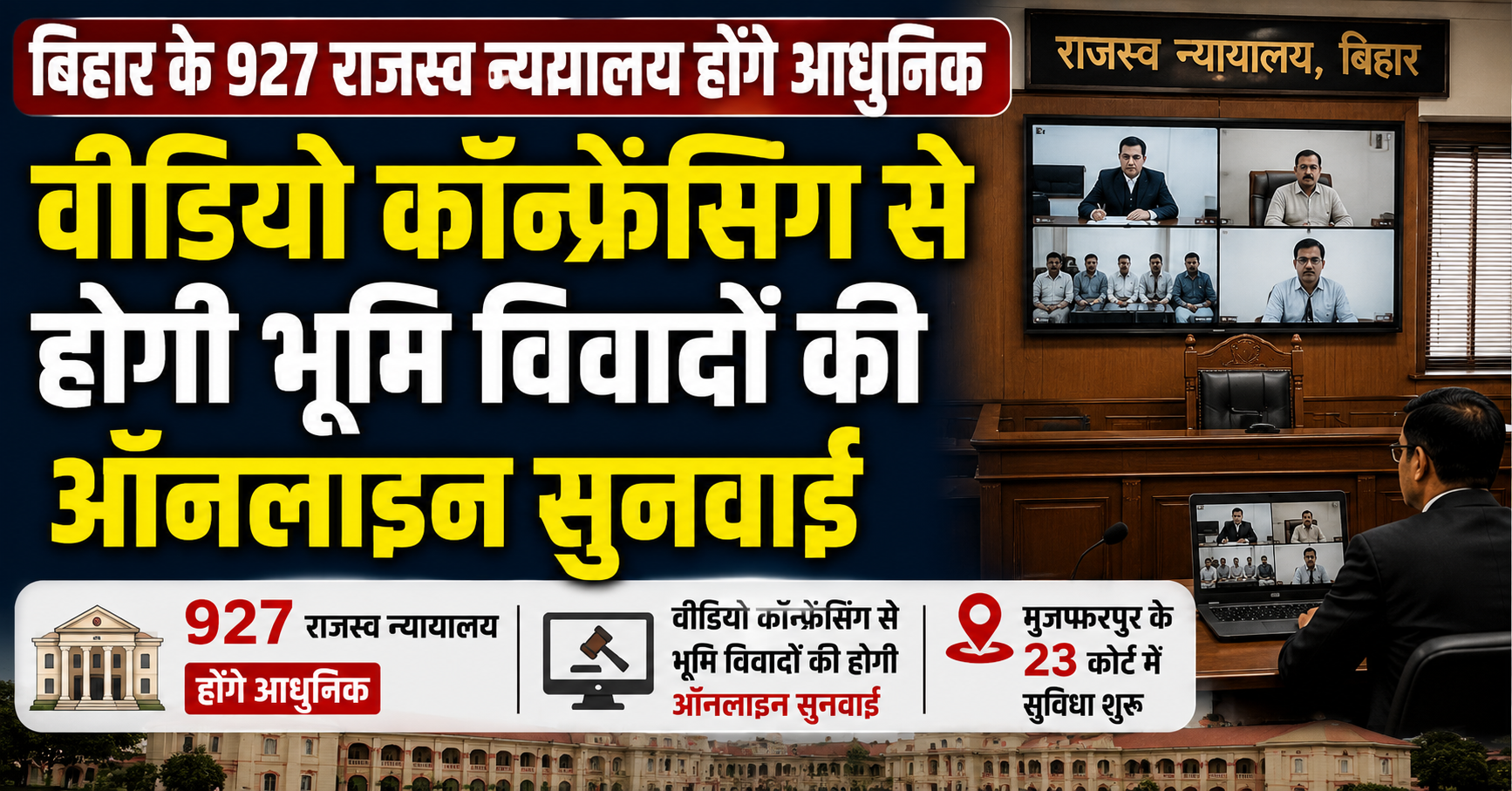
Patna/Muzaffarpur: Bihar is taking steps to make hearings related to land disputes more convenient, faster and technology-driven. The state is in the process of modernising 927 revenue courts. As part of this initiative, video conferencing facilities are being restored at revenue courts so that cases related to land disputes can be heard online, reducing the need for petitioners and witnesses to repeatedly visit courts in person.
Under the new system, petitioners and other concerned parties are sent a video-conferencing link to their mobile phones before the scheduled hearing date. At the appointed date and time, they can join the hearing through the link. The proceedings can then continue before the revenue court.
The initiative has been undertaken by the Revenue and Land Reforms Department with the aim of making the revenue justice system more accessible and reducing the burden of repeated travel, particularly for people living in rural and remote areas.
Facility Restored in 23 Revenue Courts in Muzaffarpur
Video conferencing facilities have reportedly been restored in 23 revenue courts in Muzaffarpur district.
Under the system, the concerned petitioner receives a link on their mobile phone before the hearing. They can join the hearing using a smartphone, computer or another suitable digital device at the scheduled time.
This can significantly reduce the need for people to travel to revenue courts for every hearing.
Link Sent to Petitioners Before Hearing
The online hearing process has been designed to remain relatively simple.
A petitioner or concerned party is provided with a link on their registered mobile number before the hearing date.
At the scheduled time, the person joins the video conference through the link. Their participation can then be recorded and the hearing can proceed.
The system could be particularly useful for people who otherwise have to travel long distances to district or subdivision-level revenue courts.
Relief in Land Dispute Cases
Land and property disputes have long been an important administrative challenge in Bihar.
Disputes may involve land measurement, mutation, jamabandi, boundary demarcation, possession and ownership.
In many cases, parties have to appear before the revenue court on several dates. For people living far from district headquarters, travelling to court repeatedly can be expensive and time-consuming.
Online hearings can reduce the need for physical travel in cases where virtual participation is permitted.
Witnesses Could Also Benefit
The benefits of video conferencing may not be limited to petitioners and respondents.
Where permitted under the applicable procedure, witnesses may also be connected to hearings through video conferencing.
Local residents, neighbours or other people with knowledge of a land dispute may sometimes be important witnesses. Requiring such individuals to travel to court on every occasion can be difficult.
Virtual participation could make the process more convenient, subject to the rules and requirements of the concerned court.
Modernisation of Revenue Courts
The modernisation of 927 revenue courts is being viewed as part of a broader administrative reform.
The objective is not merely to introduce video conferencing but also to increase the use of technology in hearings and record management.
Digital systems can help organise case information, communicate hearing dates and provide important information to parties more efficiently.
Particularly Useful for Rural Residents
A large proportion of Bihar's population lives in rural areas, where land-related disputes can have a direct impact on livelihoods.
For residents of remote areas, reaching a district headquarters can take several hours and involve considerable transportation expenses.
If part of the hearing process can be completed online, it could provide significant relief.
The system could be especially helpful for elderly people, women, persons with disabilities and others who may find long-distance travel difficult.
Savings in Time and Expenses
Online revenue court hearings can potentially save both time and money for litigants.
Instead of travelling several kilometres for every hearing, spending money on transportation and losing an entire working day, eligible parties may be able to participate remotely.
However, this will require reliable internet connectivity and access to suitable digital devices.
Alternative arrangements will also be important for people who do not have smartphones, computers or adequate internet access.
Digital Connectivity Remains a Challenge
One of the major challenges in implementing online hearings will be digital connectivity.
Internet speed and network availability are not uniform across all rural areas of Bihar. Poor connectivity can lead to interruptions in video and audio during hearings.
Such technical problems can disrupt proceedings.
Therefore, adequate technical infrastructure and support will be necessary for both revenue courts and participating citizens.
Cybersecurity and Protection of Records
As online hearings increase, protection of digital records will become increasingly important.
Land dispute cases may involve personal information, property documents and other sensitive details.
Therefore, secure storage of data, identity verification and protection of video-conferencing links will be essential.
Access to hearing links should be restricted to authorised participants through appropriate technical safeguards.
Verification of Participants' Identity
It will also be important to ensure that the person joining a virtual hearing is actually the concerned petitioner, respondent or witness.
Identity verification can be carried out through registered mobile numbers, identification documents or other appropriate mechanisms.
This can reduce the possibility of unauthorised individuals participating in proceedings.
Could Reduce Pressure on Physical Courts
If online hearings are implemented effectively, they could reduce crowds and the pressure of physical attendance at revenue courts.
Not all parties would necessarily have to be present in court premises for every hearing.
This could reduce the number of people visiting court buildings and allow officials and staff to focus more efficiently on case-related work.
Potential to Help Clear Pending Cases
Land disputes can sometimes remain pending for long periods.
In some cases, hearings may be delayed because parties are unable to appear on scheduled dates.
Providing an accessible online mechanism could improve attendance and help proceedings continue where virtual participation is legally permissible.
However, video conferencing alone will not automatically clear the backlog of cases. Timely hearings, adequate staff and efficient record management will also be required.
Scope for Greater Transparency
Digital procedures can make revenue court proceedings more organised and record-based.
Details such as hearing dates, notices sent to parties and online attendance can potentially be maintained digitally.
This could improve administrative monitoring and transparency.
However, clear rules, technical safeguards and regular monitoring will still be necessary to ensure that the system operates properly.
Training for Officials and Staff
Revenue court officials and employees will require adequate training to operate the new technology.
They will need to understand video-conferencing systems, digital document management, recording virtual attendance and handling technical problems.
Training technical staff and court employees can help ensure that online proceedings function smoothly.
Citizens Also Need Digital Assistance
For many rural residents, online hearings may be a new experience.
They may need basic guidance on opening links, joining video conferences and using mobile cameras and microphones.
The department could provide simple instructions in accessible language and establish support mechanisms for people who face technical difficulties.
Link With Digitisation of Land Records
Online revenue court hearings could become even more effective if they are integrated with the digitisation of land records.
If land records, applications, orders and other relevant documents are available digitally, officials could find it easier to examine cases during hearings.
This could gradually reduce dependence on physical paperwork.
Muzaffarpur Could Provide a Model
The restoration of video-conferencing facilities in 23 revenue courts in Muzaffarpur could provide an example for other districts.
If the system works effectively and provides genuine relief to litigants, similar arrangements could be expanded and strengthened across other revenue courts.
This could support the broader modernisation of Bihar's 927 revenue courts.
The restoration of video-conferencing facilities as part of the modernisation of 927 revenue courts in Bihar is an important step toward making land dispute hearings more accessible and technology-driven.
In 23 revenue courts in Muzaffarpur, the facility has reportedly been restored, allowing petitioners to receive hearing links on their mobile phones before the scheduled date and participate online at the appointed time.
The system could reduce travel expenses and time, provide greater convenience to rural residents, facilitate participation by witnesses where permitted and reduce pressure on physical court premises.
However, successful implementation will depend on reliable internet connectivity, cybersecurity, digital identity verification, technical training and assistance for citizens who are less familiar with digital technology.
If these challenges are addressed effectively, the digital transformation of Bihar's revenue courts could make land dispute hearings more convenient, transparent and efficient for citizens across the state.