

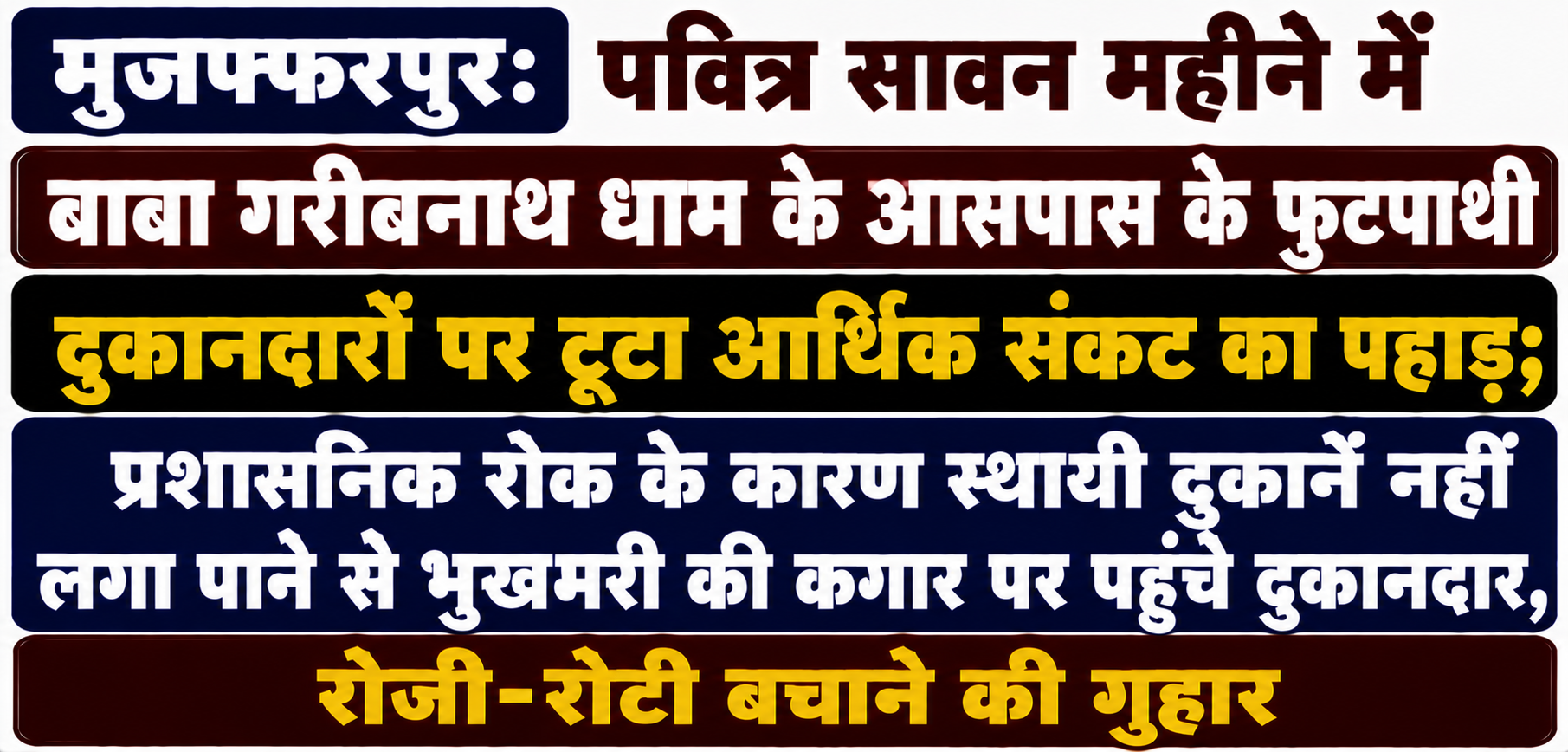
Muzaffarpur: Mountain of Economic Crisis Crushes Street Vendors Around Baba Garibnath Dham During Holy Sawan Festival; Vendors Pushed to the Brink of Starvation Due to Administrative Ban on Setting Up Permanent Shops, Plead to Save Livelihoods
Muzaffarpur (Bihar): An extremely serious, humane, and concerning news story is emerging from Baba Garibnath Dham, famed as the Baidyanath Dham of Bihar. During the holy and sacred festival of Sawan, street vendors making a living around the Baba Garibnath Dham temple in Muzaffarpur are facing a severe economic crisis. In the month of Sawan, when lakhs of Kanwarias (holy water pilgrims) and Lord Shiva devotees arrive from across the country to offer holy water to Baba Garibnath, this period serves as the primary earning season for these small vendors. However, this time, citing security, law and order, and smooth traffic management, the administration has banned setting up street stalls on the temple premises and surrounding main roads or has tightened restrictions. Due to administrative bans, these vendors are unable to set up their permanent or temporary shops, as a result of which their livelihoods have been snatched away and they have reached the brink of starvation.
While the entire city resounds with chants of "Bol Bam" on one side during this month of Sawan, the hearths in the homes of poor vendors remain cold on the other. Let us understand a detailed, analytical, and point-by-point description of this entire administrative restriction, the pain of the vendors, their problems, and various dimensions of this crisis.
Significance of Sawan Festival and Livelihoods of Street Vendors
The month of Sawan at Baba Garibnath Dham is not only important from a religious perspective, but it is also a time of greatest economic hope throughout the year for local small-scale traders.
Basis of Year-Round Earnings: By setting up small shops for worship materials (flowers, garlands, belpatra, prayer plates), prasad, photos, kanwaria clothes, toys, and food items, these vendors earn enough to cover their expenses for the entire year.
Plight of Pushcart and Handcart Vendors: There are hundreds of families around the temple who have depended generation after generation on these small businesses. Through earnings made in just one month of Sawan, they fund the education of their children and support their families.
Frustrations This Time: Due to administrative strictness and orders to remove shops, these vendors are unable to properly set up their shops this time, dashing all their hopes.
Administrative Ban and Security Rationales
Behind the restrictions imposed by the administration and district authorities also lie certain administrative compulsions and security-related reasons that are important to understand.
Crowd Control and Preventing Stampedes: Due to the influx of lakhs of crowds during Sawan, there is hardly any breathing room on the streets. Under such circumstances, if street shops continue to line the roads, narrowed pathways could create a heavy risk of stampedes or accidents.
Smooth Traffic Flow: Keeping long queues of Kanwarias and VIP movements in mind, the areas surrounding the temple have been declared 'No-Vending Zones' or restricted sectors so that ambulances and emergency vehicles can pass through easily.
Cleanliness and Order: In the name of maintaining cleanliness and removing encroachments within the temple zone, the district administration has exercised strictness, directly impacting these small vendors.
Pain of Vendors: "Crisis of Bread and Fear of Falling into Debt Trap"
The vendors state that alongside security, the administration should have also sought alternative options for the livelihoods of the poor.
Loans from Moneylenders: Many vendors have taken loans from moneylenders or relatives at high interest rates to set up their shops for the Sawan season. After purchasing goods, when bans were imposed on setting up shops, their goods began to rot and anxiety over repaying loans haunts them.
Demand for Alternative Space: A delegation of vendors has already met the district administration to plead that they be temporarily permitted to set up shops in a nearby ground or designated vending zone away from the main temple thoroughfare.
Starvation Facing Families: Expressing their grief, vendors stated that if the administration makes no alternative arrangement, their children will face starvation.
Reactions of Public Representatives and Social Organizations
Amid this severe economic crisis, local murmurs and socio-political reactions have begun to surface.
Appeal for Humane Perspective: Several social activists and local leaders have demanded that the district administration look after the interests of these poor vendors while keeping security arrangements intact, granting them permission to conduct business in confined spaces.
Need for Administrative Coordination: A pathway must be forged through coordination between the administration and vendors so that Kanwarias face no inconvenience while the hearths of the poor continue to burn.
The economic crisis endured by street vendors around Baba Garibnath Dham in Muzaffarpur during the holy Sawan festival constitutes a deeply serious and sensitive humanitarian issue. While the administration's priority is to ensure the safety and smooth management of devotees, safeguarding the livelihoods of those hundreds of poor families remains an equally moral responsibility of the administration. The need of the hour is for the district administration and municipal corporation to jointly designate a suitable alternative vending zone or location for these vendors, so that alongside serving Shiva devotees visiting the court of Baba Garibnath, the joys of Sawan and a Diwali-like illumination may return to the homes of these poor citizens as well.