

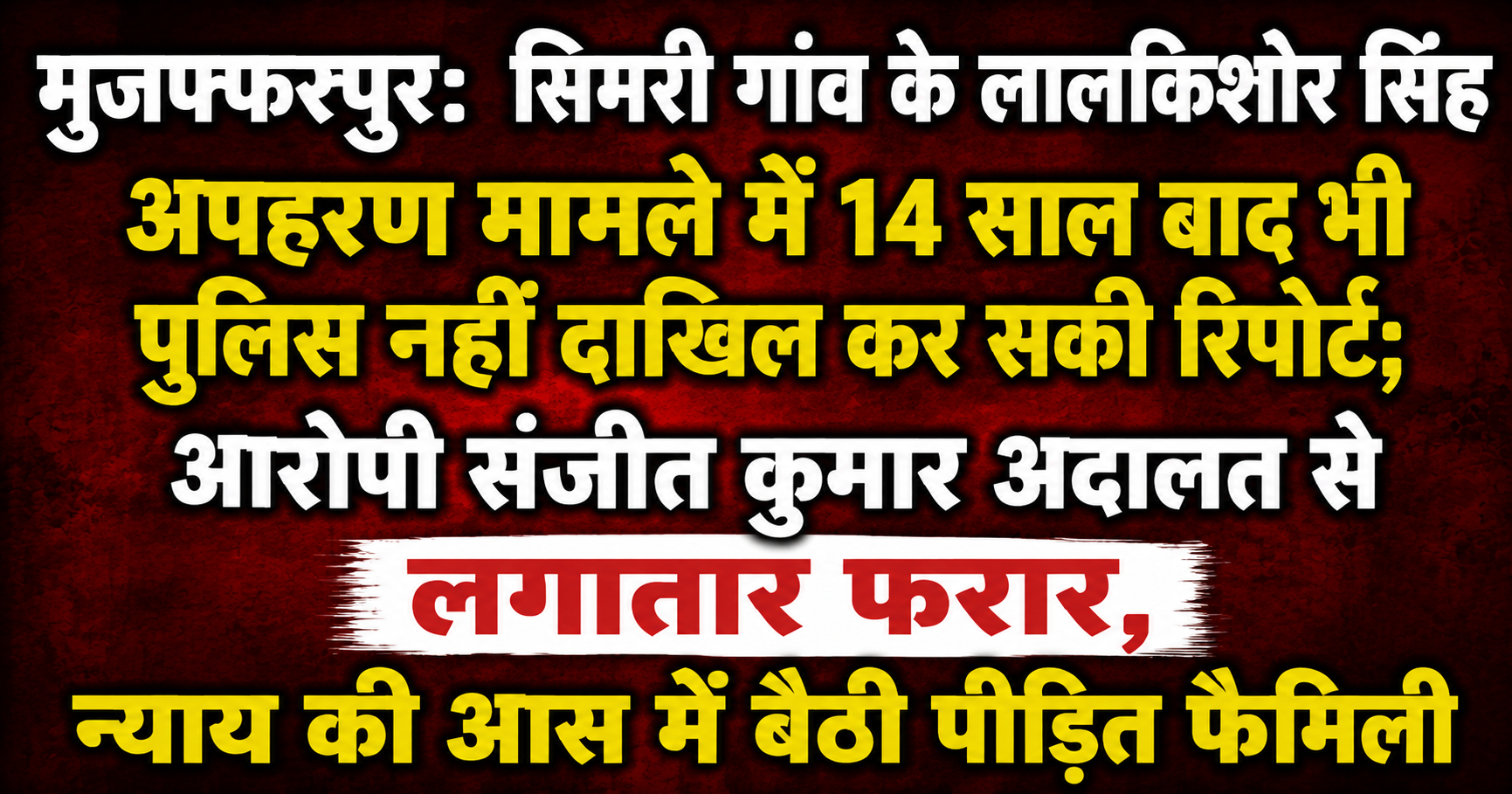
Muzaffarpur: Police Fail to Submit Report in Court Even After 14 Years in Lalakishore Singh Abduction Case from Simri Village; Accused Sanjit Kumar Consistently Absconding from Court, Victim Family Awaits Justice
Muzaffarpur (Bihar): An astonishing and grave news story related to the justice system, police sluggishness, and the prolonged pendency of criminal cases has emerged from the Muzaffarpur district of Bihar. In the high-profile abduction case of Lalakishore Singh, a resident of Simri village in the district, the local police have proven completely unsuccessful in submitting a final report or chargesheet in court even after a long span of 14 years. Sanjit Kumar has been made the primary accused in this heavily discussed case, yet he continually evades court proceedings and fails to present himself before the judiciary. While the trial of the case continues in court, the justice delivery process is being hampered due to the non-receipt of reports and evidence from the police. Taking cognizance of this severe technical and administrative hurdle, the court has taken a stern step by splitting up the trial of the accused Sanjit Kumar from the main case so that legal actions on other aspects can proceed forward.
Let us understand a detailed, analytical, and point-by-point description of the status of old criminal cases pending in Bihar's lower courts, the sluggish pace of police investigations, legal wrangling, and the struggle of the victim family.
Background of the Incident: What Is the Lalakishore Singh Abduction Case from Simri Village?
This incident of abduction occurred years ago in a rural pocket of Muzaffarpur, creating widespread panic across the entire region.
The Abduction Episode: Lalakishore Singh, a resident of Simri village, was suddenly abducted under suspicious circumstances, following which a mountain of grief collapsed on his family.
FIR and Named Accused: Acting promptly on the family's complaint, the police registered a case and, during the course of investigation, named Sanjit Kumar as the main accused in this crime.
The Long Wait for Justice: Ever since the incident, the victim family has continuously pleaded for justice, but the case has remained entangled for decades between investigative agencies and judicial procedures.
Sluggishness of Police Investigation: Report Missing Even After 14 Years
In any criminal case, the police chargesheet or final report forms the foundation of the trial, but the work style of the police in this case has raised major questions.
A Long Span of Fourteen Years: Despite the passage of over a decade (14 years), the police have failed to satisfy the court regarding what concrete evidence exists in the case and at what stage the investigation has arrived.
Apathy of Responsible Officials: Files continued to gather dust due to periodic transfers of police officials and lax monitoring, directly benefiting the accused.
Delays in Legal Procedure: Because the police report was not filed, it took years for the picture of the case to become clear before the court, making the process of obtaining justice exceedingly protracted.
Persistent Absence of Accused Sanjit Kumar and the 'Split-up Trial' Process
When an accused fails to appear despite court summons and warrants over a prolonged period, courts take special steps to expedite the justice process.
Continuously Absconding From Court: Accused Sanjit Kumar remained outside the police's grasp while also continuously absenting himself from the court, leaving the hearing of the case stalled indefinitely.
Split-up Trial: Legally, when one of the co-accused remains absconding for a long time and halts other legal proceedings, the court separates the trial of the absconding accused from the main trial.
Further Legal Action: Following the separation of Sanjit Kumar's trial, the court will now move forward with its proceedings based on other available evidence and witnesses, while strict arrest warrants will be issued against the fugitive accused.
Lessons for the Justice System and Police Administration
This case serves as an accurate illustration of the lack of coordination between Bihar's lower courts and the police department, along with the endless delays plaguing investigations.
The Burden of Pending Cases: Such legacy cases inflate the burden of litigation on courts and erode victims' confidence in the system.
The Need to Establish Accountability: The need of the hour is for police headquarters to conduct a special review of such old and pending cases and establish accountability for negligent investigators.
The failure of the police to submit a report even after 14 years in the Lalakishore Singh abduction case from Simri village in Muzaffarpur highlights a major flaw in our criminal justice system. Although the court's decision to split up the accused's trial is a necessary step to accelerate the judicial process, true justice for the victim family will remain a distant dream unless the police adopt a strict stance against criminals and file chargesheets on time.