

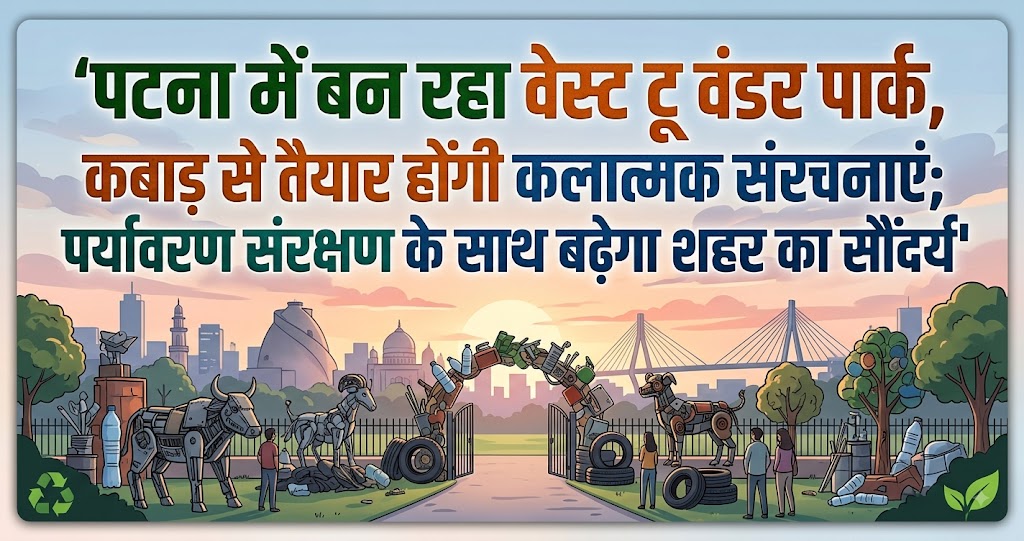
Waste to Wonder Park Being Developed in Patna, Artistic Structures to Be Created From Scrap; New Initiative to Promote Environmental Protection
Patna: A unique Waste to Wonder Park is being developed in Patna, where discarded and unusable materials are being transformed into attractive artistic structures. The project will make use of iron scrap, old tyres, broken pipes, bottles, electronic waste and other discarded metal items to create creative installations.
The initiative aims not only to develop an attractive public space but also to spread awareness about waste management, recycling and environmental protection. The artistic structures will demonstrate that many objects considered waste can be reused creatively instead of simply being thrown away.
Scrap Materials Being Converted Into Art
Different types of discarded materials are being collected and used to create artistic structures at the park. These include old pieces of iron, unused machine parts, broken pipes, vehicle tyres, plastic and glass bottles, and electronic waste.
The materials can be sorted according to their size and utility before being given artistic shapes. Old metal parts can be joined to create large sculptures, while tyres, pipes and bottles can be used for decorative installations.
Visitors will therefore get an opportunity to enjoy the artistic displays while also learning how discarded materials can be reused creatively.
Message of Waste Management
The growing amount of waste in cities has become a major challenge. Large quantities of waste are generated every day by households, markets, shops, industries and construction activities.
If waste is not properly segregated, its disposal becomes difficult. At the same time, many discarded objects can be reused or recycled.
The Waste to Wonder Park can help communicate this idea to the public. Visitors can learn that instead of immediately throwing away unwanted materials, many of them can be reused or recycled.
Focus on Environmental Protection
The concept of the park is closely linked to environmental protection. Old tyres, metal scraps and electronic waste can create environmental problems if they are dumped improperly.
Safe reuse of such materials can help reduce the overall amount of waste entering disposal systems.
By converting discarded materials into artistic structures, the park can encourage people to think more seriously about recycling and reuse.
Creative Use of Electronic Waste
With the growing use of electronic devices, e-waste is also increasing rapidly. Old computers, electronic equipment, wires, machine parts and other materials can become an environmental challenge if they are not disposed of properly.
The use of electronic waste in the Waste to Wonder Park can send an important message about responsible waste management.
However, electronic waste must be handled in accordance with applicable safety and disposal standards. Such materials should only be incorporated into artistic structures after being properly processed and made safe.
Old Tyres Could Become a Major Attraction
Used vehicle tyres are also being considered for artistic installations in the park. Tyres are difficult to break down naturally and can remain in the environment for a long time.
Creative reuse can therefore provide an alternative to simply discarding them.
Tyres can be arranged according to shape and size to create decorative designs and artistic models. Such installations could become an attraction for children and families visiting the park.
Learning Opportunity for Children
The Waste to Wonder Park can serve not only as a recreational space but also as an educational destination for children and students.
School students could visit the park to understand how waste is segregated and how discarded materials can be converted into useful and artistic objects.
If informational boards, environmental messages and educational displays are installed, children could gain a practical understanding of recycling and environmental protection.
Combination of Creativity and Environment
The most distinctive feature of the project is the combination of art and environmental awareness. Scrap is generally viewed only as waste, but artists, designers and craftsmen can transform the same materials into attractive creations.
Iron pieces can be converted into large sculptures, pipes into structural models and old tyres into decorative installations.
This can encourage people to understand that an object's usefulness does not necessarily end when its original purpose is over.
Contribution to Patna's Beautification
The Waste to Wonder Park could also contribute to the beautification of Patna. The park may become a new attraction for residents and visitors.
A combination of artistic installations, greenery and open spaces could make the park useful for recreation and tourism.
If new artworks are added regularly, the park could become a long-term attraction for residents and tourists.
Employment Opportunities Through Scrap
The concept of the park could also generate employment opportunities at the local level. People may be required for collecting, sorting and processing scrap materials and for creating artistic installations.
Local artists, welders, designers and craftsmen could also get opportunities to work on such projects.
This could create a new model linking waste management with creative industries and local employment.
Promoting a Culture of Recycling
Developing a culture of recycling and reuse is important in urban areas. People often throw away objects that could potentially be reused.
The Waste to Wonder Park could encourage residents to reconsider this habit. The displayed installations can demonstrate that properly segregated waste can have additional value.
This could also encourage households and businesses to separate recyclable materials from other waste.
Potential Link With Cleanliness Campaigns
The park's concept can also be linked with broader cleanliness initiatives. Visitors can be educated about separating wet and dry waste, reducing plastic consumption and keeping recyclable materials separate.
Awareness programs, workshops and school-based activities could be organized at the park.
In this way, the park could function not only as a recreational space but also as an environmental education centre.
New Attraction for Tourists
Along with Patna's historical and religious destinations, new urban attractions could further enhance the city's tourism potential.
The Waste to Wonder Park could attract local residents as well as tourists because of its distinctive concept. It could be particularly appealing to families and children.
If the installations incorporate Bihar's cultural identity and environmental messages, the park could develop a stronger identity of its own.
Public Participation Will Be Important
Public participation will be essential for the success of such a project. Developing the park alone will not be enough. Residents will also need to adopt better waste segregation and disposal practices.
Schools, colleges, social organizations and citizen groups can participate in awareness campaigns.
If residents begin separating recyclable materials at the household level, it could contribute to improved waste management across the city.
Scope for Expansion
If the Waste to Wonder Park becomes popular, the concept could potentially be expanded to other parts of the city.
Different locations could feature scrap-based artworks, themed installations and environmental awareness displays.
This could help improve public spaces in Patna while also changing public attitudes toward waste management.
The Waste to Wonder Park being developed in Patna is emerging as an innovative initiative that aims to transform waste into creativity. Iron scrap, old tyres, broken pipes, bottles, electronic waste and other discarded metal materials are being used to create artistic structures.
The project aims not only to make the park visually attractive but also to communicate that waste can be reused and transformed into something useful and beautiful. It could help increase awareness about recycling, reuse and environmental protection.
For children and young people, the park could become a practical centre for environmental education, while artists and craftsmen could get an opportunity to showcase their creativity. The initiative could also add a new attraction to Patna's urban landscape and tourism potential.
If the park is regularly developed and combined with awareness and educational activities, it could become an important public space promoting waste management, environmental protection and creative art together in Patna.