

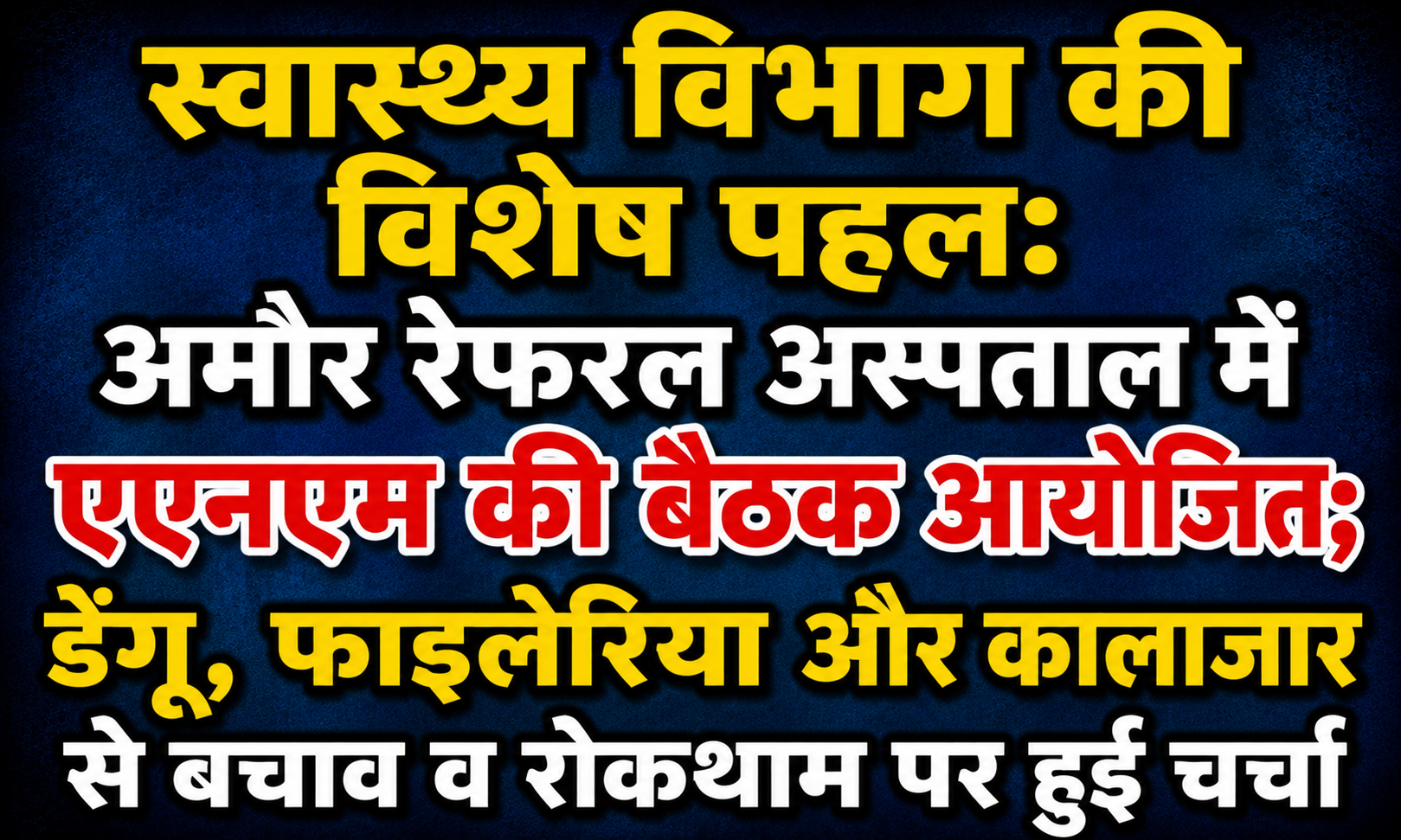
Special Initiative by the Health Department: ANM Meeting Organized at Amour Referral Hospital; Discussions Held on Prevention, Control, and Symptoms of Dengue, Filariasis, and Kala-Azar
Purnea (Bihar): A positive and public welfare-oriented update has emerged from the health department in Bihar's Purnea district. The health department appears fully alert to curb the spread of vector-borne and communicable diseases across the district. An important meeting of Auxiliary Nurse Midwives (ANMs) was organized on Tuesday at the Amour Referral Hospital in Purnea. The primary objective of this meeting was to train and raise awareness among healthcare workers regarding the symptoms, preventive measures, and timely treatment modalities for serious diseases such as dengue, filariasis, and kala-azar.
According to received details, this meeting was convened to strengthen grassroots healthcare services in the region. Let us examine a detailed analysis of the core decisions made and significant health-related points discussed in this meeting.
Core Objective of the Meeting: Prevention of Vector-Borne Diseases
During this meeting held at the Amour Referral Hospital premises, medical officers issued special guidelines in view of the mounting threat of diseases like dengue, filariasis, and kala-azar in the region.
Identification of Symptoms: ANMs were trained on how to identify the early symptoms of dengue (high fever, body aches, dropping platelet count), filariasis (elephantiasis, swelling in limbs), and kala-azar (persistent fever, weight loss, weakness) among patients at the village level.
Prevention and Public Awareness: Healthcare personnel were instructed to guide residents within their respective jurisdictions on preventive measures against these diseases, such as preventing water stagnation around houses, utilizing mosquito nets to ward off mosquitoes, and maintaining hygiene.
Strategy for Ground-Level Execution of Health Schemes
The progress of health sub-centers and immunization campaigns across the Amour region was also reviewed during the meeting.
Door-to-Door Surveys: Officials directed ANMs to conduct door-to-door surveys in their areas to timely identify potential patients and refer them to the nearest health facility for treatment.
Availability of Medicines: It was also ensured during the meeting that essential medicines and diagnostic kits related to these diseases remain available in adequate quantities at the referral hospital and rural health centers.
This meeting of ANMs organized at the Amour Referral Hospital serves as a commendable step toward bolstering rural healthcare services. Equipping healthcare workers through training against severe diseases like dengue, filariasis, and kala-azar enables timely life-saving interventions for patients. Such awareness and training programs further strengthen hopes of delivering enhanced medical services to the general public.